Gaston Bachelard, epistemological ruptures, and the brain
Long condemned as a moral failure or an accidental flaw, intellectual error represents the true driving engine of scientific discovery. Drawing upon the rigorous philosophy of Gaston Bachelard, this investigation demonstrates how genuine breakthrough requires the dismantling of intuitive common sense, tracing an unbroken thread from Galilean mechanics to modern network neuroscience.
From the bloodstained arenas of the Roman Empire to the private quarters of Emperor Marcus Aurelius, Galen of Pergamon established himself as the undisputed, almost tyrannical authority of ancient medicine. For fourteen centuries, his prestige imposed an anatomical fiction upon the Western world. According to his doctrine, blood produced by the liver had to pass through the central cardiac septum to mix with air drawn from the lungs. Finding no visible conduit within that dense wall, Galen simply postulated the existence of invisible pores. Throughout the Middle Ages and the Renaissance, generations of anatomists dissected human hearts without daring to challenge his decree. They chose to place their faith in invisible passages rather than accept the evident impermeability of the muscular wall directly beneath their eyes.
How did such an error withstand thousands of actual dissections without being exposed? Was it mere intellectual subservience to authority, or did it expose something far more unsettling: that human reason does not begin by observing nature, but rather by imprisoning itself within its own conceptual architectures?
The historical refusal to value mistaken theories
For over two thousand years, Western philosophy embraced an unyielding assumption: truth is self evident, and error is merely a culpable failure. Whether framed as moral weakness, sensory illusion, or intellectual hubris, being wrong was treated as a disgraceful flaw rather than the driving engine of scientific discovery.
This misconception originated in classical antiquity. For Plato, the material world was a deceptive shadow theater; trusting manual manipulation was already a descent from the pure realm of Forms. While Aristotle rehabilitated empirical observation, he immediately burdened nature with teleological intent: a stone falls because it desires to return to its natural place. Within this framework, theoretical paradigms were never questioned; errors were blamed on imprecise language or faulty syllogisms.
During the Middle Ages, Scholasticism turned this theoretical compliance into dogma. Truth was no longer sought within the empirical world; it was sealed inside sacred scripture and the canonical texts of Aristotle. Confronted with canonical authority, direct observation carried no weight. If a physician saw an intact septum where Galen mandated pores, the eye itself was assumed to be lying.
Even at the threshold of the modern era, intellectual error remained suspect. René Descartes sought to emancipate human thought through methodical doubt, yet he still concluded that mistaken judgment stemmed from moral deficiency, arguing that human will leaps ahead before clear ideas can reveal themselves. In the philosophy of Francis Bacon, the intellect was not guilty but tainted: a distorted mirror clouded by the idols of language, requiring only a swift clean wipe to reveal nature as it truly is.
In the nineteenth century, Auguste Comte and positivism solidified the myth. Science was depicted as an unbroken triumphal march, an expanding monument where each generation laid definitive truths over the ruins of vanquished ignorance.
Across two millennia, despite shifting paradigms, the overarching ideal remained unchanged: purify the intellect to attain unblemished truth. Very few thinkers suspected that error was not the antithesis of scientific progress, but its indispensable fuel. To grasp that reversal, one had to challenge the most seductive illusion of all: the direct testimony of human perception.
🔗 Read also: Stoicism and the cognitive roots of emotional suffering
Thought experiments over perception: the fall of direct observation
A persistent legend surrounds the birth of modern physics: science supposedly began when thinkers finally abandoned abstract speculation to observe nature as it really is.
Historical reality points in the exact opposite direction.
For centuries, Aristotelian physics persisted not out of intellectual laziness, but because of excessive faith in sensory perception. What happens when someone releases a feather and a stone at the same moment? The stone strikes the ground almost immediately, while the feather drifts lazily through the air. Concluding, as Aristotle did, that gravitational velocity depends on physical mass was not an arbitrary dogma; it was an accurate, logical formalization of sensory experience. Intuitive common sense appeared to settle the question completely.
The Galilean revolution in the early seventeenth century did not stem from looking more closely at the world; it came from daring to think against sensory appearances. Rather than ascending the Leaning Tower of Pisa, Galileo Galilei set a conceptual trap for classical physics from the quiet of his study through a pure thought experiment.
Consider two stones, he proposed: one heavy and one light. Under Aristotelian theory, the heavier body falls faster. Join them with a light cord and release them together. What must occur?
Following one line of reasoning, the lighter stone, falling more slowly, should retard the descent of the heavier stone like a parachute, making the combined pair fall more slowly than the heavy stone alone. Following the opposite line of reasoning, the two joined stones constitute a single composite body heavier than either component, and should therefore fall faster than the heavy stone alone.
The contradiction is irreconcilable: the very same composite entity must simultaneously fall faster and slower.
The two-thousand-year-old framework collapsed before a single stone touched the ground. Resolving this paradox required an inescapable conclusion, even if it defied everyday intuition: in a vacuum, all bodies fall at identical rates. The observed variance was merely the result of an invisible confounding variable: aerodynamic drag.
To substantiate this deduction against the immediate evidence of stones and feathers, passive observation was no longer sufficient. Galileo had to construct artificial conditions: an inclined plane of polished wood, calibrated bronze spheres, and a precise experimental setup designed to compel matter into answering questions that spontaneous observation obscured.
Here lies the conceptual breakthrough: Galileo did not wait for nature to disclose its secrets. He first derived the physical law in the abstract space of his mind, then engineered experimental apparatuses to force reality into alignment with theoretical models. Experimentation was no longer an observational exercise; it became an instrument to discipline matter into theoretical compliance. However, once an idea possesses the power to dictate terms to experience, the greatest peril ceases to be sensory illusion: it becomes the tyranny the mind imposes upon itself.
🔗 Explore further: The philosophical blueprint of psychology: From Plato to Freud
Why genuine knowledge demands conceptual destruction
During the early 1930s, theoretical physics entered a profound epistemological crisis. Within decades, the classical scaffolding of physical reality disintegrated. Albert Einstein’s general relativity warped space and dismantled absolute universal time, while quantum mechanics transformed the atomic core into a probabilistic wave particle paradox. The human brain was never wired to intuitively comprehend time dilation or electrons without deterministic trajectories. Still, the mathematical formulations proved unassailable, and the quantum realm refused to conform to macroscopic common sense. Science had triumphed, yet researchers found themselves disoriented: how does one pursue empirical inquiry when foundational intuitions prove entirely illusory?
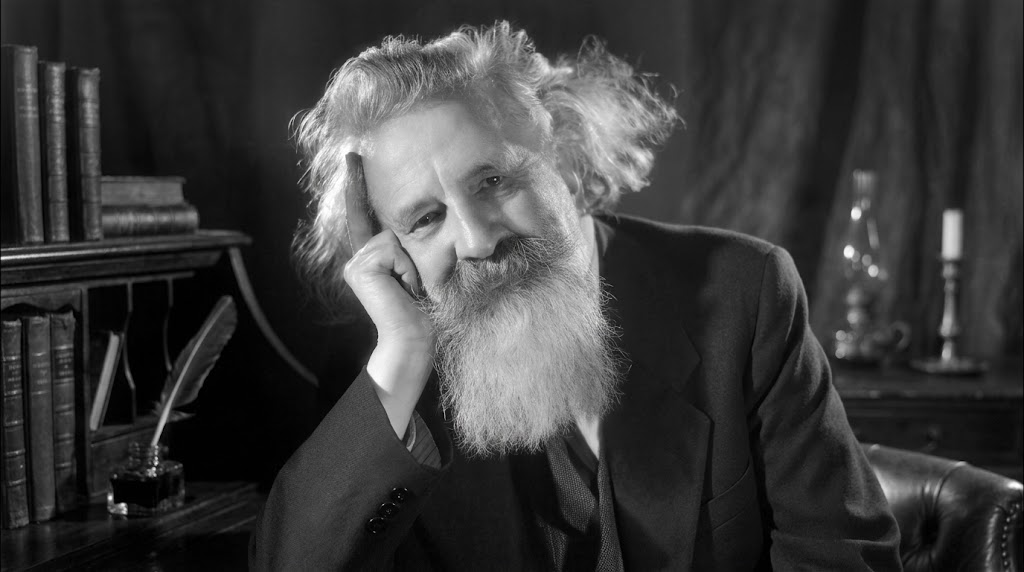
At this precise juncture arrived an unconventional figure who defied academic orthodoxy: Gaston Bachelard.
Bachelard was no detached theoretician contemplating phenomena from an ivory tower. Rising from modest origins and having worked within the postal and telegraph services, he built his intellectual path through direct immersion in the physical sciences. Trained in physics and chemistry, he taught the discipline, manipulated reagents, and knew the demanding environment of the laboratory intimately. While his contemporaries scrutinized instrumentation dials in an effort to salvage classical reference points, Bachelard realized that the critical revolution was occurring within the cognitive apparatus of the scientist.
In his 1938 masterwork, The Formation of the Scientific Mind, he issued a definitive conceptual principle: scientific knowledge is constructed against prior knowledge, through the systematic destruction of ill formed concepts.
For Bachelard, the implication was indisputable: if modern science is to transcend its own achievements, it cannot advance through peaceful accumulation. It must advance through disciplined conceptual demolition, an ongoing struggle where the mind learns to interrogate its own cognitive defaults.
To lead this demolition, Bachelard addressed a major academic taboo: the scientist is never an agent of pure reason. Even when backed by credentials and armed with sophisticated instruments, the investigator remains subject to unconscious psychological resistances, clinging to comforting heuristics as if they were self evident truths. These internal cognitive blind spots were given the name that would define his philosophy: epistemological obstacles.
The first obstacle emerges from the visceral appeal of immediate sensation: the obstacle of primary experience. The human mind craves visual spectacle. It is drawn to crackling discharges, smoking vessels, and shifting colors. However, this sensory display acts as an intellectual smokescreen, captivating perception while concealing the underlying equations and physical laws that govern the phenomena.
Next comes the trap of linguistic shortcuts: the verbal obstacle. Giving a name to a phenomenon has never been equivalent to deciphering its mechanism. For centuries, classical medicine believed it possessed real knowledge by declaring that opium induced sleep due to its dormitive virtue. This was merely an empty linguistic label substituting for rigorous functional analysis of biological pathways.
This tendency leads into projecting internal psychic experiences onto inanimate systems: substantialist and animistic obstacles. The human intellect instinctively seeks hidden essences or attributes intentional agency to blind physical mechanisms. Proposing that a liquid abhors a vacuum or that a falling body seeks equilibrium replaces rigorous physical modeling with comforting anthropomorphic narratives.
Escaping these intuitive narratives demands what Bachelard termed an epistemological rupture. Scientific inquiry never extends common sense; it shatters it. Truth does not hang like ripe fruit waiting to be harvested from nature. It must be wrested from intuitive assumptions, formalized through mathematical abstraction, and quantified through experimental apparatuses that Bachelard termed phenomenotechnology. For Bachelard, a modern scientific fact is never raw empirical input; it is an engineered, purified datum produced through the mediation of mathematical calculation and calibrated machinery.
Here lies Bachelard’s essential insight: scientific truth is fundamentally rectified error. Science is not inherently infallible; its validity stems from the methodical willingness to be wrong, to recognize its own misconceptions, and to continuously recalibrate its models.
This philosophical insight quickly extended beyond the physical sciences. Georges Canguilhem applied it to medicine, demonstrating that pathology is not simply a quantitative deviation, a mere excess or deficiency of standard metrics, but a systemic biological reorganization through which the organism establishes new norms to maintain viability. Michel Foucault carried this diagnostic framework into the human sciences, tracing how theoretical frameworks build social institutions and draw historical boundaries between sanity and madness according to changing dynamics of power.
By positioning the scientist’s own mind as the primary suspect in intellectual misdirection, Bachelard held an uncompromising mirror up to the scientific enterprise. It remains an exceptionally relevant mirror today, especially as modern neuroscience probes the mechanisms of cognition through its own complex digital displays.
🔗 Discover more: From hysteria to science: The legacy of Jean-Martin Charcot
Overcoming epistemological obstacles in modern neurobiology
The modern neuroscientist encounters a paradox unknown to physicists and chemists: the instrument employed to uncover the architecture of cognition is the very organ being investigated.
This self referential loop carries a cognitive cost. Even researchers trained in rigorous statistical methodology remain susceptible to their own brain’s cognitive shortcuts. What cognitive psychology categorizes as salience bias, essentialist thinking, or hasty analogy does not disappear at the laboratory threshold. When applied to experimental interpretation, these familiar cognitive heuristics become the epistemological obstacles Bachelard identified decades ago.
The first manifestation appears before computer displays, driven by the visual impact of functional magnetic resonance imaging (fMRI).
Across high contrast anatomical slices, localized voxels ignite in bright yellows and deep reds. The visual impact is immediate and captivating. Observers instinctively believe they are watching thought unfold in real time, photographing the mental apparatus as it experiences emotion or makes a decision. This represents the modern equivalent of the obstacle of primary experience.
The distortion extends beyond visual outputs into scientific nomenclature.
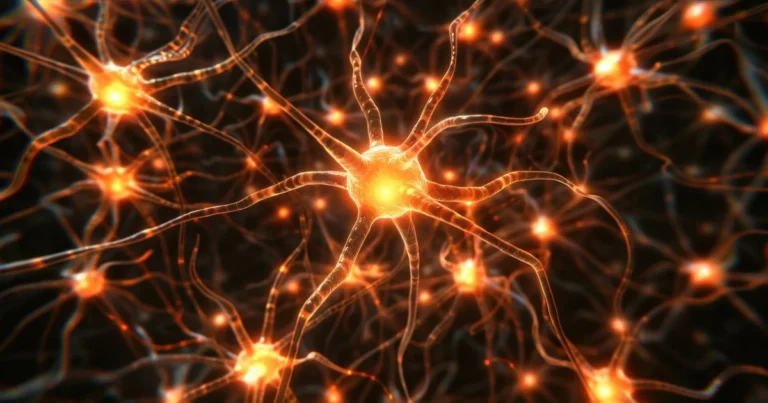
Faced with the staggering complexity of structural and functional connectomes, researchers face an intuitive urge to assign isolated labels to complex circuitry. The amygdala is designated the fear center, the ventral striatum the seat of desire, and oxytocin the empathy molecule. In attempting to explain, science often merely baptizes. This practice resurrects the old dormitive virtue critique: applying an anatomical or biochemical label to a distributed behavioral phenotype to bypass the demanding work of dynamic system modeling.
Overcoming this substantialist obstacle is precisely what modern systems neuroscience achieves when it rejects treating the cerebral cortex as modular compartments. An emotional state resides in no single structure. It emerges from dynamic, brain wide connectomics, distributed networks where temporal phase synchrony among millions of synapses continually recalibrates signal value on a millisecond timescale.
A final, deeply rooted misconception persists: the technological metaphor.
Every historical era has conceptualized neural tissue through the lens of its most advanced mechanical creations: clockwork mechanisms in the seventeenth century, telegraph wire systems in the nineteenth, and digital computing architectures today. The central nervous system is routinely described as biological hardware running mental software that can be compiled, stored, or executed at will.
This computational analogy breaks down against biological reality. Within a biological neuron, algorithmic computation and structural substrate are physically indivisible. Transmitted neural activity alters synaptic connectivity, local metabolic pathways modulate signal processing, and experience continuously reshapes physical architecture. A digital machine executes prewritten code; neural tissue is actively sculpted by its own electrical and chemical dynamics.
As scientific instrumentation grows ever more sophisticated, the greatest intellectual vulnerability is no longer the precision of our measurements. It remains what it has always been: the temptation to project intuitive narratives onto complex natural phenomena. The resilience of the scientific enterprise does not rest on the promise of infallible perception, but rather on that demanding Bachelardian discipline: the awareness that today’s established truths are simply tomorrow’s rectified errors.
References
Bachelard, G. (1938). La formation de l’esprit scientifique : Contribution à une psychanalyse de la connaissance objective. Librairie philosophique J. Vrin.
Canguilhem, G. (1966). Le normal et le pathologique. Presses Universitaires de France.
Foucault, M. (1961). Folie et déraison : Histoire de la folie à l’âge classique. Plon / Gallimard.
Galien, C. (1854). De l’utilité des parties du corps humain (trad. par C. Daremberg). J.-B. Baillière. (Texte original du IIᵉ siècle numérisé sur Medic@ / Univ. Paris Cité).
Galilei, G. (1638). Discorsi e dimostrazioni matematiche, intorno à due nuove scienze [Discours et démonstrations mathématiques concernant deux sciences nouvelles]. Louis Elsevier. (Consultable en ligne via Gallica – BNF).
Logothetis, N. K. (2008). What we can do and what we cannot do with fMRI. Nature, 453(7197), 869–878. https://doi.org/10.1038/nature06976

Amine Lahhab
Television Director
Master’s Degree in Directing, École Supérieure de l’Audiovisuel (ESAV), University of Toulouse
Bachelor’s Degree in History, Hassan II University, Casablanca
DEUG in Philosophy, Hassan II University, Casablanca