Why the autistic brain seeks refuge in virtual worlds
Why do virtual worlds hold such singular appeal for autistic minds? Far beyond passive entertainment, modern video games emerge as zones of predictability and agency. An exploration of the interface between cognitive architecture and game design.
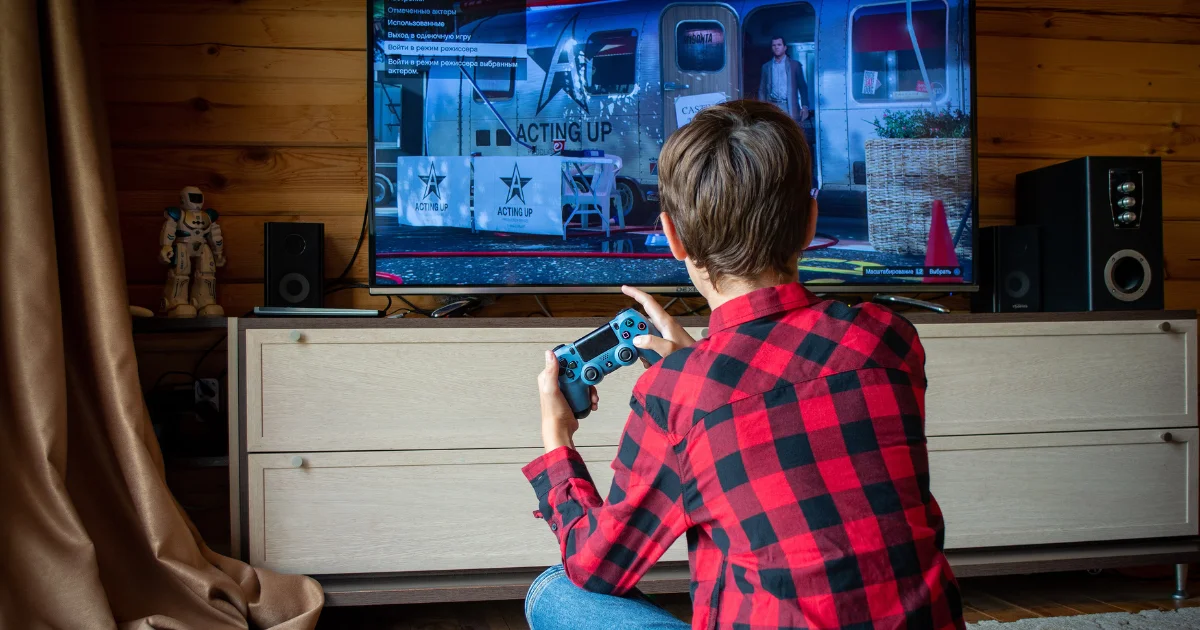
For years, the intersection of autism and video gaming has been framed almost exclusively through a single lens: that of adolescents absorbed for hours on end in digital environments, seemingly severing their ties with the physical world. This relationship was long viewed primarily as a vulnerability to behavioral addiction.
Recent research, however, is beginning to challenge this conventional perspective. Beyond the simplistic assumption of screen addiction lies a far more intricate question: why do certain autistic youths discover within virtual worlds something that daily social life fails to provide?
The debate is shifting away from mere screen time toward the specific resonance between distinct neural architectures and structured cognitive environments. These digital realms appear to address a profound need in certain individuals for environmental clarity, perceptual agency, and a measurable reduction in social ambiguity.
This conceptual framework fundamentally transforms clinical perspectives. It moves beyond standard debates over screen time to examine core aspects of autistic neurobiology. If specific digital worlds prove so compelling to autistic adolescents, it is not simply because of sensory stimulation; it is also because they accommodate profound cognitive vulnerabilities.
🔗 Read also: Neuronal rigidity in Autism: Understanding a new path to flexibility
Why explicit game design comforts the neurodivergent mind
To understand this unique affinity between autism and gaming environments, one must examine a foundational mechanism of human neurobiology that remains rarely discussed outside cognitive neuroscience. The brain does not passively register external input; it functions as a continuous prediction machine.
At every moment, neural circuits forecast upcoming events, decipher intentions, calculate potential outcomes, and calibrate behavioral responses. A standard interpersonal conversation requires an astonishing array of covert cognitive operations: reading micro expressions, interpreting vocal intonations, detecting irony, sensing discomfort, predicting conversational turns, adapting verbal output in real time, and navigating unwritten social norms.
In neurotypical development, these operations become largely automated, allowing individuals to navigate social ambiguity with minimal conscious strain. Several contemporary neuroscientific paradigms suggest that this machinery operates differently across the autism spectrum. Over the past decade, predictive processing models of the brain have gained significant traction. Under these frameworks, the autistic brain faces greater challenges in stabilizing social and sensory predictions. Environmental inputs are perceived as less predictable, more volatile, and harder to prioritize hierarchically. What appears intuitive to a neurotypical individual can present ongoing uncertainty for an autistic person.
This model clarifies why interpersonal encounters can be cognitively draining. An ordinary discussion in a classroom, among peers, or at the dinner table demands sustained mental vigilance. It requires continuous interpretation of unstable cues, behavioral self-monitoring, anticipation of others, and concurrent processing of heavy sensory and emotional inputs. Daily social interaction is an inherently unpredictable environment.
This is precisely where virtual spaces become fascinating from a neuroscientific perspective. Modern video games operate on principles that run counter to ordinary human interactions. Their rules are explicit, their goals are distinct, their progression systems are logical, and the consequences of any action follow stable mechanics. Even when a game is demanding or competitive, it remains structurally readable.
In a massively multiplayer online role playing game, a genre extensively studied by researchers, the player understands the system requirements. They know precisely why a failure occurred, how to advance, and what constraints govern the virtual environment. The game may be challenging, but it remains far more predictable than daily life. While this distinction might seem subtle to an outside observer, it is fundamental to understanding why autistic adolescents find these spaces cognitively restorative. An increasing number of researchers now suggest that this engagement is not driven solely by hedonic reward. These environments offer a marked reduction in social ambiguity, converting relational chaos into a coherent, predictable system. Interactions become controllable, stable, and cognitively manageable, fostering a form of neurological relief rarely perceived by neurotypical observers.
For some autistic adolescents, gaming evolves beyond simple entertainment into a restorative niche where the brain temporarily escapes the cognitive exhaustion of standard social interactions. This dynamic creates clinical ambiguity. When an adolescent spends hours each day inside a virtual reality, clinicians and researchers must determine whether they are observing a behavioral addiction, an intense circumscribed interest, an adaptive emotional regulation strategy, or an effort to inhabit a manageable social space. Current clinical literature confirms that this boundary is far more nuanced than previously assumed.
🔗 Explore further: How early experiences build our emotional and cognitive world
How virtual environments restore cognitive balance
The more an environment offers mastery, cognitive clarity, or psychological relief, the more intensely the brain seeks to return to it. This reinforcement loop is deeply embedded within human neurobiology. The brain systematically identifies conditions that it evaluates as advantageous, stabilizing, or reinforcing. When an environment alleviates internal tension, restores cognitive ease, or delivers a sense of agency, specific neural pathways reinforce the behaviors that facilitate repeated access.
This mechanism serves as the foundation for modern game design. Cognitive neuroscience demonstrates that interactive media heavily engage neural networks responsible for motivation, reinforcement learning, and reward processing, specifically frontostriatal dopaminergic pathways. Contrary to common belief, dopamine does not function merely as a pleasure molecule; it is essential for encoding behavioral salience and updating internal predictive models.
Modern games mobilize this architecture with remarkable precision. Continuous progression, granular objectives, variable reinforcement schedules, rare item collections, skill trees, and social validation generate powerful reinforcement loops. Every action yields observable feedback, every milestone is visible, and every solved problem produces a distinct signal of achievement.
For some autistic adolescents, these dynamics carry powerful clinical relevance. When a digital space diminishes cognitive strain, social anxiety, and unpredictability, the brain learns to utilize that space as an instrument of psychological regulation. The virtual world becomes a domain to which the central nervous system returns to restore emotional and sensory equilibrium that remains elusive in daily social contexts. This distinction is critical, presenting clinicians and researchers with a delicate question: at what point does a digital regulatory refuge cross the threshold into psychological isolation?
Harnessing virtual environments for therapeutic and executive growth
The primary difficulty in contemporary autism and gaming research lies not in the sheer volume of screen engagement, but in the realization that traditional diagnostic criteria struggle to capture this phenomenon accurately.
Historically, clinical judgment was straightforward: persistent, repetitive behaviors that were difficult to interrupt despite adverse functional consequences were classified as addictive disorders. While this framework fits many behavioral conditions, its diagnostic utility decreases when applied to autism. High intensity is an intrinsic feature of the autistic cognitive phenotype. Circumscribed interests, prolonged focus on systematic frameworks, repetitive behaviors, and intense absorption in specific domains are not inherently pathological. They often serve as adaptive mechanisms to organize thought, focus attention, and stabilize perceptual experience. What may outwardly present as a problematic obsession can represent a stable neurodevelopmental operating style.
🔗 Discover more: Before morality: The natural roots of altruism
This complicates clinical evaluations of gaming behaviors in autistic populations. Two adolescents may display identical digital screen time yet possess divergent psychological profiles. In one individual, gaming deteriorates into a compulsive loop linked to functional impairment, personal distress, and behavioral dysregulation. In the other, the identical activity serves as an environment for mastery, structured social connection, or vital psychological protection against an overwhelming physical world. Clinical assessment must look past raw screen duration or perceived behavioral control to identify the exact functional role the virtual environment serves in an individual’s cognitive equilibrium.
This conceptual shift explains why clinical perspectives have evolved. While one branch of research evaluates behavioral dependency risks, another examines an intriguing clinical paradox: the very properties that make video games profoundly absorbing, such as systematic feedback, immersive mechanics, and structured loops, can serve therapeutic purposes.
Research teams are actively developing serious games engineered to support social cognitive training, attentional control, and executive functioning in autistic children. Interactive media is no longer viewed strictly as an external behavioral risk, but as a structured cognitive environment capable of supporting targeted neurodevelopmental learning.
Cognitive neuroscience is viewing digital environments through a sophisticated lens. Gaming is not merely a leisure pursuit or a behavioral risk; it is an environment that interacts with unique ways of perceiving, organizing, and regulating mental life. The scientific community is moving past simplistic dichotomies of whether video games are beneficial or harmful for autistic adolescents, seeking instead to understand why structured digital worlds align more closely with certain cognitive profiles than unstructured real world environments do.
The intersection of autism and gaming illuminates something fundamental about how modern software architecture interfaces with non typical ways of processing uncertainty, navigating social interaction, and pursuing internal stability. Virtual worlds are not captivating solely because they provide entertainment; they resonate because they offer an organized, readable reality that daily social environments frequently fail to supply.
References
Billieux, J., King, D. L., Higuchi, S., Achab, S., Bowden-Jones, H., Hao, W., … & Poznyak, V. (2017). Functional impairment matters in the screening and diagnosis of gaming disorder. Journal of Behavioral Addictions, 6(3), 285–289.
Mazurek, M. O., & Engelhardt, C. R. (2013). Video game use in boys with autism spectrum disorder, ADHD, or typical development. Pediatrics, 132(2), 260–266.
Murray A, Mannion A, Chen JL, Leader G. Gaming Disorder in Adults with Autism Spectrum Disorder. J Autism Dev Disord. 2022 Jun;52(6):2762-2769.
Paulus, F. W., Ohmann, S., von Gontard, A., & Popow, C. (2018). Internet gaming disorder in children and adolescents: A systematic review. Developmental Medicine & Child Neurology, 60(7), 645–659.

Sara Lakehayli
PhD, Clinical Neuroscience & Mental Health
Associate member of the Laboratory for Nervous System Diseases, Neurosensory Disorders, and Disability, Faculty of Medicine and Pharmacy of Casablanca
Professor, Higher School of Psychology