How the brain makes sense of Art
Why do certain works captivate us so deeply? When confronted with an image, a story, or a piece of music, the brain mobilizes perception, emotion, and imagination to construct meaning. Neuroscience is beginning to unravel the mechanisms behind this process.
Art has accompanied humanity since its earliest cultural traces. From cave paintings to contemporary novels, from musical rituals to cinematic images, works of art have persisted across time, often eliciting powerful emotional responses. A melody can awaken a long-forgotten memory, a painting can hold our gaze for extended periods, and a narrative can immerse us in the life of a fictional character. Still, understanding why certain images, stories, or pieces of music affect us so profoundly remains a complex question.
When encountering a work of art, the brain does far more than register shapes, colors, or sounds. It interprets, anticipates, and connects the present experience to memories and expectations. Perception intertwines with emotion, imagination, and memory to construct meaning. In this sense, artistic experience becomes a unique cognitive space where multiple dimensions of mental functioning interact.
Over the past few decades, neuroscience and cognitive psychology have begun to explore these mechanisms. Research shows that aesthetic experience engages brain networks involved in attention, reward, empathy, and mental simulation. Art thus emerges as a privileged domain for observing fundamental dynamics of human cognition. However, artistic experience cannot be understood solely through biological mechanisms. Works of art acquire meaning within cultural, historical, and symbolic contexts that shape their interpretation. A novel, a painting, or a film always enters into dialogue with its time and with the collective representations that define it.
Understanding art therefore requires integrating multiple levels of analysis. Neuroscience sheds light on the perceptual and emotional mechanisms engaged by artworks, while psychology and the humanities help reveal their symbolic and cultural significance. At the intersection of these perspectives, artistic experience appears as a distinctive form of cognitive and emotional activity, capable of influencing how we perceive images, narratives, and even the world around us.
🔗Read also: When the brain meets Da Vinci: The neuroscience behind the Mona Lisa’s mystique
Why some works leave a lasting emotional imprint
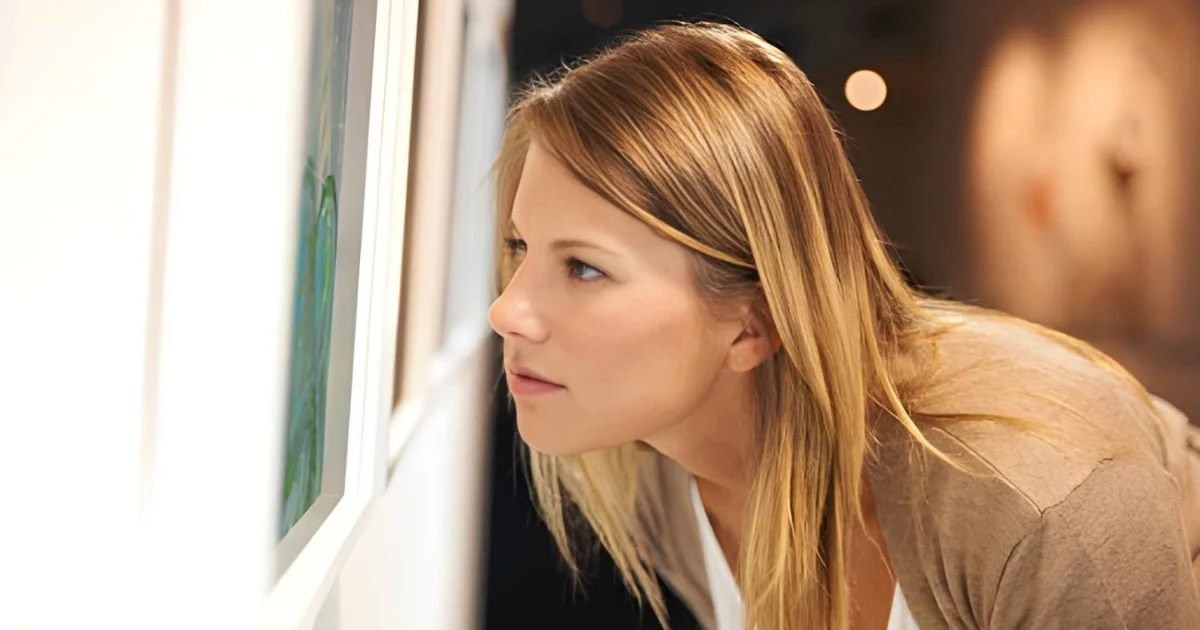
Some works produce an immediate impact. A piece of music may trigger an unexpected shiver, a film scene can create almost physical tension, and a painting may hold the gaze far longer than its subject alone would suggest. This intensity has long intrigued philosophers, artists, and scientists alike. Why do certain images or narratives exert such a powerful hold on our attention and emotions?
One explanation lies in how the brain organizes perception. Contrary to intuitive belief, perceiving an image or a scene is not a passive process. The brain continuously interprets sensory input, fills in gaps, and generates hypotheses about what it is observing. Artistic works exploit these mechanisms. They play with contrasts, rhythms, perceptual expectations, and visual ambiguities. In some cases, this interpretive uncertainty sustains cognitive engagement. Leonardo da Vinci’s Mona Lisa, for example, appears to change expression depending on where one looks, forcing the brain to constantly reassess the face.
However, perception alone cannot account for the power of art. Artistic experience also engages emotional systems. Music can activate reward-related brain circuits, cinematic suspense can maintain a state of moderate physiological alertness, and dramatic narratives can evoke deep empathy for characters. In such cases, the brain does not merely observe events; it partially simulates their emotional states.
This capacity for simulation helps explain why narratives occupy a central place in artistic experience. Literature, theater, and cinema structure attention around actions, motivations, and conflicts. By following a character, the reader or viewer generates hypotheses about what will happen next, interprets intentions, and continuously adjusts expectations. This sustained mental activity maintains cognitive engagement throughout the work.
Neuroscientific research suggests that these processes involve multiple brain networks simultaneously. Sensory regions analyze perceptual features, while other areas contribute to emotional evaluation, anticipation, and the understanding of others’ intentions. Aesthetic experience thus emerges from the interaction between perception, emotion, and mental simulation.
Music illustrates this complexity particularly well. As a melody unfolds, the brain anticipates rhythmic and harmonic patterns. Moments when these expectations are fulfilled or subtly violated can trigger intense emotional responses, sometimes described as “musical chills.” These reactions are accompanied by activation of the brain’s reward system and changes in physiological parameters such as heart rate.
The intensity of artistic experience likely arises from the convergence of these mechanisms. Works of art simultaneously engage perception, emotion, and imagination. They challenge the brain at multiple levels: interpreting an image, feeling emotional tension, following a narrative, and constructing meaning. Under these conditions, a work of art is no longer a mere aesthetic object. It becomes a distinctive cognitive situation in which the brain explores forms, emotions, and condensed representations of human experience. This interplay between active perception, emotional engagement, and narrative construction may explain why certain works leave a lasting imprint in memory. They are not simply seen or heard; they are, in a sense, mentally lived.
🔗Explore further: Improvisation and the adaptive brain
From imagination to creation: How the brain produces art
Artistic experience does not end with the reception of works. It begins upstream, within the processes through which images, narratives, and music take shape. Artistic creation has long been surrounded by an aura of mystery, often associated with inspiration or individual genius. However, creativity frequently relies on identifiable cognitive mechanisms, even if their interaction remains complex.
Creating involves the ability to form associations between elements that initially appear unrelated. A writer transforms fragments of observation into characters and narrative situations. A musician combines sound patterns to produce unexpected progressions. A painter explores shapes and colors that alter how a scene is perceived. In each case, creativity depends on recombining familiar elements into new configurations.
Neuroscientific research suggests that these processes engage complementary brain systems. Some regions are involved in generating ideas and associative exploration, while others contribute to evaluating and organizing creative output. Creativity is therefore not a single mental state, but rather the result of dynamic interaction between imaginative processes and cognitive control mechanisms.
Three Brain Networks Involved in Creativity: Research often highlights the interaction of three major networks:
- The default mode network, associated with imagination and idea generation
- The executive network, involved in organization and evaluation
- The salience network, which directs attention toward the most relevant ideas
- Creativity appears to emerge from the cooperation of these systems rather than from the activity of a single region.
🔗Read also: Inside the writer’s brain (6/6): How ideas become novels
This dynamic is particularly evident in artistic improvisation. Brain imaging studies of jazz musicians or freestyle rappers show transient changes in prefrontal cortex activity. Activity in the dorsolateral prefrontal cortex, associated with cognitive control and self-monitoring, tends to decrease during improvisation. In contrast, the medial prefrontal cortex, linked to spontaneous expression and self-generated ideas, becomes more active. This redistribution appears to facilitate a more fluid production of associations by temporarily reducing inhibition and evaluation processes.
However, improvisation does not imply the absence of structure. Artists improvise based on prior knowledge, styles, and rules they have gradually internalized. The apparent spontaneity of performance often rests on years of training and practice. Creativity thus emerges from a continuous dialogue between free exploration and technical mastery.
Literary creation provides a clear illustration of this alternation. Writing a narrative involves generating new ideas as well as progressively constructing a coherent structure. Authors frequently move between imaginative exploration, where characters and situations emerge, and analytical revision, where plot, rhythm, and coherence are refined.
Creativity and Incubation: Many creators describe a phase in which ideas seem to emerge after a period of disengagement from a problem. This phenomenon, known as incubation, likely reflects unconscious reorganization of information within associative brain networks.
From this perspective, creation lies at the intersection of several dimensions. It mobilizes associative capacities, personal experience, and cultural forms available in the environment. The resulting works then become experiences for an audience, capable of generating new emotions, interpretations, and meanings. A circular movement thus defines art: the imagination of a creator gives rise to a work, which, when encountered by a viewer or reader, becomes a new perceptual and emotional experience. Artistic creation does not merely transform materials or forms; it also reshapes how individuals perceive and interpret the world.
🔗Explore further: Inside the freestyle mind: How rappers hack the brain’s creative circuits
Art as a window into the inner mind
Artistic creation does more than produce new forms. It allows exploration of aspects of human experience that often escape ordinary language. Ambivalent emotions, inner conflicts, and identity transformations find particular modes of expression in images, narratives, and music.
This capacity rests partly on the narrative and symbolic properties of artworks. Unlike explanatory discourse, artistic forms do not necessarily aim to analyze or resolve situations. Instead, they present complex mental states through representation. The viewer or reader is invited to reconstruct meaning based on perceptual, emotional, and narrative cues.
From a cognitive standpoint, this involves multiple processes. Understanding a work often requires interpreting characters’ intentions, anticipating their actions, and reconstructing motivations. In cognitive psychology, these abilities are referred to as theory of mind, the capacity to attribute mental states to others. Artistic narratives heavily engage this faculty by placing the viewer or reader in the position of interpreting thoughts and emotions.
However, art does not merely reproduce familiar mental states. It can also reveal their complexity. Works often depict situations marked by ambiguity, conflicting emotions, or evolving identities. This indeterminacy stimulates interpretive activity as the brain seeks coherence from fragmentary cues.
Art thus functions as a form of cognitive exploration of human experience. Works create fictional situations in which aspects of the psyche can be examined with particular intensity. Narratives condense moral conflicts, images render emotions perceptible, and music conveys affective dynamics that words sometimes fail to capture.
Artistic experience therefore has a reflective dimension. By observing fictional situations, individuals indirectly explore aspects of their own mental life. Narratives allow engagement with moral dilemmas, images evoke emotional tensions, and music enables shifts in mood detached from real-life events.
This capacity helps explain the persistence of art across cultures. Works do more than convey information about the external world; they provide a space in which individuals can recognize, interpret, and sometimes transform aspects of their inner life.
In this sense, art can be viewed as a symbolic laboratory of human experience. It allows simulation of situations, exploration of emotions, and confrontation of perspectives without immediate real-world consequences. This distance fosters a more nuanced understanding of oneself and others, making diffuse or difficult-to-express mental states perceptible.
Moreover, aesthetic experience often involves a slower, more open form of attention that contrasts with everyday perception. It invites a suspension of automatic interpretations, allowing space for emotional and symbolic complexity.
From this perspective, art is neither mere entertainment nor simple expression. It contributes to the formation of subjectivity by offering sensory and symbolic frameworks through which individuals organize their experience. By confronting the individual with forms, narratives, and rhythms, it shapes how internal states are represented. The artwork becomes a mediator between lived experience and meaning, opening the possibility of subtle yet lasting transformations in how we relate to ourselves and to the world.
🔗Discover more: When trauma finds form through repetition
How culture shapes the meaning of art
Artworks never emerge in a cultural vacuum. They arise within historical contexts, traditions, and symbolic systems that shape both their creation and interpretation. A painting, novel, or film is not merely a perceptual object; it participates in a network of shared meanings through which individuals recognize emotions, narratives, and representations of the world. These symbolic systems evolve with social, political, and technological change, gradually transforming how works are produced and understood.
This cultural dimension plays a central role in interpretation. The brain processes images and narratives based on acquired knowledge, shared references, and expectations shaped by social experience. This interpretive activity relies on inference and prediction. When encountering a work, the brain anticipates its structure and attempts to fit it into familiar frameworks. As a result, the same work can be interpreted differently depending on the cultural and historical context in which it is received.
Meaning is therefore not contained solely within the artwork itself; it emerges through the interaction between the work, its context, and the viewer.
This interpretation engages categorization and cultural memory. Individuals learn to recognize styles, symbols, and narrative conventions that guide understanding. These learning processes shape what might be called implicit aesthetic competence: the ability to identify genres, anticipate narrative structures, and assign emotional value to formal configurations.
🔗Read also: Dostoevsky through Freud’s eyes
Cinema provides a clear example. Certain visual or auditory codes immediately signal tension, drama, or narrative reversal. These conventions are not biologically innate; they are acquired through cultural experience and integrated into cognitive processing.
Art thus contributes to the construction of what may be described as a collective imagination. Narratives, images, and artistic forms help organize shared representations of love, fear, rebellion, or success. These representations structure expectations, norms, and emotional responses. Artworks do not merely reflect these imaginaries; they transform, challenge, and reconfigure them, opening new ways of interpreting the world and oneself.
This interaction between art and culture helps explain why some works endure across time. When a work condenses widely shared human experiences such as moral conflict, vulnerability, power relations, or social tension, it can continue to resonate across historical contexts. Meanings evolve, but certain narrative, emotional, and symbolic structures remain recognizable.
Théodore Géricault’s The Raft of the Medusa offers a particularly illuminating example. The painting is based on a real shipwreck that occurred in 1816, when the French frigate Méduse ran aground off the African coast due to navigational errors. With insufficient lifeboats, around 150 passengers were abandoned on a makeshift raft. Over several days, the survivors endured hunger, thirst, violence, and death; only a few were eventually rescued. The event sparked a political scandal in France, exposing incompetence and negligence.
Although rooted in a specific historical context, the painting quickly transcends the mere recounting of an event. It becomes a broader representation of the human condition under extreme circumstances. The composition is structured around tension between two opposing dynamics: in the foreground, inert or exhausted bodies evoke death and abandonment; in the background, a group of men rises toward the horizon, sustained by fragile hope. This visual structure guides the viewer’s attention and shapes emotional interpretation by articulating contrasting states such as despair, expectation, solidarity, and survival.
Understanding the painting can be enriched by historical knowledge, but it does not depend on it entirely. It also relies on the viewer’s ability to recognize fundamental emotional configurations and integrate them into an implicit narrative. The brain spontaneously constructs a story: what has happened, what is unfolding, and what might come next. The artwork thus functions as a device for narrative and emotional simulation, where historically situated meanings intersect with more general cognitive structures.
🔗Read also: The Psychologist on screen: From savior to shadow
Art therefore acts as a space for the circulation of ideas and emotions within a culture. Works transform individual experiences into shared forms. They create points of intersection between personal experience, collective references, and narrative structures. This circulation is not one-directional. Works influence collective representations, but they are also reinterpreted through new social and historical experiences.
From this perspective, artistic experience cannot be reduced to either a purely individual brain response or a simple cultural product. It emerges from the ongoing interaction between cognitive mechanisms and symbolic systems. Artworks exist precisely at this interface, mobilizing perceptual, emotional, and imaginative capacities while actively participating in the construction of meaning.
Across these dimensions, art appears as a phenomenon situated at the intersection of multiple levels of experience. Works engage perceptual and emotional mechanisms, explore creativity, and give form to psychological experiences that are difficult to express otherwise. As they circulate within culture, they also contribute to structuring collective imaginaries and symbolic frameworks that shape how individuals interpret the world.
Artistic experience is therefore neither purely biological nor exclusively cultural. It unfolds within the interaction between these dimensions, where human cognitive capacities meet the symbolic forms through which societies represent themselves. It is precisely within this space that art acquires its distinctive power: the ability to render individual experiences perceptible while embedding them within shared meanings, and to subtly, yet enduringly, transform how we understand both the world and ourselves.
References
Chatterjee, A. (2014). The aesthetic brain. Oxford University Press.
Limb, C. J., & Braun, A. R. (2008). Neural substrates of spontaneous musical performance. PLoS One.
Zeki, S. (1999). Inner vision: An exploration of art and the brain. Oxford University Press.
Freedberg, D., & Gallese, V. (2007). Motion, emotion and empathy in aesthetic experience. Trends in Cognitive Sciences.

Sara Lakehayli
PhD, Clinical Neuroscience & Mental Health
Associate member of the Laboratory for Nervous System Diseases, Neurosensory Disorders, and Disability, Faculty of Medicine and Pharmacy of Casablanca
Professor, Higher School of Psychology