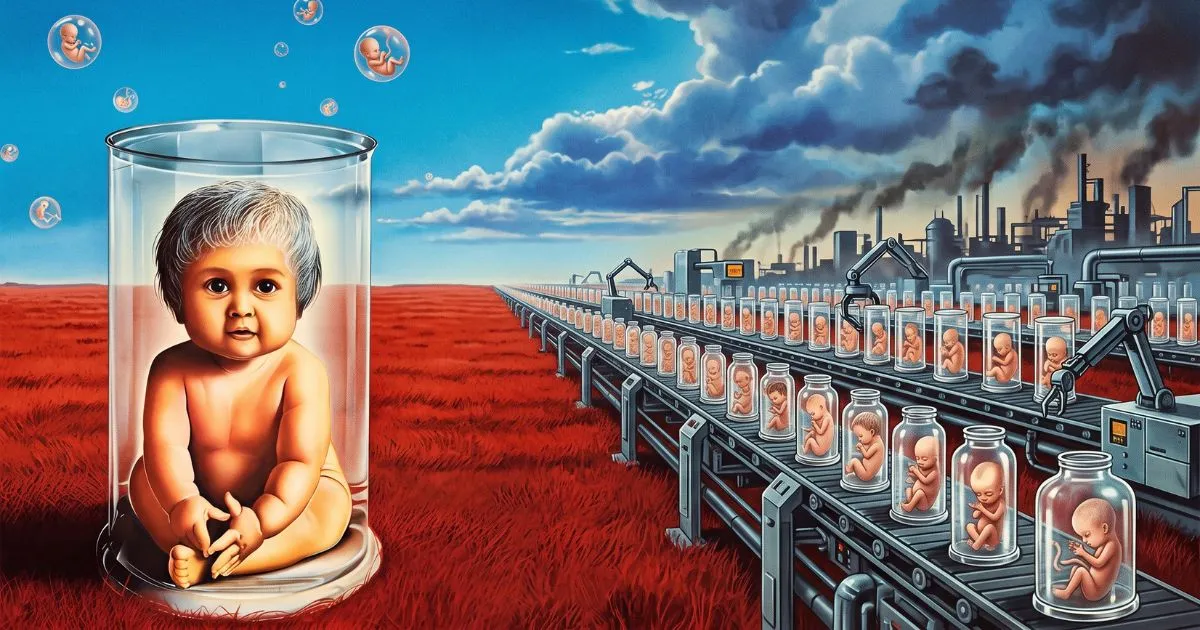
Brave new world: what remains of our humanity?
In Aldous Huxley’s imagined society, no one wants for anything, suffering is swiftly erased, and rebellion is almost unthinkable. Beneath this apparent harmony lies a disturbing question: can we remain fully human without the freedom to think and feel for ourselves?
Ask someone to picture a dictatorship in fiction, and the answer will almost invariably be George Orwell’s 1984. Screens watching you in your own living room, guard towers, police terror, and pain elevated to an instrument of government.
Seventeen years earlier, however, in 1932, another British novelist had imagined a radically different way of subduing the human mind. In Brave New World, Aldous Huxley depicts a society without gulags or torturers. Its rulers control the population not through deprivation, but through abundance; not through fear, but through pleasure. The truncheon has given way to an endless pursuit of gratification.
Nearly a century later, as our days unfold amid relentless notifications, the pursuit of instant rewards, and an increasingly compulsive desire to escape uncomfortable emotions, Huxley’s novel deserves another reading. It offers a compelling thought experiment about the vulnerabilities of the human mind.
Our Ford: the birth of an industrial utopia
To understand the origins of this fascinating and unsettling fable, we must return to the 1920s. The world was emerging from the devastation of the First World War, and one man was attracting considerable attention in London’s intellectual circles: H. G. Wells.
The author of The War of the Worlds and The Time Machine was championing an almost innocent faith in progress. His proposition was simple: place society in the hands of engineers, establish a centralised world government, put your trust in science, and humanity would finally overcome its age old failings.
Huxley listened with a wry smile and restrained irritation. Born into one of Britain’s most distinguished scientific families, with a grandfather who had been a staunch defender of Darwin and a brother who became a leading evolutionary biologist, he knew that living organisms were not so easily moulded to fit utopian blueprints. In his view, science possessed no inherent moral compass. Entrusted to those obsessed with order, it would not liberate humanity. It would merely equip those in power with a far more sophisticated means of control.
🔗 Read also: 1984: How language becomes a tool of power
The decisive revelation came during a visit to the United States in 1926. Encountering the industrial world of Henry Ford, Huxley was struck by something more profound than the sight of metal chassis moving along assembly lines. He saw a relentless mechanical rhythm capable of eroding individuality. Ford had not invented the assembly line, but he had helped perfect a model of mass production that would transform modern capitalism. Huxley recognised its unsettling implications: an industrial economy could depend not only on standardised workers, but also on consumers trained to desire the very products it manufactured.
A provocative literary question began to take shape: what if human biology and the human psyche were treated like the sheet metal of a car?
Huxley takes this logic to its most cynical conclusion. In his imagined future, years are no longer counted from the birth of Christ, but from the advent of the Ford era. Time itself is measured in years After Ford. The Christian cross has been stripped of its upper arm to form a capital T, honouring the famous Ford Model T. Religious altars have given way to conveyor belts, while the search for meaning has been replaced by an overriding imperative: produce, consume, and above all, never stop to think.
Soma: the drug that erases human suffering
Some worlds do not descend into tyranny through bloodshed, but through the immaculate silence of a laboratory. To eliminate the disorder of human passions, Huxley’s World State begins by abolishing one of our earliest sources of attachment: the mother’s womb.
The novel opens in the clinical whiteness of London’s Central London Hatchery and Conditioning Centre, where life no longer begins in the intimacy of human reproduction, but develops within the cold glass of laboratory vessels.
Here, humanity has become an industrial product, sorted from its earliest stages of development into a rigid hierarchy of castes. At the top stand the Alphas and Betas, destined for positions of intellectual and administrative responsibility. Below them are the Gammas, Deltas, and Epsilons, compliant workers manufactured in vast numbers to keep society running.
For the lower castes, destiny is determined inside the bottle. Carefully controlled oxygen deprivation and restrictions on nutrients are used to impair their development, ensuring that their physiological capacities will suit repetitive, undemanding work.
In this society, where biological motherhood has become an almost barbaric absurdity, the words “father” and “mother” no longer evoke tenderness. They sound like indecent relics of a bygone age, provoking embarrassed laughter among visiting students.
And still, within this seemingly flawless clinical order, the machinery begins to falter.
To give this frictionless world a human face, Huxley introduces Bernard Marx. An intelligent but physically undersized Alpha, whose unusual stature is rumoured to result from a laboratory error, Bernard embodies a flaw in the system. He is tormented by feelings of inadequacy and a private longing for solitude.
But in the World State, the desire to be alone, or to form a deep attachment to another person, borders on sacrilege.
Beyond artificial reproduction, the regime exercises strict control over the emotional lives of its citizens through a second uncompromising principle: no affection must be exclusive.
The official maxim, endlessly repeated through the machinery of social conditioning, allows no exceptions: “Everyone belongs to everyone else.”
Exclusive devotion, fidelity, and romantic passion are treated as antisocial tendencies that threaten collective stability. To prevent intense emotional attachments from developing, desires are continually satisfied through light entertainment and casual sexual encounters, normalised from childhood.
Even death, the ultimate rupture of human connection, is stripped of its emotional significance. From an early age, children are taken to hospitals for the dying, where sweets and pleasant distractions accompany encounters with mortality. The intention is to teach them that another person’s death is neither tragic nor particularly disturbing.
And if, despite these elaborate safeguards, an existential unease or sense of emptiness should disturb the mind, as it does Bernard’s, the State has prepared the ultimate antidote: soma.
This universal chemical remedy, readily available whenever discomfort threatens, promises immediate tranquillity without the bitterness of an aftermath. The regime’s slogan captures its entire approach to emotional life: “One cubic centimetre cures ten gloomy sentiments.”
🔗 Explore further: Kafka’s Metamorphosis and the voice of silence
A single dose is enough to silence doubt, soothe anxiety, and return the citizen to a state of blissful indifference.
It is precisely to escape this chemically maintained tranquillity that Bernard ventures beyond the boundaries of the World State and visits a Savage Reservation, a place excluded from its vision of progress.
There he encounters John, known as “the Savage”: a man born to a mother, steeped in the tragedies of Shakespeare, and familiar with a world in which people still grieve.
The encounter between a man who has experienced the full weight of human suffering and the inhabitants of a society sustained by prescribed happiness becomes the novel’s central collision.
It raises a profoundly unsettling question: what remains of a human being when even the right to suffer has been taken away?
Engineering obedience: eugenics, conditioning and the human mind
To appreciate the full significance of this confrontation, we must understand the mechanisms that separate these two versions of humanity.
John is a product of natural reproduction and the unpredictable circumstances of life. The citizens he encounters, by contrast, are the products of an all encompassing programme of human engineering.
Confronted with the Savage’s raw experience of suffering, the World State offers no philosophical counterargument. Instead, it presents bodies and minds shaped to obey from the very beginning of life.
To prevent rebellion before it can even take root, the regime has no need for gulags or a political police force. It has appropriated two influential scientific movements of Huxley’s era: eugenics and behaviourism.
In the 1930s, eugenics occupied a prominent and deeply troubling place in scientific journals and academic debate. Its advocates imagined a humanity freed from supposedly undesirable hereditary traits and directed towards continuous biological improvement.
Huxley turns this utopian ambition on its head with savage irony. What if those in power used biology not to improve humanity, but to deliberately manufacture individuals with diminished intellectual capacities?
That is the purpose of the bottles moving along the production lines of the Hatchery. Equality is not regarded as an ideal, but as a threat to industrial efficiency.
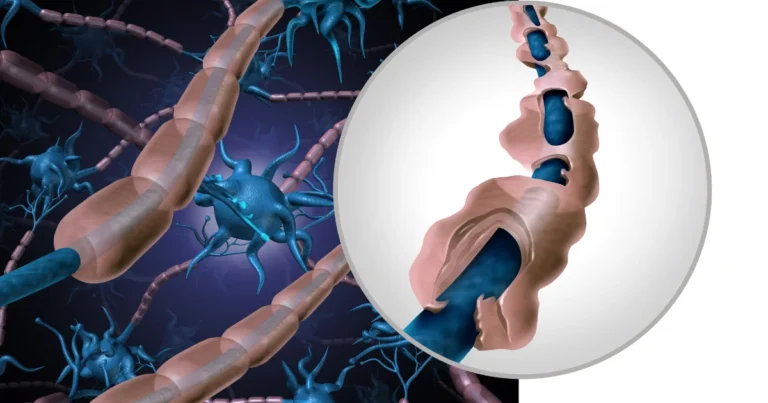
To ensure that the lower castes will continue cleaning sewers or operating machinery without ever considering a strike, technicians expose developing embryos to harmful substances and restrict their oxygen supply. In the fictional logic of the novel, this amounts to deliberately engineered neurodevelopmental damage, carried out under the authority of the State.
By compromising the development of the capacities needed for complex reasoning, the system seeks to prevent these workers from recognising injustice or imagining emancipation.
They have not simply resigned themselves to an inferior social position. Their very biology has been manipulated to make that position seem inevitable.
Once the biological foundations have been established, the next task is to programme behaviour.
Here, Huxley draws on another major scientific influence of his time: the behaviourist tradition associated with John B. Watson and the conditioning experiments of Ivan Pavlov. In its most reductive interpretation, behaviour is understood as something that can be shaped through associations between stimuli and responses, as well as through reinforcement and punishment.
This idea inspires one of the most disturbing scenes in modern dystopian fiction.
In a bright, bare room, nurses place groups of Delta infants on the floor before bouquets of vivid roses and beautifully illustrated books.
The babies coo and stretch out their hands, driven by the spontaneous exploratory curiosity that draws children towards the world around them.
At that precise moment, a piercing alarm sounds, followed by an electric shock. Their tiny bodies recoil, and the room fills with cries.
🔗 Discover more: Crime and punishment: when logic crosses the line
The procedure is repeated with the calculated precision of an industrial experiment.
Eventually, the sight of flowers and books becomes associated with distress. What began as spontaneous curiosity is replaced by an acquired aversion.
The economic reasoning is chilling. A worker who enjoys reading might develop an appetite for solitude rather than consumption, while contemplative walks through the countryside generate no profit for the industrial machine.
For the more intellectually sophisticated Alphas and Betas, the brutality of electric shocks gives way to a subtler form of manipulation: hypnopaedia, or sleep teaching.
Night after night, small speakers placed beneath children’s pillows endlessly repeat slogans celebrating conformity, consumption, and loyalty to the social hierarchy.
Within the fictional world of the novel, these messages are absorbed during sleep and become so deeply embedded in memory that they are eventually mistaken for personal convictions.
As an adult, the citizen takes pride in thinking independently, unaware that many of those apparently original thoughts are merely the slogans the State has repeated throughout childhood.
Critical thinking has not been crushed by censorship. It has been systematically deprived of the conditions in which it might develop.
The price of perfect happiness: freedom, art and the right to suffer
By combining biological manipulation with psychological conditioning, the World State achieves something that conventional tyrannies could scarcely imagine: the near total elimination of psychological conflict.
To question, create, philosophise, or rebel, the human mind needs opportunities for silence, uncertainty, and sometimes an uncomfortable confrontation with reality.
Such moments can create space for metacognition, our capacity to reflect on our own thoughts and mental processes.
By flooding everyday life with an uninterrupted stream of stimulation, from immersive cinemas that reproduce physical sensations to collective entertainment and regular doses of soma, the regime leaves almost no room for introspection.
Solitude becomes a sign of abnormality. Even the faintest trace of melancholy is promptly smothered beneath a new layer of chemically induced pleasure.
The contradictions of this system come into sharp focus when John the Savage is brought from the Reservation into the heart of this gleaming world of glass and steel.
For a man whose understanding of human nature has been shaped by Shakespearean tragedy, where moral character emerges through adversity and inner conflict, a society without tears is no paradise. It is a gilded tomb.
The novel’s intellectual climax unfolds in one of the most memorable confrontations in twentieth century literature: a dialogue between John and Mustapha Mond, one of the ten World Controllers who govern the planet.
Faced with John’s passionate rebellion, Mond responds with neither anger nor threats.
He listens with disarming composure because he understands exactly what his civilisation has sacrificed.
He openly acknowledges that maintaining this perfectly ordered society has required restrictions on scientific inquiry, the suppression of tragic art, and the removal of great literary works from public life.
But he confronts John with an uncompromising argument: great art emerged from anguish, overwhelming passion, and instability, while the World State has made stability its supreme priority.
A civilisation organised around uninterrupted happiness cannot readily accommodate the conditions that gave rise to humanity’s greatest artistic achievements. Society, Mond argues, cannot tolerate emotional upheaval merely to satisfy the aspirations of a few poets.
John refuses this bargain in a declaration that captures the moral heart of the novel. Rejecting soma and the promise of permanent emotional anaesthesia, he makes a defiant demand for freedom, poetry, danger and even suffering. His words culminate in a radical assertion of human autonomy: “I claim the right to be unhappy.”
By demanding the right to sorrow, ageing, illness, and emotional turmoil, John is not glorifying suffering for its own sake.
He is defending a fundamental insight into the human condition, one that the World State has deliberately erased: dignity, beauty, and the depth of human experience cannot be entirely separated from vulnerability.
When absolute comfort becomes a gilded prison, refusing emotional anaesthesia may be the last remaining act of freedom.
John refuses this bargain in a declaration that captures the moral heart of the novel.
References
Huxley, A. (1932). Brave New World. Chatto & Windus.
Huxley, A. (1958). Brave New World Revisited. Harper & Brothers.
Pavlov PI. Conditioned reflexes: An investigation of the physiological activity of the cerebral cortex. Ann Neurosci. 2010 Jul;17(3):136-41. doi: 10.5214/ans.0972-7531.1017309. PMID: 25205891; PMCID: PMC4116985.
Postman, N. (1985). Amusing ourselves to death: Public discourse in the age of show business. Viking Penguin.
Watson, J. B., & Rayner, R. (1920). Conditioned emotional reactions. Journal of Experimental Psychology, 3(1), 1–14.

Amine Lahhab
Television Director
Master’s Degree in Directing, École Supérieure de l’Audiovisuel (ESAV), University of Toulouse
Bachelor’s Degree in History, Hassan II University, Casablanca
DEUG in Philosophy, Hassan II University, Casablanca