Locked-In Syndrome: Inside a mind cut off from the world
Fully conscious, able to think and feel, but almost entirely unable to move or speak. Locked-in syndrome reveals one of the brain’s most striking dissociations. From patient accounts to brain-computer interfaces, neuroscience is exploring new ways to restore communication.
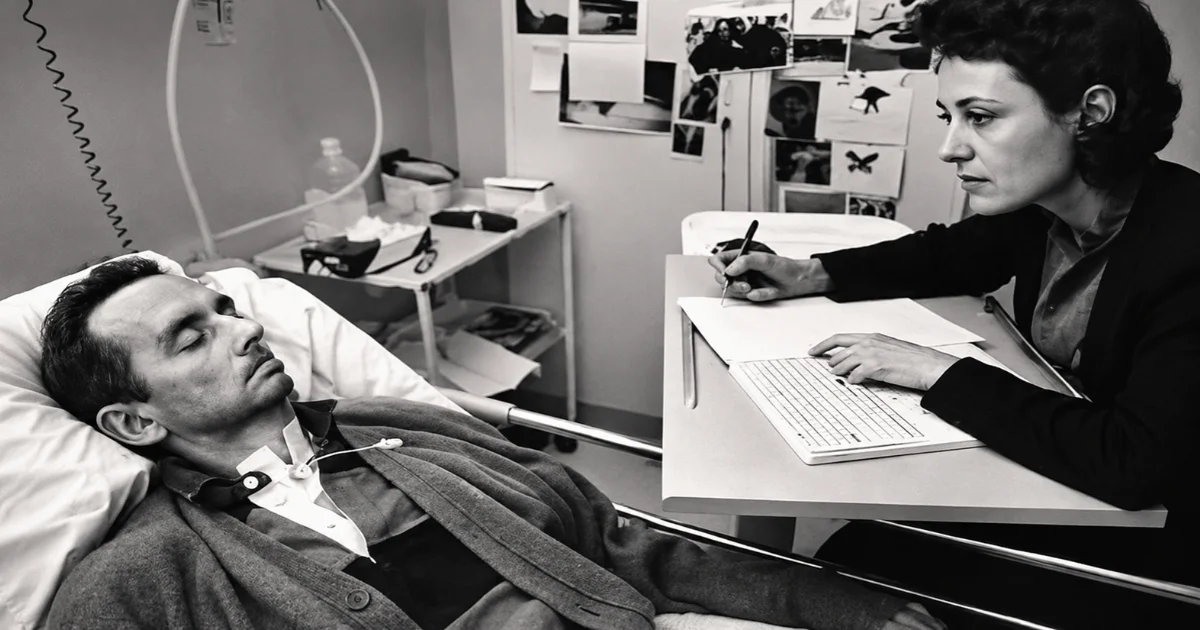
Lying in his hospital bed, Jean-Dominique Bauby could no longer speak or move, and he needed assistance to breathe. The former editor-in-chief of Elle magazine had suffered a devastating brainstem stroke at the age of 43. His body had suddenly become motionless, but his consciousness remained intact. Trapped in a state of near-total paralysis, Bauby had only one means of communication left: blinking his left eye.
Through this tiny movement, he managed to dictate his book, The Diving Bell and the Butterfly, a deeply moving account of a lucid mind trapped inside an unresponsive body. To compose each word, an assistant recited the letters of the alphabet in order of their frequency in French. When she reached the correct letter, Bauby blinked. Letter by letter, word by word, he reconstructed his inner world as she patiently transcribed his sentences, giving expression to thoughts that remained intact despite his body’s silence.
Bauby’s extraordinary story offers one of the most poignant illustrations of locked-in syndrome (LiS), a rare neurological condition that challenges some of our most fundamental assumptions about consciousness and communication. It presents a striking paradox: a person who remains conscious and aware of their surroundings but is almost entirely unable to move or speak.
🔗 Read also: When AI thinks like a brain
The syndrome was formally described by Fred Plum and Jerome Posner in 1966. In its classic form, it results from damage to the ventral pons, a region of the brainstem that carries essential motor pathways connecting the brain to the body. The most common cause is a stroke affecting this region, although traumatic brain injuries, demyelinating diseases such as multiple sclerosis, and certain severe infections can also produce the syndrome.
The underlying lesions disrupt the corticospinal and corticobulbar pathways, which are involved in the voluntary control of movements of the body and face. As a result, patients lose most of their ability to move and speak, even though consciousness is generally preserved. The body no longer responds, but the capacity to think, feel, and remember remains.
This is what makes locked-in syndrome so extraordinary, and why Jean-Dominique Bauby has become one of its best-known witnesses. Behind an almost motionless body, a person may continue to perceive, reflect, and experience emotions without being able to communicate through conventional means. When eye movements are preserved, a single blink can become a vital connection to the outside world.
When the brain can no longer command the body
To understand locked-in syndrome, imagine the brain as a bustling city whose main routes to the outside world have suddenly been cut off. Messages are generated, but they can no longer reach their destinations.
Damage to the ventral pons, a crucial region of the brainstem, effectively interrupts major motor pathways. Commands from the brain can no longer reach the muscles they normally control. Voluntary movement is severely impaired, while the neural systems supporting wakefulness and awareness are generally spared.
The extent of this disruption helps explain the different forms of the syndrome. In classic locked-in syndrome, patients experience quadriplegia and an inability to speak, while vertical eye movements and blinking are typically preserved, providing a limited means of communication. In incomplete locked-in syndrome, some additional voluntary movements remain possible, such as moving a finger or toe.
At the most severe end of the spectrum is total locked-in syndrome, in which no voluntary motor response can be observed, including eye movements. Consciousness may nevertheless remain preserved, making its assessment particularly challenging.
Advances in neuroscience have transformed our understanding of these conditions by providing ways to investigate brain activity when behavioral responses are absent. Functional magnetic resonance imaging (fMRI) and electroencephalography (EEG) can sometimes reveal patterns of brain activity associated with intentional mental tasks. For example, when a patient is instructed to imagine performing a movement, specific brain networks may show reproducible changes in activity, even when no movement can be observed. Such findings can provide evidence of preserved cognitive processing and, in certain circumstances, command following without an observable motor response.
These approaches have become particularly important in the assessment of patients with severe disorders of consciousness, helping clinicians distinguish between different neurological states. However, a negative result does not establish that consciousness is absent, and these techniques do not reliably identify awareness in every patient. Recognizing preserved consciousness is only part of the challenge. The next step is to give patients a way to express themselves. When the body can no longer respond, the eyes may become the last available means of communication. A blink, an upward glance, or a sustained fixation can carry meaning that would otherwise remain inaccessible.
Early communication methods relied on alphabet boards. A caregiver would indicate individual letters, and the patient would select the intended one with a blink or another preserved movement. Although slow and demanding, these systems made something invaluable possible: a return to dialogue.
Today, technology offers far more sophisticated alternatives. Eye-tracking systems use infrared cameras to monitor eye movements and translate them into written text, synthesized speech, or digital commands. Depending on their remaining motor abilities and the technology available, patients may be able to write messages, read, browse the internet, and participate in conversations.
🔗 Explore further: Cotard Syndrome: when patients deny their own existence
Predictive text software can further reduce the effort required, making communication faster and less exhausting. For many people living with locked-in syndrome, these technologies can make an enormous difference to their independence and quality of life. They offer a means of maintaining relationships, expressing preferences, and participating in decisions about their own care.
However, even the most advanced eye-tracking systems depend on preserved eye movements. They are therefore unsuitable for patients with total locked-in syndrome who have lost all voluntary motor control. This is where brain-computer interfaces (BCIs) offer a different possibility.
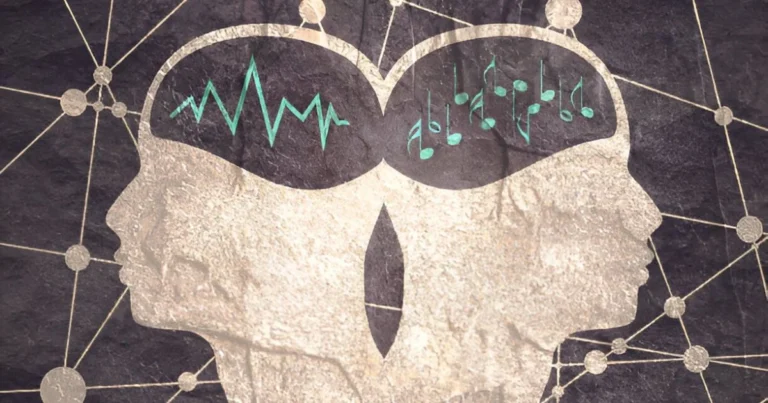
At the intersection of neuroscience, engineering, and computer science, these systems record and analyze brain signals and translate selected patterns of activity into commands for external devices. Some BCIs use electrodes placed on the scalp to record EEG signals, while others rely on surgically implanted electrodes. Depending on the system, users may learn to control a cursor, select letters, or operate assistive technology by performing specific mental tasks.
Rather than restoring movement itself, these interfaces aim to create an alternative communication pathway that does not depend on conventional muscular responses. Research into BCIs has demonstrated that some patients with severe paralysis can communicate by intentionally modulating their brain activity. In certain experimental systems, distinct mental tasks can be used to select responses corresponding to “yes” or “no.”
These findings represent an important step toward restoring communication in people who cannot rely on speech, hand movements, or eye movements. Researchers are also investigating combinations of EEG, machine learning, and virtual environments to expand the possibilities for interaction. However, many of these approaches remain experimental, and reliable communication is not yet achievable for every patient, particularly in cases of complete paralysis.
The significance of these technologies extends far beyond their technical sophistication. They can change the relationship between patients, caregivers, and clinicians by making it possible to recognize and respond to a person’s intentions when conventional communication has become impossible. A patient who appears entirely unresponsive may still have thoughts, preferences, memories, and emotions that deserve to be acknowledged.
Locked-in Syndrome challenges our understanding of conscious life. It reveals that thought can persist despite paralysis, and that communication can sometimes emerge from silence. Behind an almost entirely motionless body, an inner world remains, filled with perceptions, emotions, and memories.
Yet the challenge of a mind trapped within an unresponsive body extends far beyond medicine. It raises profound ethical, philosophical, and human questions: How can we recognize and preserve the dignity of someone deprived of their usual means of expression? How can we ensure they remain part of the conversations and relationships that give life meaning?
In the silence of the body, the brain continues to speak, provided that society, medicine, and science learn to listen.
References
Cabrera, A., Pupo, H., Oduntan, K., Paulino, R., Martinez, M., Shallop, J., & Onyema, O. (2024). Locked In Syndrome: Looking Inside It, A Case Report. Medicine and Clinical Science. https://doi.org/10.33425/2690-5191.1114.
Nieto‐Salazar, M. (2023). Unlocking the Clinical Manifestations and Classifications of Locked-In Syndrome: A Comprehensive Review. Open Access Journal of Neurology & Neurosurgery. https://doi.org/10.19080/oajnn.2023.18.555987.
Schnetzer, L., McCoy, M., Bergmann, J., Kunz, A., Leis, S., & Trinka, E. (2023). Locked-in syndrome revisited. Therapeutic Advances in Neurological Disorders, 16. https://doi.org/10.1177/17562864231160873.
Zelik, U., Florczak, W., Śnieżna, J., Dziewic, J., Dzwonnik, K., Domino, W., Trestka, G., Przygoda, M., Włodyka, J., Stępień, K., & Adamczyk, S. (2025). Locked-in Syndrome: Insights into Etiology, Diagnosis, Management, and Quality of Life. Quality in Sport.

Sara Lakehayli
PhD, Clinical Neuroscience & Mental Health
Associate member of the Laboratory for Nervous System Diseases, Neurosensory Disorders, and Disability, Faculty of Medicine and Pharmacy of Casablanca
Professor, Higher School of Psychology