Can AI be conscious? What machines reveal about the human mind
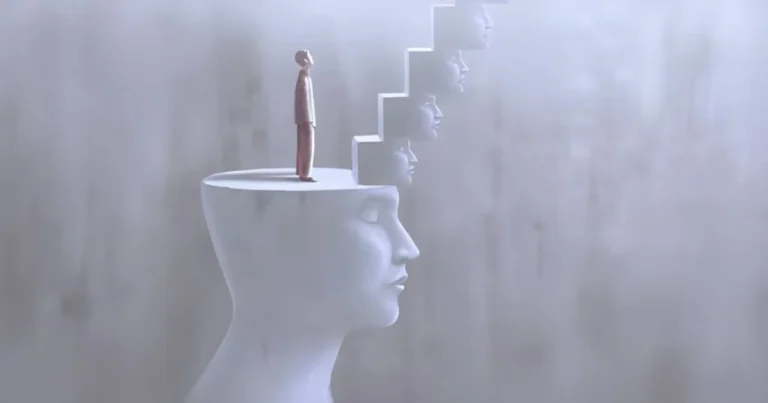
When AI tells me “I feel” or “I have a hunch that…”, what is really happening? Is it experiencing something, or simply borrowing our words? The question is more difficult than it might seem. We have never had any evidence of another person’s consciousness beyond what they say and do.
In 1950, Alan Turing sidestepped the question “Can machines think?” and replaced it with a test. If, through written conversation, you can no longer distinguish a machine from a human, the machine has passed. Today’s AI systems are getting closer to that point, and sometimes even reach it.
This is where the unease begins. We have always judged other people’s consciousness through their words and actions. No one has ever seen another person’s consciousness. For the first time, something speaks like us without, in my view, being conscious. To understand why, we first need to agree on what we mean by consciousness.
What do we mean by consciousness?
It all depends on where we start. From an idealist perspective, the question is settled from the outset: consciousness is understood in terms of mind, soul, or some fundamental principle underlying everything. The scientific paradigm, however, is materialist, and this brings us face to face with the question in all its difficulty: how can consciousness emerge from matter?
Philosopher Ned Block distinguishes between two forms of consciousness. Access consciousness refers to having information available and being able to use it to reason, speak, and act. Phenomenal consciousness, by contrast, is what it feels like to experience something, the subjective experience itself. Thomas Nagel captured this in a famous question: What is it like to be a bat? We may know everything about its brain and echolocation system. We will never know what it is like to experience the world as a bat.
🔗 Read also: The limits of science and the depths of the human psyche
David Chalmers calls this the “hard problem” of consciousness. Explaining the brain’s functions is one thing. Explaining why those functions are accompanied by subjective experience is another. He illustrates this with the philosophical zombie. Imagine a being identical to you in every way, speaking and behaving just like you, but with no conscious experience whatsoever. If you ask whether it is conscious, it will say yes.
The important point is this: by definition, this zombie behaves exactly as we do. No observation of its behavior could therefore establish whether it is conscious. If AI were a zombie, its responses would never tell us. For Chalmers, this is a thought experiment designed to challenge materialism, not a test for machines. I borrow it here as an illustration because it captures the question so well: AI speaks in our words. It says “I feel”, “my instincts tell me”. But does it actually experience any of this?
The limits of artificial intelligence’s human-like responses
The Turing test examines only what a machine says, never what it experiences. Passing the test proves that a machine can speak like a conscious being, not that it is conscious. John Searle demonstrated this through his Chinese Room argument. A man locked in a room follows a manual to respond to messages written in Chinese. His answers are flawless, but he does not understand a single word of Chinese. Manipulating symbols is not the same as understanding them.
Not everyone agrees. Functionalists argue that what matters is how a system is organized, not what it is made of. Neurons or silicon, the material makes no difference. Stanislas Dehaene is a prominent advocate of this view. According to him, consciousness rests on two conditions: C1, information is broadcast throughout the brain and made available to all its systems; C2, the brain monitors its own activity, a process known as metacognition. In a 2017 paper published in Science, Dehaene and his colleagues argue that a machine could, in principle, meet both conditions.
This distinction is not merely an intellectual exercise. Patients with damage to the visual cortex may report that they cannot see. However, when asked to guess, they can correctly identify the location or shape of objects. This is known as blindsight: visual information is processed and used, yet it is not consciously experienced. Access without subjective experience is therefore already possible in humans.
🔗 Explore further: The unseen truth: Exploring the neurological roots of Anton syndrome
It all comes down to one question: can phenomenal consciousness be reduced to access consciousness? If so, Dehaene is right, and there is nothing inherently preventing AI from becoming conscious. If not, a machine could reproduce every aspect of cognitive functioning while lacking what matters most. C1 and C2 describe very well how information is processed and used. They do not explain why anyone experiences it. My view is that the answer lies elsewhere: in the body.
The body: the missing piece
Antonio Damasio starts with a simple biological phenomenon: homeostasis. An organism must maintain its temperature, oxygen levels, and glucose within narrow limits, or it risks dying. This vulnerability gives everything that happens within it a stake. From this foundation emerge proto-consciousness, core consciousness, and eventually extended consciousness. All remain fundamentally embodied.
The brain is part of the body. Through somatic markers, it registers bodily signals, and this is how we feel. Emotions involve changes in the body. Feelings are the brain’s interpretation of those changes. In other words, the body tells the brain whether things are going well or badly. AI has nothing comparable. It can be switched off, copied, restarted. Nothing is ever at stake for it.
Damasio found a striking illustration of this in a patient known as Elliott. Following surgery to remove a frontal lobe tumor, Elliott retained his intelligence, memory, and reasoning abilities. However, he had lost much of his emotional capacity and could no longer make decisions. He could spend hours deliberating over something as simple as choosing a date for an appointment. His thinking remained intact, but without emotions to guide his choices, it went nowhere.
Analytical psychology points in the same direction. Jung described four psychological functions: thinking, feeling, sensation, and intuition. AI genuinely possesses only thinking. The other three, it merely simulates.
Empathy is the clearest example. There is cognitive empathy, understanding what another person feels, and affective empathy, actually sharing or feeling something in response to their emotional state. AI can simulate the first remarkably well. It detects distress, rephrases what someone says, and adjusts its tone. The second, however, remains beyond its reach. How can it mirror an emotion it has never experienced? Its empathy is performed, not felt.
🔗 Discover more: Why artificial intelligence cannot decode human suffering
A mirror, not a mind
AI is the only technology inspired by the workings of the human brain, with its artificial neural networks. In the past, the relationship was reversed: we used the machines of each era to explain the brain. Galen’s fluids and theory of humors, Descartes’ mechanics, then the clock, the telegraph, and the computer. This time, we built the machine by drawing inspiration from the brain.
It therefore resembles us, including in our cognitive biases, because it has learned from our texts. This is also where its errors come from, errors it warns us about in advance. When it says “I feel”, it is repeating a phrase written by millions of people who, unlike AI, were genuinely experiencing something. It is echoing experiences that are not its own.
And we are quick to believe it. In 1966, computer scientist Joseph Weizenbaum created ELIZA, a rudimentary program that did little more than rephrase the user’s statements as questions. It understood nothing. Nevertheless, many people confided in it as though it were a therapist, to the point that Weizenbaum’s own secretary asked him to leave her alone with the machine. Weizenbaum was deeply unsettled by this. What the program revealed was not itself, but us.
What do we do when we stand before a mirror? We project. We attribute an inner life to AI because it speaks our language, and because we are wired to recognize faces and minds everywhere. This says something about our loneliness and our need to be understood. Jung might also have spoken of the shadow: what we refuse to acknowledge within ourselves comes back to us from the outside. AI has learned from everything we have written, from our prejudices to our finest ideas, and reflects it all back to us with remarkable confidence.
To conclude, and quite deliberately, I would argue that AI will never be conscious. It may pass the Turing test, simulate empathy, and reason about feelings, intuition, and sensation. But thinking is not living. Without a body, without vulnerability, without homeostasis, there can be no experience.
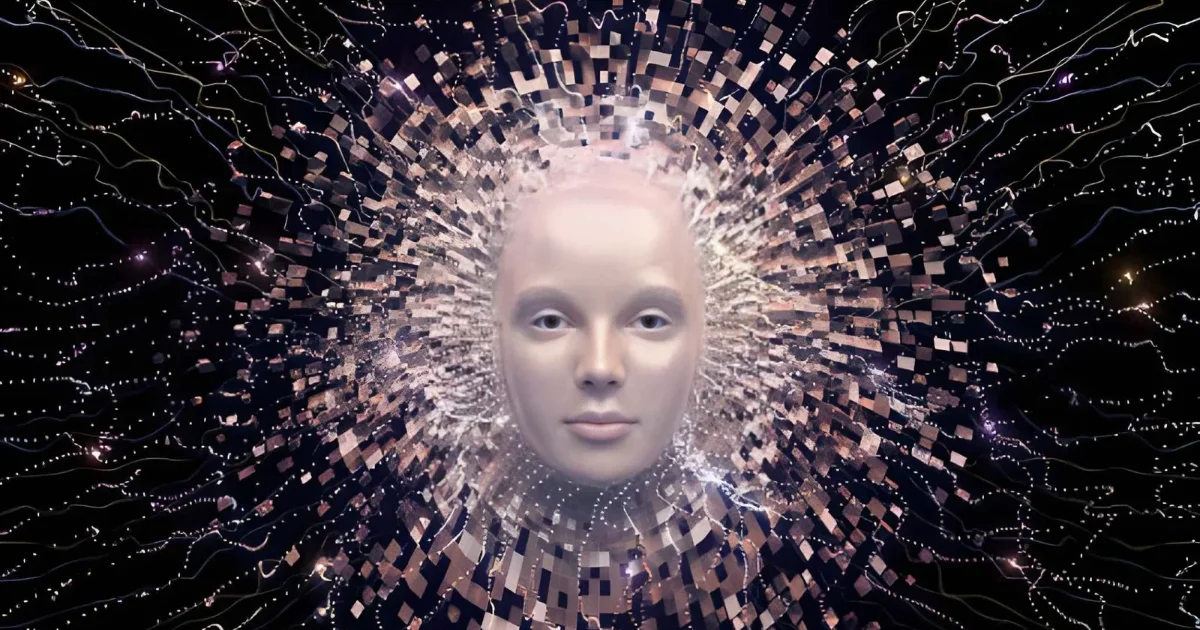
The real question lies elsewhere: what kind of human consciousness programmed AI? AI is less an artificial consciousness than an opportunity to become more conscious of our own values, blind spots, and projections, reflected back at us as if in a mirror.
References
Block, N. (1995). On a confusion about a function of consciousness. Behavioral and Brain Sciences.
Chalmers, D. (1995). Facing up to the problem of consciousness. Journal of Consciousness Studies.
Damasio, A. (1999). Le sentiment même de soi. Odile Jacob.
Dehaene S, Lau H, Kouider S. What is consciousness, and could machines have it? Science. 2017 Oct 27;358(6362):486-492. doi: 10.1126/science.aan8871. PMID: 29074769.
Jung, C. G. (1921). Types psychologiques.
Nagel, T. (1974). What is it like to be a bat? The Philosophical Review.
Searle, J. (1980). Minds, brains, and programs. Behavioral and Brain Sciences.
Turing, A. (1950). Computing machinery and intelligence. Mind.

Eliesse Drissi
Clinical Psychologist
PhD in Cognitive Neuroscience