Why our social brain withers in hyperconnectivity
While our digital tools multiply our interactions, these fragile links fail to sustain a true sense of presence. This article explores the hidden mechanism through which constant hyperconnectivity hinders the attachments necessary for the psychic survival and resilience of our social brain.
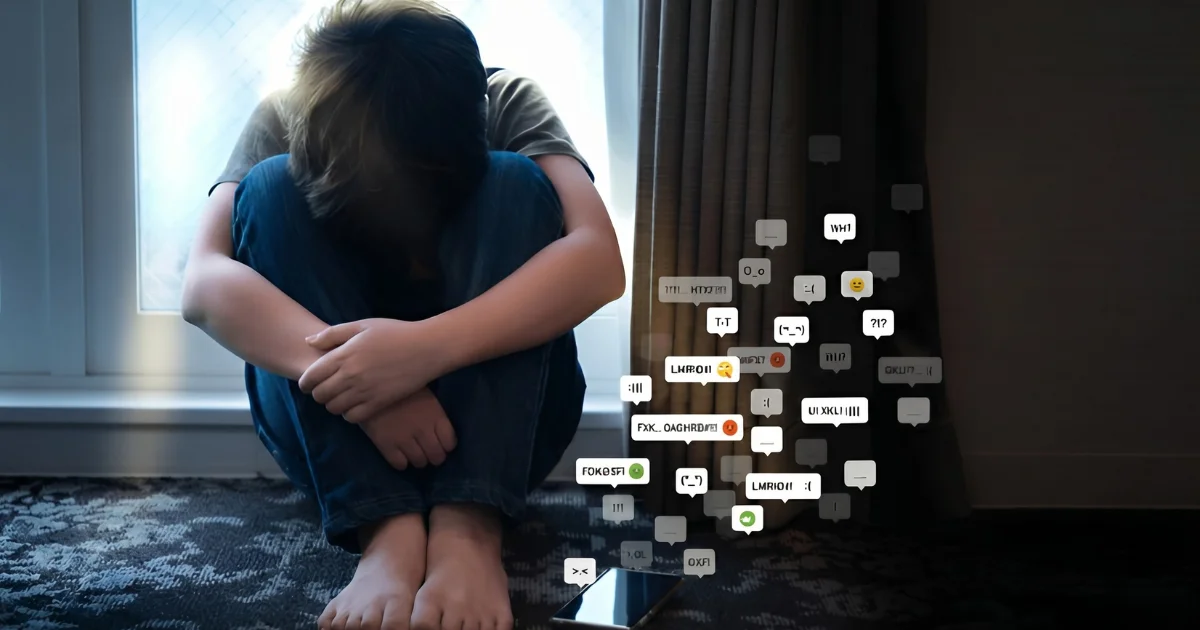
One of the most striking contradictions of our time can be summarized in a few words: never has humanity communicated so much, yet never has it complained so much of loneliness. This observation now transcends continents, generations, and social strata. It is a recurring theme in medical offices, neuroscience research, public health surveys, and even political discourse. Everywhere, the same question arises: how can individuals who are permanently connected to hundreds, sometimes thousands, of others experience such a profound sense of disconnection?
For a long time, loneliness was understood as a consequence of isolation. To be alone meant to be separated from the group, deprived of contact, and physically distanced from others. This definition no longer captures our contemporary reality. Today, loneliness does not necessarily manifest in an absence of relationships; it arises paradoxically at the very heart of their multiplication. Individuals exchange hundreds of messages daily, consult dozens of profiles, and participate in numerous conversations, all while describing the persistent impression that no one truly encounters them.
This phenomenon is not a mere sociological curiosity. It reveals a profound transformation of the human experience. We are perhaps witnessing the emergence of a new form of solitude: relational loneliness within the very core of hyperconnectivity.
The human brain: wired for attachment, not just connection
A common misconception is that the human brain is essentially an information-processing organ. Contemporary neuroscience tells a very different story. From birth, the brain develops through interaction with others. An infant does not yet possess the ability to regulate its emotions alone; its nervous system literally depends on the presence of another human being to organize itself.
This biological reality is fundamental. Humans are likely the species with the longest period of relational dependency. We do not survive solely thanks to food or physical protection; we also survive thanks to the quality of our bonds.
Research on attachment has shown that psychological security is built through the repetition of relational experiences where a stable presence responds to emotional needs. This security then becomes the invisible foundation from which the individual explores the world, constructs their thoughts, and develops their identity.
In other words, the human brain does not just seek contact; it seeks attachment. However, this is precisely where the contemporary misunderstanding lies. Digital technologies excel at producing contact, but they do not guarantee the creation of attachments.
A notification is not a gaze. A message is not a presence. A digital reaction is not an encounter.
The human social brain continues to require signals that screens transmit imperfectly: the synchronization of gestures, variations in vocal tone, silences, fleeting facial expressions, bodily proximity, and the warmth of physical presence. These apparently minor elements are, in reality, the raw materials of trust.
🔗 Read also: Scrolling and the brain: why the swipe never feels like rest
When being seen replaces being known
Another major mutation characterizes our era: unprecedented access to visibility. For most of human history, recognition essentially came from one’s immediate circle. Today, everyone potentially possesses a permanent stage. Social media has democratized self-exposure, and this phenomenon has profoundly altered the psychic economy of bonding.
In traditional societies, the fundamental question was often: “To which group do I belong?” In digital societies, the question has become: “Who is watching me?”
The difference seems subtle, but it is immense. Belonging produces security. Visibility produces evaluation. The former nurtures the feeling of existing; the latter nurtures the need to be validated.
Digital systems have gradually transformed recognition into a metric. Signs of social value become quantifiable: number of followers, views, reactions, and comments. The gaze of the other is converted into data. This logic powerfully activates the brain’s reward circuits. Every notification becomes a micro-promise of recognition, and every interaction produces an anticipation that mobilizes the dopaminergic systems involved in motivation.
However, a difficulty quickly arises. The need to be validated is potentially infinite. The more it is fed, the more it tends to demand new confirmations. Thus, a form of paradoxical relational hunger develops: the individual is constantly exposed to the gaze of others without ever experiencing the emotional security provided by an authentic relationship.
The silent disappearance of spaces for depth
One of the great losses of our era is perhaps less visible than the technological transformations themselves. It concerns the gradual disappearance of spaces for psychic depth. Human encounters require time. They also require uncertainty; they sometimes presuppose boredom, waiting, silence, and even frustration. Yet, the digital environment is built to reduce these experiences. Today, we can avoid emptiness, solitude, waiting, or absence almost instantly. At the slightest sensation of lack, we simply reach for a phone. This possibility seems innocuous, but it profoundly modifies psychic functioning.
Psychoanalysis has always placed particular importance on absence, not because it is pleasant, but because it participates in the construction of desire. Desire is born in the space that separates the subject from the desired object. It presupposes a gap, a distance, and a lack. A society that seeks to suppress all forms of lack risks, paradoxically, impoverishing inner life. Thus, constant hyperconnectivity does not merely produce a saturation of information; it sometimes produces a saturation of artificial presence that makes the experience of a true encounter more difficult.
🔗 Explore further: Repressed and reloaded: Psychoanalysis in the age of social media
Permanently connected, regulated by no one
Contemporary loneliness also possesses a neurobiological dimension that is often overlooked. For millions of years, the human brain evolved in relatively small groups. The presence of others represented an essential resource for security; conversely, isolation could constitute a threat. The work of John Cacioppo has shown that loneliness activates biological mechanisms comparable to those observed during other forms of stress. The brain interprets social disconnection as a warning signal.
When this situation becomes chronic, the organism enters a state of heightened vigilance. The individual becomes more sensitive to signs of rejection, more distrustful, and more attentive to cues of relational threat. A vicious cycle can then set in: The more a person feels alone, the more they anticipate the possibility of being rejected. The more they anticipate rejection, the more they protect themselves. The more they protect themselves, the less they engage in deep bonds. And the more their loneliness intensifies.
Digital hyperconnectivity does not necessarily break this cycle. In some cases, it masks it temporarily without resolving it.
The tyranny of permanent comparison
Humans have always compared themselves to their peers. However, never before have we had access to a global showcase continuously presenting the achievements, beauty, travels, loves, and successes of others. The human brain was not designed to process such a quantity of social information. For thousands of years, we compared ourselves primarily to the members of our immediate group. Today, we compare ourselves to millions of people carefully selected by algorithms. This constant exposure produces considerable psychological effects. The paradox is cruel: the more we observe others, the less connected we sometimes feel to them.
Platforms promise inclusion, but they can sometimes reinforce the feeling of exclusion, because the images that circulate generally do not show the complexity of human existence. They show its peaks, rarely its valleys. By constantly contemplating the exceptional moments of others, some end up considering their own ordinary life as insufficient. Comparison then becomes a machine for producing lack.
🔗 Discover more: Who am i online? Rethinking identity in the social media era
Why are the young on the front lines?
Young generations are often presented as being perfectly adapted to the digital universe. This assertion deserves nuance. Mastering a tool does not mean being protected from its effects. Adolescence is a period of particular vulnerability. The brain is still developing, and the systems involved in the search for reward and social recognition are particularly active.
In this context, digital platforms can become powerful emotional amplifiers. Many adolescents today report an increasing difficulty in sustaining long face-to-face interactions. They sometimes possess remarkable ease in written communication while feeling significant anxiety during real encounters. The question is not to condemn a generation, but to recognize that relational skills, like all human skills, require practice. A brain that spends more time in mediated interaction risks developing certain fundamental social abilities differently.
When communication replaces communion
The philosopher Martin Buber already distinguished between two ways of entering into a relationship: one where the other becomes an object of knowledge or use, and another where they are encountered as a singular presence. This distinction appears remarkably relevant today.
We communicate more than ever. But do we really communicate to meet? Or do we sometimes communicate to occupy the silence, maintain a symbolic presence, or avoid confronting our own solitude?
The multiplication of exchanges does not guarantee their depth. An authentic relationship implies a form of mutual vulnerability. It assumes the possibility of being transformed by the encounter. However, digital environments often favor the control of self-image. We can select our words, filter our photographs, edit our responses, and construct an optimized version of our identity.
This mastery is reassuring, but it can also distance us from what grounds a true encounter: human unpredictability.
The real question is probably not technological; it is anthropological. What type of human being do we wish to become?
The challenge is not to renounce digital tools, but to rediscover a hierarchy of relational needs. We need connection, but we need attachment even more. We need information, but we need meaning even more. We need visibility, but we need recognition even more.
The quality of an existence is not measured by the number of people capable of reaching us. It is measured by the number of people with whom we can share our vulnerabilities without fear of being judged.
🔗 Read also: The stolen identity
Human encounter remains an irreplaceable experience. No algorithm reproduces the density of an attentive gaze. No screen replaces the regulatory power of a benevolent presence. No communication system replaces the intimate experience of feeling understood.
Perhaps we are faced with one of the greatest confusions of modern history. We have confused the circulation of information with the creation of bonds. We have confused visibility with recognition. We have confused interaction with attachment. We have confused connection with the encounter.
However, the human brain continues to function according to laws far older than our technologies. It remains a relational brain, shaped by millions of years of evolution where the quality of the bond conditioned survival itself.
The true question of the 21st century is therefore not how far technology will go. It is whether human beings will be able to preserve the psychic, biological, and symbolic conditions that make the encounter possible. Because at the end of all technical advances, all networks, and all imaginable connections, one truth remains unchanged: it is not the presence of others that protects us from loneliness. It is the quality of the bond that unites us to them.
References
Baumeister, R. F., & Leary, M. R. (1995). The Need to Belong: Desire for Interpersonal Attachments as a Fundamental Human Motivation. Psychological Bulletin, 117(3), 497–529.
Bowlby, J. (1969). Attachment and Loss. Basic Books.
Buber, M. (1923). Je et Tu. Aubier.
Cacioppo, J. T., & Patrick, W. (2008). Loneliness: Human Nature and the Need for Social Connection. W. W. Norton.
Cacioppo, J. T., Hawkley, L. C. (2009). Perceived Social Isolation and Cognition. Trends in Cognitive Sciences, 13(10), 447–454.
Dunbar, R. I. M. (2010). How Many Friends Does One Person Need?. Harvard University Press.
Eisenberger, N. I., Lieberman, M. D. (2004). Why Rejection Hurts: A Common Neural Alarm System for Physical and Social Pain. Trends in Cognitive Sciences, 8(7), 294–300.
Freud, S. (1921). Psychologie des foules et analyse du moi. Payot.
Holt-Lunstad, J., Smith, T. B., Layton, J. B. (2010). Social Relationships and Mortality Risk: A Meta-analytic Review. PLoS Medicine, 7(7), e1000316.
Lieberman, M. D. (2013). Social: Why Our Brains Are Wired to Connect. Crown Publishers.
Porges, S. W. (2011). The Polyvagal Theory. W. W. Norton & Company.
Turkle, S. (2011). Alone Together: Why We Expect More from Technology and Less from Each Other. Basic Books.
Twenge, J. M. (2017). iGen. Atria Books.
Winnicott, D. W. (1958). La capacité d’être seul. Payot.

Flora Toumi
Psychoanalyst, Researcher at the Paris Brain Institute, and Doctor of Philosophy
Flora Toumi holds a PhD in Philosophy and is a neuropsychoanalyst and clinical sexologist specializing in resilience and post-traumatic stress disorder (PTSD). She works with both civilians and members of the French Special Forces and the Foreign Legion, using an integrative approach that combines Ericksonian hypnosis, EMDR, and psychoanalysis.
As a researcher at the Paris Brain Institute, she regularly collaborates with neuropsychiatrist Boris Cyrulnik on the processes of psychological reconstruction.
Flora Toumi has also developed an innovative method for PTSD prevention and founded the first national directory of psychoanalysts in France. Her work bridges science, humanity, and philosophy in a quest to unite body, soul, and mind.