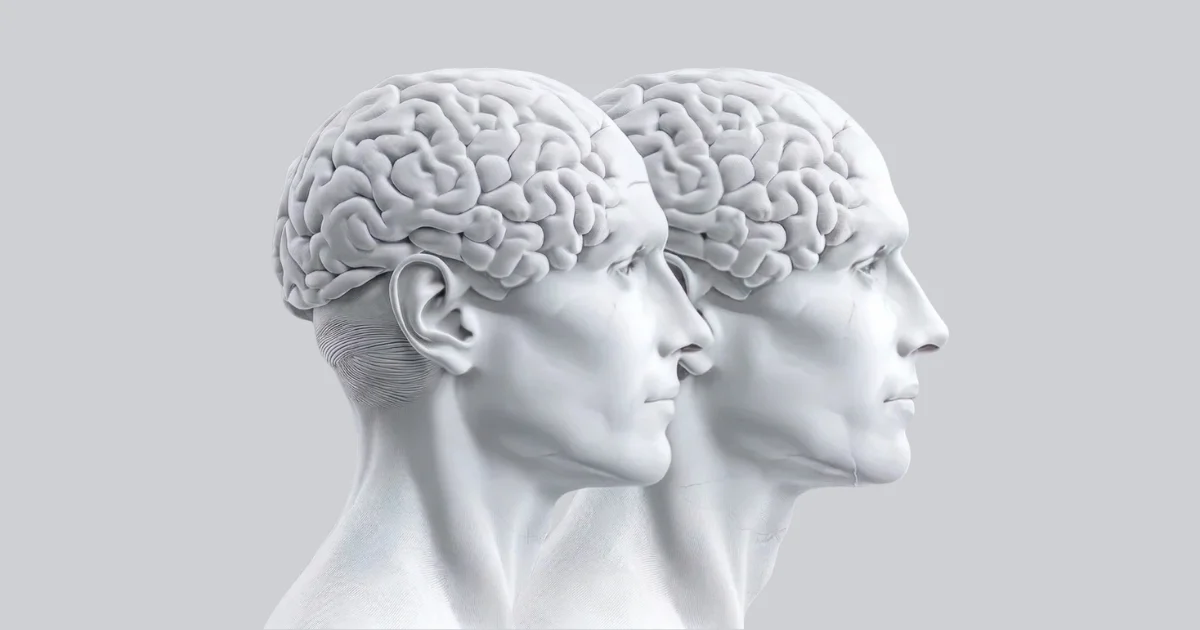
How the presence of others rewires neural architecture
For over a century, experimental psychology has demonstrated that the presence of others alters our performance and behavior. Contemporary neuroscience now confirms that this influence extends far beyond mere motivation or stress. The simple presence of another individual reconfigures the functional organization of the brain.
This observation raises a more profound question: what if the presence of others does not simply change what we do, but redefines how we must conceptualize the human brain itself?
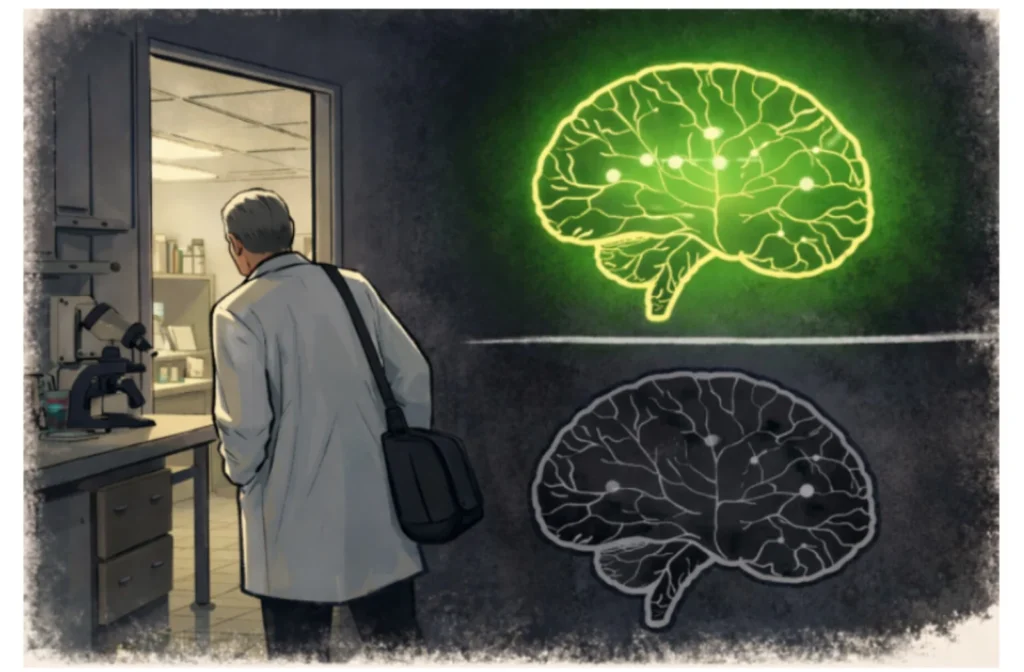
Is anyone there?
You step into an apparently empty room. Before you act, before you consciously think about anything, a fundamental question is already guiding your brain’s processing: are you truly alone, or is someone else there?
The scenario seems mundane, but it is not.
The brain does not merely process the physical space surrounding it. It instinctively evaluates the presence or absence of others from the outset. Furthermore, absence itself is not a neutral state; it represents distinct information that the brain must actively establish.
Naturally, not all forms of presence carry the same weight. A familiar, indifferent, helpful, intrusive, or threatening presence will modulate the brain in distinct ways. However, this is precisely the core issue. Before even distinguishing the quality of that presence, the brain is already organized by a more fundamental set of variables: presence, absence, and the specific nature of that presence.
This concept may seem straightforward, however, it remains largely overlooked in standard models of brain function.
From contextual variable to neurobiological reality
For a long time, the effects of presence were interpreted as secondary byproducts, such as increased arousal, elevated stress, or heightened vigilance. In other words, presence was conceived as a mere contextual variable modulating a fundamentally individual brain.
Concurrently, neuroscience sought to isolate a “social brain,” meaning a specific set of regions specialized in managing interpersonal relationships. This approach yielded major breakthroughs, uncovering neural networks involved in social perception, empathy, and mentalization.
However, it relies on an implicit assumption: that social processing is a distinct, localized function of the brain confined to specific structures.
Nevertheless, a growing body of research is now shifting this perspective entirely.
Simple presence: A century of research
For more than a hundred years, psychologists have studied a disarmingly simple phenomenon: we do not think or behave the same way when we are alone as we do when others are present. In 1898, Norman Triplett observed that cyclists rode faster when racing against others than when riding alone. A few decades later, Floyd Allport termed this phenomenon “social facilitation.”
Early experiments showed that simple or well-learned tasks are often enhanced by the presence of others, whereas more complex tasks can be disrupted. For a long time, these effects were interpreted as a basic increase in arousal. Subsequent research refined this view, showing that presence alters attentional allocation itself. It reinforces dominant responses, concentrates resources on automated processes, or diverts cognitive capacity toward social monitoring when the other person is perceived as an evaluator.
In other words, presence operates at the very core of cognitive mechanisms. Moreover, it takes effect prior to any explicit interaction. Sociality does not begin only when we communicate, cooperate, or attempt to decode another person’s intentions; it begins the moment someone else is there.
Even more striking is that these effects are not unique to humans. Studies across numerous species, from insects to primates, demonstrate that simple co-presence modifies foraging behavior, nest building, vigilance, and problem solving. Presence is not merely a background setting; it is a fundamental biological variable.
A primitive form of this phenomenon can even be found in bacteria. Through quorum sensing, these microorganisms detect the density of their peers and adjust their collective behavior accordingly. Long before the evolution of the brain, life was already sensitive to presence.
This rich tradition of research in social psychology has remained largely absent from classic conceptions of the “social brain,” which focus primarily on structures involved in interaction, mentalization, or empathy. Yet, this body of work demonstrates that an entire facet of sociality unfolds upstream of these processes, deeply rooted in how the presence of others immediately reconfigures brain function and behavior.
🔗 Read also: Why our social brain withers in hyperconnectivity
Deconstructing the social brain
The objective is not to deny the existence of specialized social systems. Rather, it is to recognize that they rely on a more global condition: a brain fundamentally calibrated by the presence of others.
Recent research in systems neuroscience demonstrates that the presence of another individual does not merely activate specific regions. It modifies the global organization of the brain. When we are near another person, even without explicit interaction, the underlying dynamics of neural networks change. This includes the balance between integration and segregation, the allocation of attentional resources, the prioritization of relevant information, and the stability of brain states.
This distinction is decisive. The classic framework of the “social brain” has been extraordinarily productive in identifying regions or networks involved in face recognition, theory of mind, empathy, or mentalization. However, it primarily describes social processes that are already fully formed, such as perceiving, understanding, or interacting with others. It offers far fewer insights into the more elementary condition that makes these processes possible in the first place: the fact that a human brain operates from the start within a world populated by other brains.
To put it another way, the presence of others is not simply one social stimulus among many. It acts as a baseline condition, an organizational parameter that modifies how the brain distributes its resources, stabilizes its states, and prioritizes environmental cues. Therefore, this represents a transformation of the brain’s global operating regime rather than isolated local activation.
At this level, the theoretical paradigm shift is profound. The brain does not become social only when it interacts. It is already configured, continuously, by the presence of others.
Sociality as a global brain state
This paradigm shift forces us to rethink the very definition of sociality.
Sociality, our fundamental orientation toward others, can no longer be understood solely as the product of specialized neural structures. It emerges as a property of global brain function. It is not an add-on feature appended to a primary individual brain, but a property that arises from a brain developed, calibrated, and continuously adjusted within a social environment.
From metabolic regulation to attention, and from synaptic plasticity to network dynamics, the human brain functions within an implicitly social environment. In primates, specific neuronal populations alter their firing rates depending on whether the individual is alone or in the presence of a conspecific. In humans, recent studies show that the presence of another person influences the efficiency of coupling between brain regions and reconfigures cooperation between large-scale functional networks.
Being alone is not the baseline condition. It is a distinct state that the brain must actively establish, which often requires additional effort. This is also supported by research on distributed regulation. In the presence of others, particularly when that presence is reliable and non-threatening, a portion of the adaptive load can be shared. Conversely, an evaluative or threatening presence redistributes resources toward vigilance and social monitoring.
This concept carries particular weight when viewed from a developmental perspective. The historic case of Victor of Aveyron, often cited as the “feral child,” serves as a poignant reminder that the human brain does not develop within a purely physical environment, but in a world of human presences. Deprived of structured relationships early in life, Victor was never able to fully acquire language or certain forms of social adaptation, despite the dedicated educational efforts of Jean Itard. His story demonstrates that prolonged social isolation is not a simple lack of interaction; it represents a radical developmental condition capable of permanently altering brain and cognitive trajectories. For a more detailed exploration of this case, see the article on this platform: The tragic brain of Victor the wild child
Consequently, the real question is not merely whether someone is there, but who is there, in what context, and with what consequences for the state of the system. Presence does not exert a uniform effect. However, this variability is precisely what reinforces its theoretical importance. Presence, absence, and the quality of presence function collectively as a foundational organizational variable.
Viewed through this lens, the presence of another person is not a minor contextual factor. It constitutes a primary organizational condition of the human brain, offering a new framework for understanding sociality.
🔗 Discover more: Artificial intelligence and cognitive debt: Are we sacrificing our ability to think?
Implications for clinical practice
This framework sheds new light on psychotherapeutic practice.
Within the therapeutic setting, the presence of the clinician cannot be reduced to mere relational or emotional support. It actively modulates the neural states in which the patient’s difficulties are encoded. Before any words are spoken or interpretations made, the quality of presence acts as a regulatory constraint. It can shift a system dominated by hypervigilance into a state compatible with exploration and therapeutic transformation.
This does not imply that every presence is inherently soothing, or that presence heals passively. A presence can provide security, but it can also be perceived as intrusive, evaluative, unpredictable, or threatening. Here again, the effect is not uniform; it reflects a neural architecture highly sensitive to the quality of that presence. In clinical practice, this requires taking what happens prior to verbal communication entirely seriously: rhythm, stability, availability, vocal tone, the use of physical space, and the patient’s capacity to feel that they are not alone with their internal experience.
The therapeutic relationship thus becomes an active neurobiological environment. It is not merely a setting for talking about oneself; it is a live scenario in which the brain can transition away from states dominated by alarm, fragmentation, or defense, and reclaim a stability compatible with symbolization, learning, and change.
From this perspective, presence is not a human supplement to clinical technique. It is a core condition of therapeutic efficacy itself.
A new paradigm
Neuroscience currently points toward a simple concept with profound implications: the presence of others is not an incidental variable. It is a foundational architect of brain organization.
Within this framework, sociality is no longer restricted to a localized “social brain.” It emerges from a brain entirely shaped, at every level, by the presence of others. Specialized social systems remain critically important, but they operate against the backdrop of a larger reality: the human brain developed in presence, under presence, and through presence.
The human brain is not merely capable of forming relationships. It is, from its inception, a brain built on presence.
Further Reading: For a more clinical and experiential exploration of how presence influences internal states, including stress, attention, and the sense of safety, see: Presence and the Brain: Why the Simple Presence of Others Alters Our Internal State.
Références
Beckes, L., & Coan, J. A. (2011). Social baseline theory: The role of social proximity in emotion and economy of action. Social and Personality Psychology Compass, 5(12), 976–988.
Bennani, A., El Ahmadi, A., Channouf, A., Boujraf, S., Benzagmout, M., & Boussaoud, D. (2023). Social facilitation and bilingual cognitive advantage: Bridging social psychology and psycholinguistics. Heliyon, 9, e13239.
Boussaoud, D. (2026). The Brain of Presence: A Foundational Framework for Social Neuroscience. PsyArXiv.
Charaf, K., Agoub, M., & Boussaoud, D. (2024). Associative learning and facial expression recognition in schizophrenic patients: Effects of social presence. Schizophrenia Research: Cognition, 35, 100295.
Coan, J. A., Schaefer, H. S., & Davidson, R. J. (2006). Lending a hand: Social regulation of the neural response to threat. Psychological Science, 17(12), 1032–1039.
Demolliens M, Isbaine F, Takerkart S et al. Social and asocial prefrontal cortex neurons: a new look at social facilitation and the social brain. Soc Cognit Affective Neurosci 2017;12:1241–48.
Esmaeili A, Demolliens M, Viersen M, Ziaeemehr A, Isbaine F, Huguet P, Zaal F, Jirsa V, Boussaoud D*, Hashemia H* (2025). Probing other’s Presence: Probabilistic Inference Across Brain Scales Reveals Enhanced Excitatory Synaptic Efficacy. Communications Biology, 8, Article number: 1608 (2025).
Tricoche, L., Royer d’Halluin, M., Meunier, M., & Pélisson, D. (2025). Neural bases of social facilitation and inhibition: How peer presence affects elementary eye movements. Social Cognitive and Affective Neuroscience, 19(1), nsae079

Driss Boussaoud
Emeritus Research Director at the French National Centre for Scientific Research (CNRS) and neuroscientist at the Institute of Systems Neuroscience (Inserm & Aix-Marseille University). His research focuses on the neural mechanisms underlying perception, attention, learning, executive functions, and social behavior, integrating neurophysiology, systems neuroscience, cognitive neuroscience, and computational approaches.
Alongside his career in fundamental neuroscience, he trained in clinical psychology and psychotherapy. He now maintains a clinical practice specializing in neuropsychology, psychological trauma, EMDR, and integrative therapeutic approaches. This unique combination of basic and clinical expertise underpins a translational perspective that seeks to bridge neuroscience with the mechanisms of psychological functioning, mental suffering, and mental health.
Deeply committed to international scientific collaboration, he coordinated the Franco-Moroccan Neuroscience Consortium (CNRS GDRI) and the NEUROMED Euro-Mediterranean Consortium, both of which promoted collaboration among laboratories, PhD students, and early-career researchers across the Mediterranean region. He is also a founding member and the first President of the Mediterranean Neuroscience Society (MNS). Throughout his career, he has supervised numerous PhD students, postdoctoral fellows, and young researchers in both France and Morocco, contributing to the training of a new generation of neuroscientists.
His recent research explores how social presence shapes brain function. Following the discovery of social neurons in the primate prefrontal cortex (Demolliens et al., 2017), his work has demonstrated that social presence influences cognitive control (Bennani et al., 2023), modulates specific learning processes in schizophrenia (Charaf et al., 2024), and alters the organization of attentional brain networks as well as synaptic efficacy (Esmaeili et al., 2025). Building on these findings, he is currently leading the Brain of Presence research program, which aims to establish the foundations of a neuroscience of social presence and to develop an integrative framework connecting fundamental neuroscience, psychology, human development, and psychotherapy. This theoretical synthesis is presented in an open-access article available on OSF/PsyArXiv.