The adolescent brain and the myth of constant focus
Why do teenagers lose focus so easily, even when they are trying to pay attention? A new study suggests that adolescent attention is far more dynamic and unstable than previously believed.
Difficulty staying focused in class, a wandering mind, fragmented attention… these experiences are often interpreted as a lack of effort or motivation in teenagers. Neuroscience, however, offers a very different perspective. Far from being a simple personal shortcoming, attentional instability largely reflects a brain undergoing profound transformation. A 2025 study published in Cerebral Cortex sheds new light on this issue by examining, at a highly detailed level, how the adolescent brain organizes attention while focusing on a simple internal signal: the breath. The findings suggest that attention is neither continuous nor uniform, but deeply dynamic, even under conditions specifically designed to stabilize it.
Why focus changes during adolescence
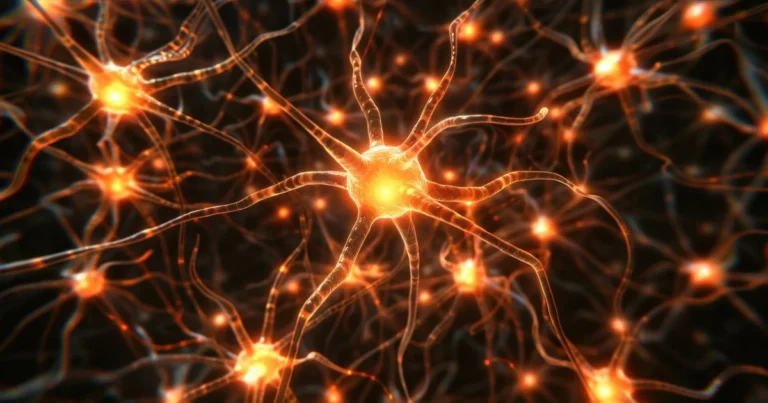
Attention is not confined to a single brain region. It relies on the coordination of several large scale neural networks whose balance continues to evolve throughout development. Among them, the default mode network plays a central role. It becomes especially active when the mind turns inward toward memories, imagined scenarios, or spontaneous thoughts. In contrast, attentional control and salience networks help select relevant information and maintain engagement with a task.
During adolescence, these networks have not yet fully stabilized. Long range connections, particularly between frontal regions involved in cognitive control and other areas of the brain, are still strengthening. This gradual maturation may help explain why attention at this age appears more vulnerable to distractions, emotions, and internal fluctuations. The adolescent brain seems to shift more easily between functional states, making attention less predictable, but in some situations, more flexible as well.
In this context, researchers are becoming increasingly interested in what is known as “internal attention,” meaning attention directed toward bodily sensations such as breathing. This type of attention is often considered relatively stable because it relies on a simple and repetitive signal. But is this stability truly reflected at the neural level?
🔗Read also: When nature becomes a classroom
What brain scans reveal about teenage focus
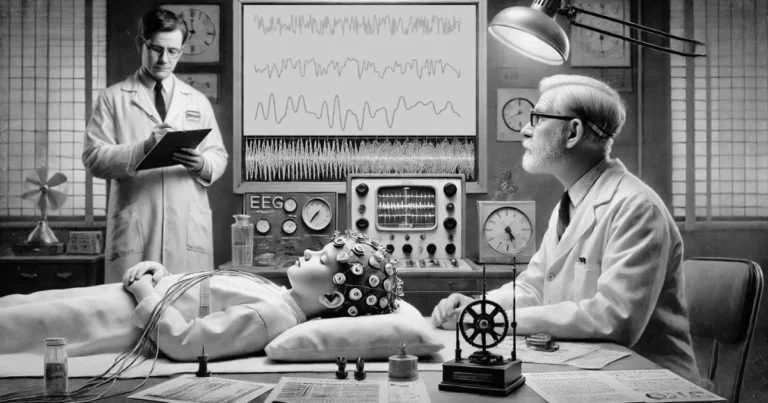
To explore this question, a team led by Isaac N. Treves studied 72 adolescents between the ages of 13 and 18 using functional magnetic resonance imaging. Participants performed a breath counting task inspired by focused attention practices and were compared with periods of rest. What makes the study particularly original is that the researchers examined not only average brain connectivity, but also its dynamics, meaning how brain networks continuously interact and reorganize from one moment to the next.
The results first confirm an observation already well established in neuroscience: focusing on the breath changes how the brain operates. Compared with resting states, regions involved in attentional control showed stronger coordination, while areas associated with mind wandering became less dominant. In other words, directing attention toward the breath appears to shift the brain into a configuration more closely associated with sustained focus and less oriented toward spontaneous thought.
However, this broader picture does not fully capture what is happening in real time. By analyzing the brain moment by moment, the researchers found that it never remains in a single stable state. Instead, multiple neural configurations emerge and disappear throughout the task. Some of these states appeared more frequently during breath focused attention than during rest, suggesting that attention corresponds to distinct modes of brain functioning.
One particularly important finding emerged from the analysis: brain states typically associated with attention did not always coincide with effective concentration. Moments when adolescents correctly counted their breaths were not systematically linked to the neural configurations researchers expected. Conversely, some states more commonly observed during rest occasionally accompanied accurate attention. Attention therefore does not appear to rely on one single stable mechanism, but rather on an ongoing alternation between different modes of functioning.
🔗Explore further: Mindfulness at school between promise and scientific reality
The hidden dynamics of concentration
These findings challenge the idea that attention operates like a switch that can simply be turned on and maintained indefinitely. In adolescents, attention appears more like an unstable balance marked by constant shifts between engagement and distraction. Even when the task is simple and the environment calm, the brain continues to transition between different states.
This instability should not necessarily be interpreted as a sign of failure or cognitive weakness. It may instead reflect a brain that is still undergoing functional reorganization. Some researchers even suggest that this variability could contribute to cognitive flexibility and a greater ability to adapt to new situations.
The study also highlights substantial individual differences among adolescents. The neural markers associated with attention varied considerably from one participant to another, underscoring the limitations of one size fits all approaches to measuring or training attention.
These findings may also inform broader reflections on attention in educational settings. They suggest that fluctuations in concentration are likely part of the normal functioning of the developing brain. From this perspective, the goal may be less about expecting uninterrupted focus and more about helping adolescents regain engagement after moments of distraction.
From the perspective of developmental neuroscience, attention therefore appears less like a fixed ability and more like an evolving process. In adolescents, it reflects a brain still under construction, shaped by constant variations that reveal both its vulnerability and its remarkable capacity for adaptation.
References
Treves, I. N., Kucyi, A. K., Tierney, A. O., Balkind, E., Whitfield-Gabrieli, S., Schuman-Olivier, Z., Gabrieli, J. D. E., & Webb, C. A. (2025). Dynamic functional connectivity signatures of focused attention on the breath in adolescents. Cerebral cortex (New York, N.Y. : 1991), 35(2), bhaf024.