Unlocking the brain: Between science and illusion
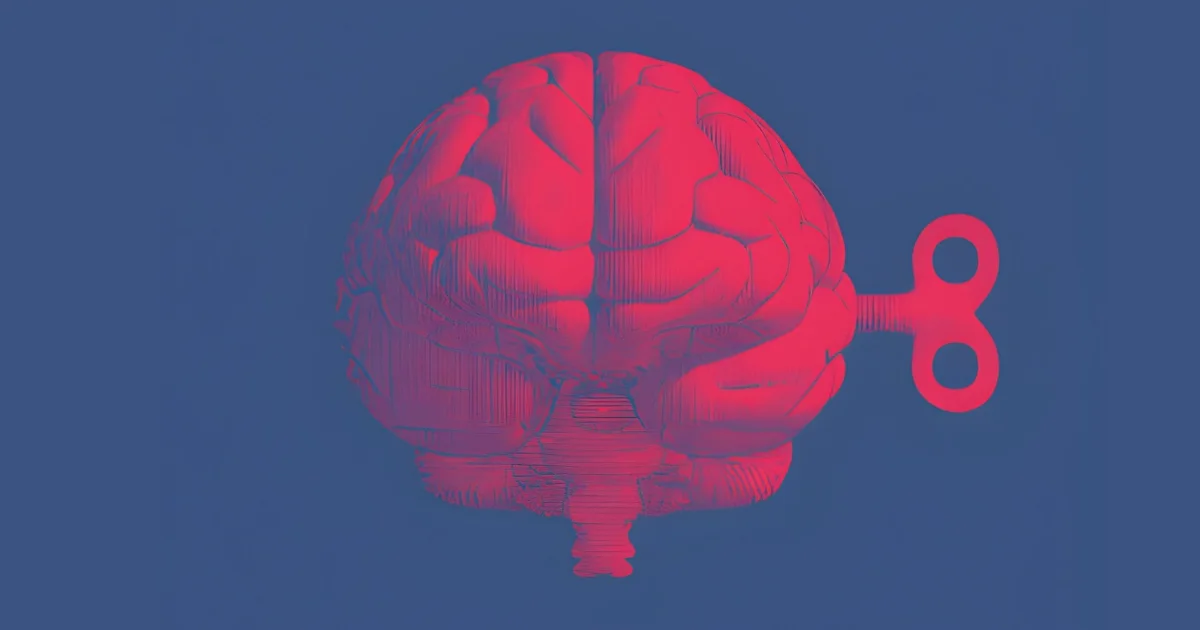
What if the brain is not underused, but already fully engaged? Between science and fiction, the alluring idea of unlocking hidden potential persists.
What if we could unlock the full hidden potential of our brain?
This is the captivating promise behind the film Lucy, which fascinated millions of viewers worldwide. The story begins in Taiwan. A young woman, played by Scarlett Johansson, is forced to transport an experimental drug. When the substance accidentally spreads through her body, something extraordinary happens: her mental and physical abilities begin to expand dramatically. She gradually accesses 20 percent, then 50 percent, and ultimately 100 percent of her brain’s capacity. As her abilities multiply, she becomes capable of reading thoughts, manipulating matter, controlling time, and eventually transcending the limits of her own body.
The entire narrative rests on the idea that we use only a small fraction of our brain, and that activating the rest would grant us extraordinary powers. This concept, far older than the film itself, dates back to the early twentieth century. However, Lucy revived it by presenting it as a plausible scientific hypothesis. In doing so, cinema rekindled a deeply rooted myth: the belief that humans use only 10 percent of their brain. Behind the spectacle, however, a crucial question remains: do we truly have an underused brain, or are we simply trying to satisfy a deeper desire for cognitive omnipotence?
🔗Read also: How the human brain works
The seduction of cognitive superpowers
The idea of a partially unused brain did not originate with Lucy. Its roots lie in the early days of modern psychology, when the workings of this complex organ were still largely unknown. At the end of the nineteenth century, the philosopher and psychologist William James observed that “human beings use only a small part of their mental and physical resources.”
This statement, often quoted out of context, was not an anatomical claim about the brain. Instead, it referred to psychological potential. According to James, we operate below our capacities for attention, motivation, and learning. Over time, this metaphorical idea was misinterpreted as a biological fact, leading to the belief that large portions of the brain remain inactive.
These distortions grew with the rise of popular science culture in the mid twentieth century. Early brain imaging, enthusiasm for applied psychology, and faith in technological progress all contributed to the seductive notion of an underused brain waiting to be activated.
Contemporary neuroscience clearly refutes this view. No region of the brain is unused or dormant. Brain imaging techniques such as functional MRI, positron emission tomography, and electroencephalography consistently show continuous neural activity, even in the absence of deliberate tasks. The brain never stops working. It simply alternates between externally oriented states and more introspective ones. For instance, when a person relaxes or lets their mind wander, a specific network becomes active: the Default Mode Network.
The Default Mode Network: A Brain That Never Rests
The Default Mode Network, identified in the early 2000s by neurologist Marcus Raichle, refers to a set of brain regions whose activity increases when we are not engaged in a specific task. This network includes the medial prefrontal cortex, the precuneus, the posterior cingulate cortex, the inferior parietal lobules, and parts of the temporal and hippocampal regions. Far from representing a state of rest, it reflects an internally oriented mode of functioning. It plays a role in processes such as autobiographical memory, planning, spontaneous thought, and mental time travel. In other words, even when we appear to be doing nothing, the brain remains highly active: it simulates, imagines, remembers, and anticipates.
The human brain is therefore not a partially empty reservoir, but a dynamic and cooperative system. Its efficiency depends not on how many neurons are activated, but on the quality of interactions between networks involved in perception, movement, memory, emotion, and attention. If all neurons were to fire simultaneously, the result would not be heightened intelligence, but an epileptic seizure.
The “10 percent myth” ultimately reflects a broader human tendency: simplifying complexity to make it more reassuring. It reveals both our fascination with the brain’s power and our reluctance to accept its biological limits. In reality, there is nothing disappointing about the brain. Fully engaged, it possesses remarkable plasticity, enabling it to learn, adapt, and reorganize throughout life.
🔗Explore further: Mind wandering: A common mental state long misunderstood
Neurotechnology and the dream of enhancement
In recent years, the idea of an augmented brain has moved beyond science fiction. It is becoming a tangible technological horizon, driven by rapid advances in neuroscience and digital technologies. Researchers are exploring ways to enhance cognitive functions such as memory, attention, learning, and creativity. This field, often referred to as neuroenhancement or human enhancement, lies at the intersection of neuroscience, medicine, and engineering. The most studied approaches involve non invasive brain stimulation. Techniques such as repetitive transcranial magnetic stimulation (rTMS) and transcranial direct current stimulation (tDCS) apply magnetic fields or low intensity electrical currents to targeted brain regions.
Originally developed for therapeutic purposes, particularly in treatment resistant depression, these methods have demonstrated clinical effectiveness in specific contexts. Some studies suggest that, when combined with cognitive training, they can produce modest and temporary improvements in memory or attention, particularly in older adults or individuals with mild cognitive impairment. However, when applied to healthy individuals with the goal of enhancing cognition, the results are far less consistent. While some studies report small and context dependent effects, most meta analyses conclude that there is no reliable, lasting, or generalizable cognitive enhancement. This variability reflects the complexity of neural interactions, differences in experimental protocols, and individual variability. These technologies may help restore impaired function, but there is no evidence that they can unlock hidden potential in a healthy brain.
🔗Discover more: The new era of intelligent neurorehabilitation
Brain machine interfaces and the limits of enhancement
Brain machine interfaces represent another major dimension of the augmented brain paradigm. These systems establish direct communication between neural activity and external devices, such as computers or robotic limbs. Invasive versions, involving intracranial implants, have already enabled paralyzed patients to control cursors or prosthetic limbs through thought alone. This demonstrates the technical feasibility of direct brain interaction.
Projects such as Neuralink have amplified public interest, promoting the idea that such interfaces could eventually enhance human intelligence. However, current scientific evidence does not support this claim. Existing research primarily focuses on restoring lost functions, not enhancing cognition in healthy individuals.
Similarly, programs like DARPA’s N3 initiative aim to develop non invasive interfaces capable of transmitting neural signals through the skull. These technologies remain highly experimental and are primarily designed for therapeutic applications, such as restoring communication in locked in patients or improving neurorehabilitation.
These neurotechnological advances are undeniably promising, particularly for medicine and rehabilitation. However, they do not validate the idea of a dormant or underused brain. Rather than unlocking hidden capacities, they support existing functions, compensate for deficits, and facilitate recovery when neural systems are impaired. True cognitive enhancement does not rely on artificial stimulation or technological unlocking. It is grounded in fundamental biological processes: learning, motivation, sleep, experience, and curiosity.
The pursuit of an “optimized brain” ultimately reflects a modern tension between technological fascination and the difficulty of accepting that the most complex organ we possess does not need to be artificially boosted to be extraordinary. It already is. Understanding the brain is, in itself, a form of enhancement not through technology, but through awareness.
References
Horvath, J. C., Forte, J. D., & Carter, O. (2015). Quantitative review finds no evidence of cognitive effects in healthy populations from single-session transcranial direct current stimulation (tDCS). Brain Stimulation, 8(3), 535–550.
Hu, M., et al. (2024). The effects of repetitive transcranial magnetic stimulation and transcranial direct current stimulation on memory functions in mild cognitive impairment patients: A meta-analysis. Frontiers in Human Neuroscience.18:1436448.
Lv, Y., et al. (2024). A meta-analysis of the effects of transcranial direct current stimulation combined with cognitive training on working memory in healthy older adults. Frontiers in Aging Neuroscience. 16, 1454755.
Reilly CM. Brain-Machine Interfaces as Commodities: Exchanging Mind for Matter. Linacre Q. 2020 Nov;87(4):387-398.
Parikh PM, Venniyoor A. Neuralink and Brain-Computer Interface-Exciting Times for Artificial Intelligence. South Asian J Cancer. 2024 Apr 15;13(1):63-65.

Sara Lakehayli
PhD, Clinical Neuroscience & Mental Health
Associate member of the Laboratory for Nervous System Diseases, Neurosensory Disorders, and Disability, Faculty of Medicine and Pharmacy of Casablanca
Professor, Higher School of Psychology