The conscious brain: Inside a scientific showdown
Consciousness remains one of the greatest challenges in neuroscience. Every day we see, feel, and think, yet explaining how a mental content becomes conscious continues to elude us. Neuroscience has made remarkable progress in mapping the brain, but a fundamental question persists. At what moment and through what mechanism does information become conscious?
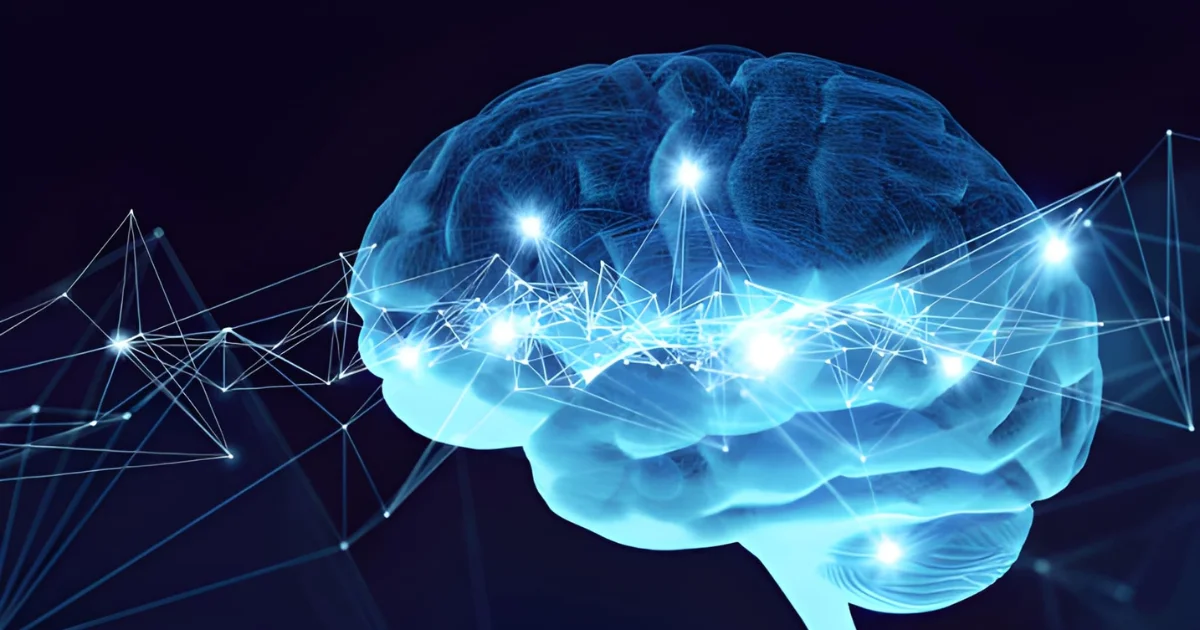
Researchers agree that consciousness is produced by brain activity, although they disagree on the precise way this phenomenon emerges. Is consciousness the outcome of a widespread diffusion of information across large neural networks, similar to a message broadcast throughout the brain so it can be shared by multiple cognitive systems? Or should it be understood as a deep and intimate integration among several subsystems, each contributing to a unified and indivisible whole?
Over the years, hundreds of theories have attempted to solve the enigma, with some estimates counting more than two hundred models. Today, however, two dominant frameworks structure the scientific debate.
The first, the Global Neuronal Workspace Theory, proposes that information becomes conscious when it is made accessible to a specialized neural network functioning as a cognitive control room. The second, the Integrated Information Theory, focuses on the architecture of neural connections. The richer and more interconnected the signals are, the more intense and elaborate the conscious experience becomes.
The first large scale head-to-head battle over consciousness
For years, the confrontation between the Global Workspace Theory and the Integrated Information Theory resembled an endless match. Each camp accumulated experimental findings without managing to convince the other. To move beyond this stalemate, researchers adopted an original approach: adversarial collaboration. Instead of conducting separate experiments, both groups agreed on a single experimental protocol designed to be fair, transparent, and interpretable by all. The rules were established in advance and validated by both sides so that the results could be accepted regardless of theoretical allegiance.
This ambitious project led to a study published in 2025 in Nature by a large international consortium of leading cognitive neuroscientists. It stands as one of the most extensive experiments ever conducted on consciousness. A total of 256 volunteers participated in this meticulously designed protocol, created to test the predictions of the two rival theories under equivalent conditions.
Participants were exposed to a variety of carefully selected visual stimuli. Faces, objects, letters, and pseudowords were presented under different identities, orientations, and durations of exposure ranging from half a second to one and a half seconds. This diversity made it possible to examine several facets of consciousness, from the recognition of familiar items to the perception of ambiguous or hard-to-identify shapes.
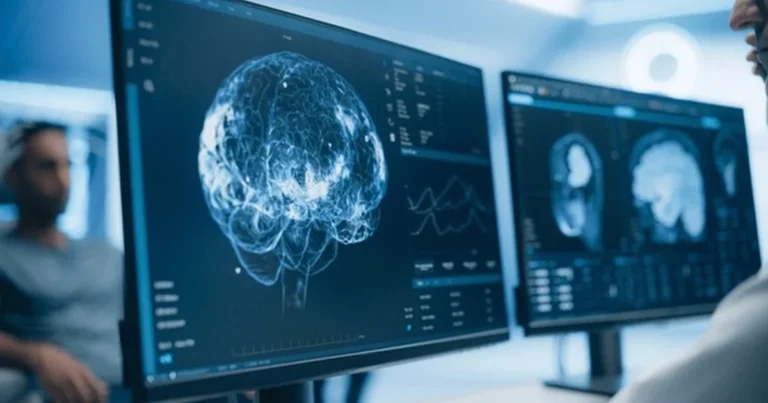
While participants performed the task, their brain activity was monitored through three complementary methods. Functional magnetic resonance imaging provided a global picture of activated regions. Magnetoencephalography captured neuronal activity with millisecond precision. Intracranial electroencephalography, conducted in patients implanted for medical reasons, offered direct measurements at the closest proximity to neurons. By combining these modalities, researchers obtained an unprecedentedly detailed and comprehensive view of the brain dynamics associated with consciousness.
The goal was to test, within a single protocol, the core predictions of the two theories. According to the Global Workspace Theory, the emergence of consciousness should involve a wide broadcasting of information toward prefrontal regions and associated networks. The Integrated Information Theory predicted that the essence of consciousness would instead be found in posterior regions of the brain, where sensory signals become tightly integrated, transforming a mere perception into a conscious experience.
🔗 Read also: Brain photons: Discovery of a natural light emission
The results did not crown a single winner. Some findings supported the Global Workspace Theory, showing that conscious information becomes available to large networks, including frontal regions. Other observations aligned with the Integrated Information Theory by revealing local signal integration in posterior areas central to perceptual processing. The study, however, goes far beyond a simple scorecard. It shows that reality is more intricate than either theory initially predicted.
Conscious content appeared detectable in multiple regions including the visual cortex, the ventrotemporal cortex, and the inferior frontal cortex. Moreover, the duration of stimulus presentation left a measurable trace in sustained responses in the occipital and lateral temporal regions. This highlights the pivotal role of posterior areas in maintaining the stability of conscious experience.
Putting consciousness theories to the ultimate test
Historically, most research placed the frontal cortex at the heart of conscious access. These so-called executive regions were considered key to consciousness because they support decision making, planning, and cognitive control. The Cogitate Consortium experiment challenges this view by demonstrating the major contribution of posterior regions. The data revealed that information about conscious content was particularly visible in visual and ventrotemporal cortices, areas traditionally associated with perceptual processing. These results suggest that sensory regions are not passive relays but active contributors to the maintenance and structuring of conscious experience.
Although the study confirms parts of both theories, it also exposes their limitations. Neither emerges unscathed from this direct confrontation with empirical data.
For the Integrated Information Theory, the main difficulty lies in the absence of several expected signatures. According to this model, consciousness should manifest through sustained synchronization between areas of the posterior cortex. The study did not consistently identify these markers, which weakens the notion that local integration alone can explain consciousness.
The Global Workspace Theory also encounters challenges. It predicted a sudden ignition of prefrontal activity marking the appearance or disappearance of conscious content. This sharp burst of activation did not robustly appear in the data. Additionally, the prefrontal cortex did not represent all dimensions of conscious experience, contrary to theoretical expectations.
These results show that each theory captures part of the truth but neither manages to fully account for the complexity of the phenomenon.
🔗 Explore further: Altered states of consciousness: Inside the sacred rotation of the Dervishes
The study also reinforces a broader lesson. Consciousness does not reside in a single brain region and cannot be reduced to a single computational logic. Instead, it seems to arise from a delicate balance between frontal and posterior regions, between global broadcasting and local integration. This insight encourages researchers to move beyond theoretical divides and consider hybrid models capable of integrating the strengths of both approaches.
In this regard, the scientific battle is not a failure but a catalyst. It fuels a rapidly evolving field where every round produces new clues and even contradictions become avenues for progress. Consciousness remains elusive, although the debate grows increasingly fertile.
If the experiment does not resolve the duel between the two major theories, it reshapes the very terms of the discussion. In the end, the Cogitate Consortium study does not reveal the mechanism of consciousness. It shows that existing models, valuable as they are, remain incomplete and that reality extends beyond theoretical boundaries. Most importantly, it inaugurates a methodological shift. By bringing together long-standing rivals in an adversarial collaboration, it demonstrates that transparently testing conflicting predictions can generate truly robust insights. In a field prone to interpretative divergence, collectively confronting disagreements may prove more fruitful than the victory of any single camp. What is at stake is not conceptual triumph but the emergence of a more open and rigorous way of advancing in the scientific quest for consciousness.
Reference
Cogitate Consortium., Ferrante, O., Gorska-Klimowska, U. et al. Adversarial testing of global neuronal workspace and integrated information theories of consciousness. Nature 642, 133–142 (2025).

Sara Lakehayli
PhD, Clinical Neuroscience & Mental Health
Associate member of the Laboratory for Nervous System Diseases, Neurosensory Disorders, and Disability, Faculty of Medicine and Pharmacy of Casablanca
Professor, Higher School of Psychology