CAN 2025: How collective emotions shape identity and recognition
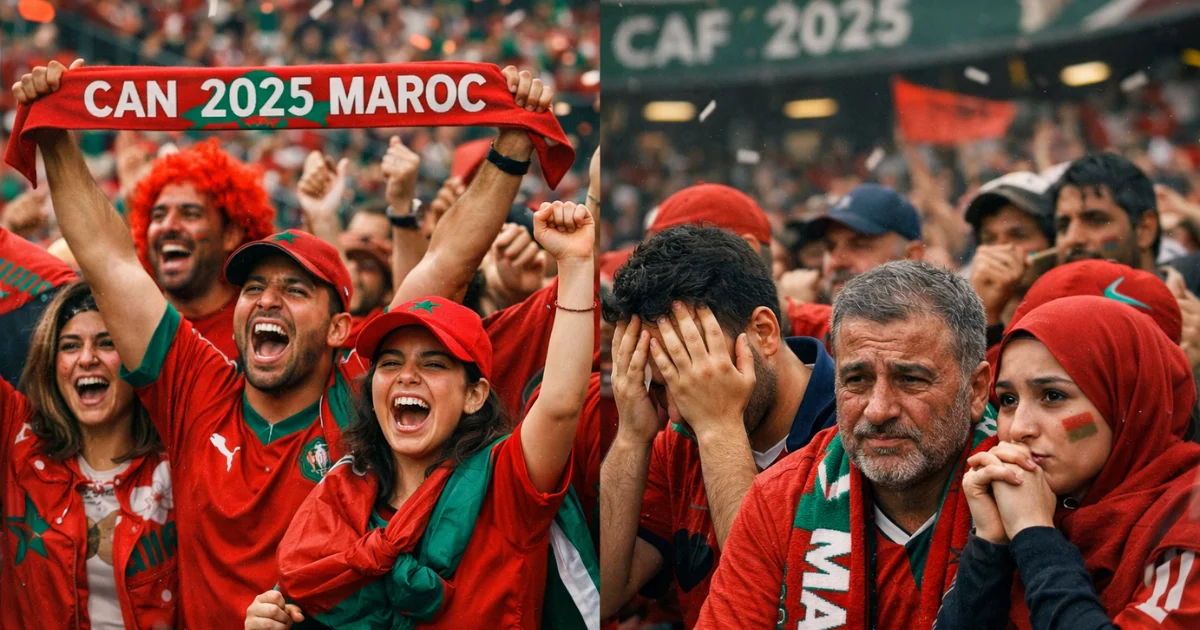
Morocco’s hosting of the 2025 Africa Cup of Nations combined with the participation of the national team represents a social event of high psychological intensity. Beyond its sporting dimension, this competition constitutes a collective emotional experience that reveals deeper dynamics related to national identity the sense of belonging and collective self esteem. In this context sport appears not only as a space for competition but also as a symbolic mechanism through which the relationship between the individual the collective and the image projected by the nation on the African and international stage is continuously redefined.
From the perspective of social psychology this experience can be examined through the lens of social identity theory which posits that individuals derive a significant part of their self esteem from membership in socially valued groups Tajfel and Turner 1979. Within the Moroccan context the national football team functions as a powerful symbolic carrier of collective identity and sporting performance becomes invested with meaning that extends far beyond the boundaries of the game itself. Victory tends to strengthen collective self esteem while defeat may be experienced as a symbolic threat to the group’s image generating intense emotional reactions that are sometimes disproportionate to the actual sporting stakes.
🔗Read also: The crowd: A study of the popular mind – A visionary look into group dynamics
This dynamic is further intensified by Morocco’s role as host nation. Organizing the tournament entails a dual identity that of competitor and that of host subject to evaluation. Organizational success is no longer limited to logistical efficiency but becomes an indicator of collective competence and symbolic legitimacy. From this standpoint the concept of collective effervescence introduced by Durkheim helps explain how major sporting gatherings foster emotional fusion among individuals producing a sense of unity power and transcendence of the individual self Durkheim 1912 2008. Contemporary research confirms that major sporting events provide privileged contexts for the emergence of such shared emotional experiences Páez et al 2015.
Moreover several studies in social psychology indicate that participation in collective gatherings such as football matches contributes to the satisfaction of fundamental psychological needs particularly the sense of belonging social support and the temporary reduction of loneliness Hopkins et al 2016. In the Moroccan context these effects are especially significant for younger generations facing various forms of social precarity and disenchantment. The 2025 Africa Cup of Nations may therefore function as a symbolic space of psychological compensation offering the impression of participation in a meaningful collective project.
However this collective emotional experience also carries ambivalent effects. The elevation of expectations inherent in hosting the tournament can generate substantial collective psychological pressure. Sporting success then tends to be perceived as a symbolic necessity rather than a mere possibility which increases the group’s emotional vulnerability. Research by Baumeister and colleagues 2003 shows that when self esteem is heavily dependent on external and unstable factors such as sporting results it becomes particularly fragile exposing individuals and groups to marked emotional fluctuations between euphoria and frustration.
🔗Explore further: The stolen identity
This dynamic can also be examined through the concept of collective efficacy defined as a shared belief in a group’s capacity to achieve common goals Bandura 2000. The success of the national team or the effective organization of the 2025 Africa Cup of Nations is likely to reinforce this sense of collective efficacy fostering broader confidence in the capabilities of the national group. Nevertheless this confidence remains contingent upon the collective’s ability to manage potential failure without allowing it to evolve into an identity crisis or lasting disillusionment.
Ultimately the 2025 Africa Cup of Nations in Morocco serves as a revealing lens through which the deep psychological functions of sport within Moroccan society can be understood. It operates as a collective emotional laboratory where processes of identification recognition and emotional regulation are replayed. The central issue lies not solely in sporting outcomes but in the society’s capacity to channel the emotional energy generated by the event toward the durable strengthening of social cohesion and collective emotional maturity. In this sense the 2025 Africa Cup of Nations transcends the status of a sporting competition to become a pivotal moment for reflecting on the relationship between sport identity and collective psychology in Morocco.
References
Bandura, A. (2000). Exercise of human agency through collective efficacy. Current Directions in Psychological Science, 9(3), 75–78.
Baumeister, R. F., Campbell, J. D., Krueger, J. I., & Vohs, K. D. (2003). Does high self-esteem cause better performance, interpersonal success, happiness, or healthier lifestyles? Psychological Science in the Public Interest, 4(1), 1–44.
Durkheim, É. (2008). Les formes élémentaires de la vie religieuse (ouvrage original publié en 1912). Paris : Presses Universitaires de France.
Hopkins, N., Reicher, S., Stevenson, C., Pandey, K., Shankar, S., & Tewari, S. (2016). Social identity processes underpinning mass gatherings: Evidence from the Kumbh Mela. European Journal of Social Psychology, 46(6), 701–716.
Páez, D., Rimé, B., Basabe, N., Wlodarczyk, A., & Zumeta, L. (2015). Psychosocial effects of perceived emotional synchrony in collective gatherings. Journal of Personality and Social Psychology, 108(5), 711–729.
Tajfel, H., & Turner, J. C. (1979). An integrative theory of intergroup conflict. In W. G. Austin & S. Worchel (Eds.), The social psychology of intergroup relations (pp. 33–47). Monterey, CA: Brooks/Cole.

Mohamed Elafifi
Film director, sound engineer, and lecturer in film and audiovisual studies
PhD in Arts – Film, Audiovisual, and Performing Arts Studies (Abdelmalek Essaâdi University, Tetouan)
Doctoral thesis focused on preserving Moroccan film and audiovisual heritage, linking technical preservation issues, cultural policies, and collective memory
More than twenty years of professional experience in film production, technical coordination, documentary work, and university teaching