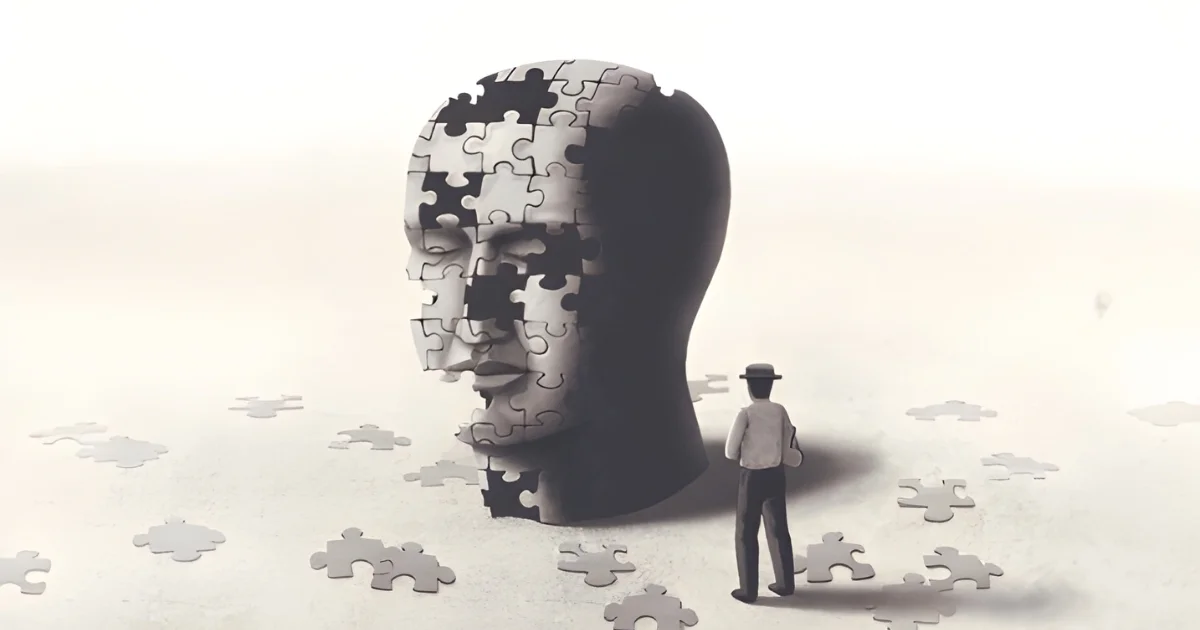
Schizophrenia: The new integrated model
Schizophrenia is often described as a disorder of hallucinations and delusions. However, these striking symptoms represent only the visible part of the condition. The illness also affects cognition, motivation, emotional engagement, and social functioning. Affecting roughly one in one hundred people, it remains one of the leading causes of disability worldwide.
Since the 1950s, available treatments have been guided by a dominant principle: blocking dopamine activity in the brain. These medications, known as antipsychotics, reduce psychotic symptoms for many patients, although a significant proportion continues to experience persistent cognitive difficulties, motivational decline, and functional impairments. Moreover, up to one third of individuals do not respond adequately to these treatments.
These limitations challenge the traditional dopamine-centric explanation of schizophrenia. Can such a complex disorder truly be reduced to a single neurotransmitter excess? A comprehensive scientific review published in 2024 in Nature Reviews Neurology provides a different perspective. By combining evidence from neuroimaging, spectroscopy, pharmacology, and genetics, researchers reveal a broader and more intricate picture. Schizophrenia emerges as the result of a global neurochemical imbalance involving three major neurotransmitter systems: dopamine, glutamate, and GABA.
Three neurotransmitters in conflict
For decades, dopamine dominated scientific discussions about schizophrenia. Research has consistently shown an excess of dopamine production in specific deep brain structures, particularly the striatum, which is involved in motivation and reward processing. The review confirms this: the striatum in individuals with schizophrenia produces and releases more dopamine, and the degree of this dysregulation correlates with the severity of delusions and hallucinations.
On the other hand, the opposite pattern appears in the frontal cortex, a region essential for working memory, planning, and executive control. Here, dopamine levels are abnormally low. This contrast helps explain why patients may experience both psychotic symptoms linked to excessive signaling and cognitive deficits linked to insufficient regulation.
🔗 Read also: Schizophrenia: Between silent suffering and the search for meaning
A similar imbalance is observed for glutamate, the brain’s main excitatory neurotransmitter. Levels are reduced in the frontal cortex but elevated in the basal ganglia and the thalamus, disrupting communication between cortical and subcortical regions. GABA, the primary inhibitory neurotransmitter, is also decreased in several cortical areas, diminishing the brain’s ability to maintain a balanced interplay between excitation and inhibition.
Together, these findings paint the picture of a system operating off key. Excess dopamine and glutamate in some regions, insufficient levels in others, and a widespread deficit in GABAergic inhibition create a fragile equilibrium. Schizophrenia therefore appears less as an isolated chemical surplus and more as a disrupted balance across interconnected systems.
When neural circuits lose their rhythm
This neurochemical view aligns with a broader circuit-based model proposed by the researchers. It highlights the interconnected loops linking the frontal cortex, the thalamus, and the striatum. When glutamate and GABA signaling becomes dysfunctional in the frontal cortex, inhibitory interneurons can no longer regulate neural activity efficiently. This loss of control generates excessive excitatory projections toward deeper brain structures, which in turn fuel increased dopamine production in the striatum. This sequence directly contributes to psychotic experiences.
Neuroimaging findings and animal studies converge on this mechanism. The brain begins to assign exaggerated importance to irrelevant stimuli, forming inaccurate associations that can evolve into delusional beliefs. At the same time, reduced neurotransmitter activity in the frontal cortex compromises executive control, reinforcing cognitive deficits and diminishing motivation.
Genetics further supports this model. More than two hundred genetic variants associated with schizophrenia involve genes related to glutamate receptors, GABAergic interneurons, and synaptic plasticity. These findings suggest a vulnerability rooted in neurodevelopmental processes. During adolescence and early adulthood, when the brain naturally refines its networks through synaptic pruning, even subtle alterations may disturb the delicate balance between excitation and inhibition.
Therapeutic paths beyond traditional antipsychotics
Although dopamine overactivity explains the partial effectiveness of current treatments, the review underscores the need to address the broader neurochemical disruptions. Several innovative therapeutic avenues are now being explored. TAAR1 receptor agonists, for example, may modulate dopamine activity while enhancing glutamate function. Muscarinic receptor agonists, which indirectly influence dopamine signaling, are also showing promise.
🔗 Explore further: Neural biotypes: What MRI Can and Can’t reveal about mental disorders
To address cognitive and motivational deficits, researchers are investigating approaches that enhance NMDA receptor activity or stimulate GABAergic interneurons. Some compounds increase the availability of essential co-agonists for glutamatergic functioning, whereas others target specific ion channels involved in inhibitory regulation.
Non pharmacological interventions are gaining attention as well. Transcranial magnetic stimulation and transcranial direct current stimulation, already used for treatment resistant depression, offer targeted ways to modulate cortical activity. These techniques complement pharmacological strategies by acting directly on neural circuits rather than solely on chemical signaling. In the future, integrated therapeutic protocols combining medication, brain stimulation, and psychological support may provide more comprehensive improvements in daily functioning.
As research progresses, the field is also moving toward personalized medicine. Instead of applying a uniform treatment approach, scientists are beginning to identify distinct neurochemical profiles within schizophrenia. Stratifying patients based on these profiles could guide more precise therapeutic choices and enable earlier interventions before neural circuits become irreversibly altered.
This individualized perspective combines technological innovation with a deeper understanding of brain function, paving the way toward a more effective, more adaptive, and above all more humane approach to schizophrenia care.
Reference
Howes, O. D., Bukala, B. R., & Beck, K. (2024). Schizophrenia: from neurochemistry to circuits, symptoms and treatments. Nature Reviews Neurology, 20(1), 22–35.