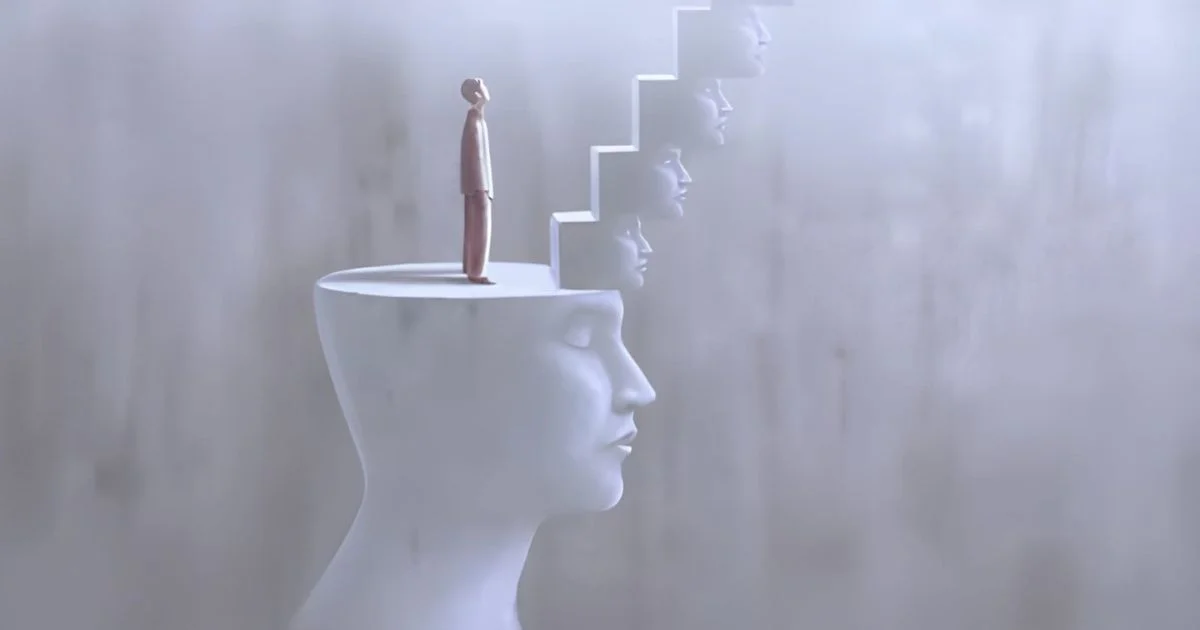
The limits of science and the depths of the human psyche
We can describe the world with remarkable precision, yet its deeper nature often escapes us. Between neuroscience and Jungian theory, another reading of the psyche takes shape.
Modern science was built upon rigorous methodological principles: systematic observation, quantification, the search for causal relationships, and the capacity for generalization. These foundations can be traced to Francis Bacon, who established induction and experimentation as pillars of knowledge, and to Auguste Comte, who argued that scientific understanding should be limited to observable and measurable facts. This framework enabled major breakthroughs, from Newtonian mechanics to contemporary neuroscience.
However, as Karl Popper demonstrated, science does not advance by accumulating certainties but by exposing its own hypotheses to potential refutation. This implies a structural epistemological limitation: science cannot claim to provide a total explanation of reality. This limitation becomes especially apparent when addressing phenomena rooted in subjective experience or dimensions not directly accessible to instrumental measurement. Gaston Bachelard highlighted the discontinuities that reshape scientific knowledge, while Thomas Kuhn emphasized the historically situated and paradigmatic nature of explanatory frameworks. Such limitations are not accidental weaknesses but logical consequences of the way scientific knowledge is produced.
The history of science illustrates this clearly. We are often able to describe the effects of a phenomenon and model its relationships without understanding its ultimate nature. Gravity, for example, can be described with extraordinary precision in terms of how bodies attract one another, yet the fundamental essence of that attraction remains elusive. In cosmology, dark matter is estimated to account for approximately 27 percent of the universe’s mass-energy content, while dark energy represents nearly 68 percent. Ordinary visible matter, everything that makes up the Earth, stars, and living organisms, constitutes only about 5 percent of the observable universe. This overwhelming proportion of the unknown reflects not a failure of science but the historical character of our models and instruments, which evolve as knowledge progresses.
This observation invites a broader question: to what extent can scientific knowledge fully account for complex phenomena, particularly those involving the human psyche?
🔗Explore further: The conscious brain: Inside a scientific showdown
Consciousness at the edge of measurement
Human consciousness remains one of the most challenging and fascinating frontiers in science. It manifests through subjective experience yet resists direct objective measurement. This methodological dilemma runs through contemporary neuroscience. Any theory of consciousness must grapple with the difficulty of reducing subjective experience to observable signals, which complicates the possibility of falsifying such theories. When consciousness is defined in ways that make it testable against behavioral observations, theoretical models often become either trivial or practically unfalsifiable. This tension underscores the limits of classical scientific methods when confronting lived experience and subjectivity.
Within this context, some disciplines have explored phenomena situated at the margins of scientific standards. Parapsychology, for instance, has investigated telepathy, precognition, and psychokinesis using statistical methodologies. These studies gained momentum during the twentieth century, particularly during the Cold War, when substantial funding was allocated in both the United States and the Soviet Union. Some findings were interpreted as exceeding what would be expected by chance alone. However, methodological flaws and confirmation biases have been widely criticized, limiting their acceptance within mainstream science.
This exploration raises a central epistemological question. What if what we call chance sometimes simply names the limits of our current explanatory capacity? Science observes, measures, categorizes, and generalizes, but it can only incorporate what fits within its present conceptual and methodological tools. Phenomena that do not readily align with these frameworks are not necessarily nonexistent. They may simply remain beyond the reach of current methods.
🔗Read also: Surrealism and the Unconscious: when art delves into the depths of the mind
Jung and the architecture of the unconscious
Carl Gustav Jung occupies a distinctive place in the history of psychology. Moving beyond Freudian psychoanalysis, he developed analytical psychology, an approach that gives a central role to unconscious processes. For Jung, the psyche is not merely a repository of repressed material. It is a dynamic reality structured by archetypes, universal symbolic patterns that manifest in dreams, myths, and cultural imagery. These archetypes form what Jung called the collective unconscious, a domain where individual psychological structures intersect with shared invariants across cultures.
Jung believed that the modern division between consciousness and the unconscious contributes to many psychological disturbances. In cultures that overvalue conscious rationality, unconscious contents may emerge in distorted or conflictual forms. Recognizing the depth and dynamics of the unconscious is therefore essential for a more comprehensive understanding of the human psyche.
This perspective invites a reconsideration of how psychological phenomena relate to the external world. Jung proposed the idea of the unus mundus, or one world, a hypothesis suggesting that both psychic and physical realities emerge from a unified underlying foundation. In this view, archetypes are not purely internal entities but structures that may traverse the apparent boundary between mind and matter.
🔗Explore further: The self and its brain: Understanding duality according to Popper and Eccles
Synchronicity and the limits of probability
Within this expanded framework, Jung introduced the concept of synchronicity. Formally, it refers to the simultaneous occurrence of two events, one psychic and one physical, without any identifiable causal link, yet experienced as profoundly meaningful by the individual. The emphasis lies not on statistical coincidence but on the subjective significance these events acquire.
In Synchronicity: An Acausal Connecting Principle, published in 1952, Jung described synchronicity as a noncausal principle of connection that complements, rather than replaces, classical scientific causality. This idea emerged from his extensive correspondence and collaboration with Nobel Prize winning physicist Wolfgang Pauli, who explored the possibility that physical and psychic phenomena might share underlying structures rather than being connected through direct causal chains.
The well known anecdote of the golden scarab illustrates this concept. At the precise moment when a patient described a scarab in a dream, a beetle resembling the symbol tapped against Jung’s consulting room window. For Jung, this was not evidence of paranormal causation but an example of a meaningful coincidence that transformed the patient’s psychic experience.
It is important to stress that this concept remains highly controversial. The scientific reception of synchronicity has been largely critical, and it is often classified as pseudoscientific because it does not rely on reproducible experimental evidence and challenges the sufficiency of probability theory in explaining coincidences. Skeptics also point to cognitive biases, such as retrospective selection and meaning attribution, to account for experiences perceived as significant.
Despite this skepticism, the notion of synchronicity continues to be explored in certain fields, not as a causal mechanism in the strict sense, but as a descriptive category useful for understanding the subjective relationship between internal experiences and external events. This is particularly relevant in clinical settings, where patients often experience coincidences as deeply meaningful.
In conclusion, clinical psychology suggests that it may be reductive to restrict explanation solely to classical causality. Practitioners frequently encounter phenomena that, although lacking identifiable causes according to conventional methodological standards, produce genuine and sometimes transformative psychological effects. Acknowledging that certain experiences may currently elude scientific explanation does not mean abandoning rigor. It means recognizing that causality may not exhaust the full reality of psychic life. At the intersection of neuroscience, clinical psychology, and Jungian thought, it becomes possible to envision a more open framework, one that integrates the complexity of psychological phenomena while remaining aware of the intrinsic limits of any scientific enterprise.
References
Bachelard, G. (1938/2011). La formation de l’esprit scientifique. Paris : Vrin.
Chalmers, D. J. (1996). The conscious mind: In search of a fundamental theory. Oxford University Press.
Jung, C. G. (1952/1988). Synchronicité et paracausalité. Paris : Albin Michel.
Jung, C. G. (1959/1991). Les archétypes et l’inconscient collectif. Paris : Albin Michel.
Jung, C. G., & Pauli, W. (1955/2002). Correspondance (1932–1958). Paris : Albin Michel.
Kuhn, T. S. (1962/2008). La structure des révolutions scientifiques. Paris : Flammarion.
Planck Collaboration. (2020). Planck 2018 results. VI. Cosmological parameters. Astronomy & Astrophysics, 641, A6.

Eliesse Drissi
Clinical Psychologist
PhD in Cognitive Neuroscience