Trauma healing at the crossroads of brain and unconscious
Between neuroscience and psychoanalysis, trauma appears as an organization, not a destiny. One the brain can reshape.
In contemporary clinical practice, understanding what it truly means to heal from trauma requires moving beyond the traditional opposition between psyche and brain. Human beings are not made of ideas and words alone. They are also biological systems deeply shaped by lived experience. Modern non dogmatic psychoanalysis embraces this complexity by recognizing that the unconscious is not a metaphor, but is rooted in brain structures and dynamic neurocognitive functions. Rather than applying rigid models, it observes each individual in their uniqueness, where personal history resonates with biological traces embedded in the brain.
Letting experience speak before theory
The contemporary psychoanalyst adopts the stance of a careful explorer rather than that of a rigid diagnostician. Non dogmatic psychoanalysis does not impose predefined theoretical categories. It brings attention to the subject’s inner movements as they unfold through speech, hesitation, repetition, silence, and affect. From this perspective, symptoms such as anxiety, anger, sadness, or emotional withdrawal are not fixed pathologies, but attempts to organize experience, often shaped by past or recent traumatic events.
René Spitz had already shown through his work on anaclitic depression in infants that what truly matters is not only the event itself, but its impact on attachment, safety, and emotional regulation pathways. Today, developmental neuroscience echoes this insight by demonstrating how early relationships shape connectivity between the amygdala, the prefrontal cortex, and the hippocampus, regions essential for memory, emotion, and cognitive regulation.
How time shapes both brain and unconscious
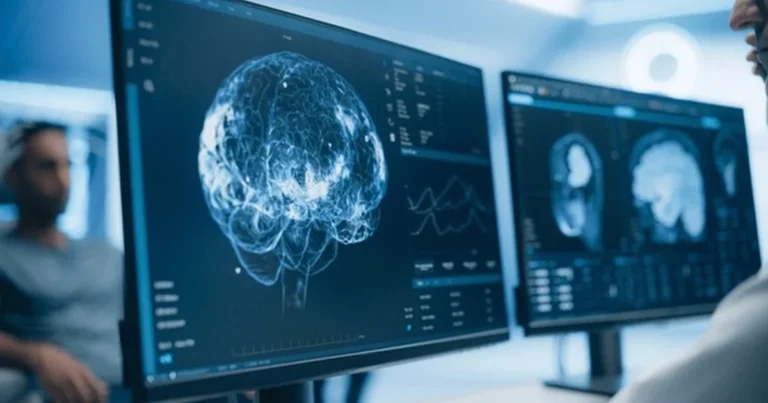
Contemporary neuroscience adds a crucial layer of understanding. The brain is not a static organ, but a continuously plastic system capable of reshaping its circuits through relational experiences. The Remember study conducted after the November 13 attacks showed that some individuals exposed to severe trauma develop a renewed capacity to engage memory control mechanisms, particularly within the prefrontal cortex and hippocampus. This capacity represents a neurobiological marker of resilience to post traumatic stress.
In post traumatic stress disorder, the amygdala, which encodes fear and vigilance, is often hyperactive, while regions involved in cognitive regulation show reduced activation. This imbalance leads to difficulties in modulating emotional responses and contextualizing traumatic memories. Modern psychoanalysis does not view this as an irreversible fate, but as a functional brain architecture that can be reorganized through neural plasticity and sustained clinical work.
🔗Read also: The anxious brain in an overstimulated world
The somatic memory of experience
One of the most valuable contributions of neuroscience informed psychoanalysis is its attention to the body and to sensory experience. Trauma is not confined to an abstract psychic event. It becomes inscribed in the circuits of the autonomic nervous system, influencing breathing, muscle tension, heart rhythms, and sleep cycles. Research shows that traumatic experiences alter critical regulatory functions within the brainstem, affecting sleep wake cycles, autonomic balance, and stress responses, which helps explain the persistence of certain symptoms in traumatized individuals.
Acknowledging that the body remembers is essential. The unconscious does not express itself solely through words, but through tensions, postures, and automatic reactions that reflect long standing survival strategies. These embodied traces must be welcomed in clinical work, as they carry information that language alone cannot access.
Symbolization as neural regulation
One of the central aims of modern psychoanalysis is to transform raw emotion into symbols that can be integrated. This process involves putting experience into words, but also giving symbolic form through art, writing, or play. Symbolization is not a literary luxury. It engages subtle yet powerful brain networks involved in working memory, attention, and self awareness.
In traumatized patients, symbolization does not erase memory. It places it within a coherent narrative, allowing activation of prefrontal cortical circuits that regulate the amygdala. Psychic work transforms fragmented, intense, and intrusive memories into integrated, contextualized, and manageable experiences.
🔗Discover more: When trauma finds form through repetition
Repetition as an attempt at repair
In psychoanalytic practice, repetition is never seen as a simple obsessive return. It is understood as an attempt to reorganize an experience that has not yet found an adequate symbolic representation. Although often painful, this process is not a failure. It signals that the mind is still seeking to make sense of what remains unfinished.
Neuroscience confirms that trauma alters implicit memory circuits, favoring automatic responses over contextualized recollection. This explains why some patients relive sensations or behaviors without being able to put them into words. Careful analytic work helps reintroduce temporality and narrative into these experiences, giving the brain an opportunity to recompose its internal networks.
Healing strategies that unite mind and brain
Healing trauma requires a combination of strategies that honor both psychic complexity and brain plasticity. Therapeutic approaches grounded in attention and mindfulness strengthen the prefrontal cortex and improve emotional regulation by reducing amygdala hyperactivity and stabilizing attentional networks.
Psychoanalytic psychotherapy provides a secure space to revisit traumatic experiences, allowing reinterpretation of affect and symbolic transformation of memory. This transformation engages high level brain circuits that enable individuals to move beyond automatic reactions and become conscious agents of their own emotional regulation.
Beyond verbal therapy, innovative brain based approaches explore tools such as neuromodulation to support recovery in patients resistant to conventional methods. Recent trials suggest that targeted electrical stimulation of the prefrontal cortex can enhance emotional regulation and reduce symptoms linked to severe emotional trauma, offering complementary pathways alongside psychotherapeutic work.
The alliance between psychoanalysis and neuroscience does not reduce the human being to an organ. It acknowledges that brain and unconscious together weave the fabric of subjective experience. The modern psychoanalyst welcomes the patient’s living history, supports the symbolization of affect, integrates scientific discoveries on brain plasticity, and develops practices that honor both mind and body.
🔗Explore further: Scrolling and the brain: why the swipe never feels like rest
Seeing Oneself Differently
Healing from trauma is not measured solely by the absence of symptoms. It is reflected in the capacity to live, love, think, and form relationships without the past dictating present emotion. It is a gradual movement in which the brain reconnects through new experiences and the unconscious finds forms that no longer impose repetition, but open new paths.
Along this journey, every moment of awareness, every spoken word, and every welcomed sensation becomes part of internal transformation. The modern psychoanalyst accompanies this process not as a master, but as a respectful partner, mindful of each person’s singularity, and aware that science and clinical practice meet not to confine, but to liberate.
References
Moallem, B. I., Wen, Z., Hammoud, M. Z., Su, W., Pace-Schott, E. F., & Milad, M. R. (2024). Impact of trauma type on neural mechanisms of threat conditioning and its extinction. Journal of psychiatric research, 178, 50–58.
Tran The J, Saguin E, Ansermet F (2025) Trauma freed of the concept of determinism: is it possible to have a dialogue between psychoanalysis and neuroscience around the question of singularity? Front. Psychol. 16:1529698
Stress post-traumatique : la plasticité cérébrale, un mécanisme clé de la résilience au trauma. INSERM Brasil press release (2025) experimental imaging Remember study

Flora Toumi
Psychoanalyst, Researcher at the Paris Brain Institute, and Doctor of Philosophy
Flora Toumi holds a PhD in Philosophy and is a neuropsychoanalyst and clinical sexologist specializing in resilience and post-traumatic stress disorder (PTSD). She works with both civilians and members of the French Special Forces and the Foreign Legion, using an integrative approach that combines Ericksonian hypnosis, EMDR, and psychoanalysis.
As a researcher at the Paris Brain Institute, she regularly collaborates with neuropsychiatrist Boris Cyrulnik on the processes of psychological reconstruction.
Flora Toumi has also developed an innovative method for PTSD prevention and founded the first national directory of psychoanalysts in France. Her work bridges science, humanity, and philosophy in a quest to unite body, soul, and mind.