The hidden cost of an All-Nighter
After a sleepless night, attention falters without warning. These subtle failures reflect a brain oscillating between wakefulness and rest, despite the appearance of being awake.
Sleeping too little is not just a persistent feeling of fatigue. Even after the first shortened night, sustained attention becomes unstable, reaction times slow, and brief episodes of disconnection occur, often without conscious awareness. These lapses in attention are well documented and lie at the heart of high-risk situations such as traffic accidents or errors in professional settings caused by sleepiness. However, the effects of sleep loss extend far beyond diminished vigilance. Lack of sleep also impairs working memory, emotional regulation, and decision-making ability, especially in complex or stressful contexts. This understanding is supported by extensive cognitive neuroscience research showing broad declines in cognitive performance after acute sleep deprivation.
Until recently, a central question remained: what exactly occurs in the brain at the precise moment attention fails due to sleep loss, and what deep physiological mechanisms explain this sudden fragility in mental functioning? A recent study published in Nature Neuroscience provides novel insights, showing that these moments are not simple cognitive errors but reflect a global change in brain state. The authors demonstrate that sleep deprivation disrupts not only neuronal activity but simultaneously affects cerebral blood circulation, certain bodily indicators of arousal, and even the movement of cerebrospinal fluid, a fluid essential to brain function and maintenance.
🔗Read also: Sleep vs. Screens: The silent battle for your brain
How sleep loss disrupts the stability of wakefulness
To explore these mechanisms, researchers studied healthy adults after a normal night of sleep and following a night without sleep. During the study, participants performed sustained-attention tasks that were simple but sufficiently demanding to pinpoint moments when attention lapsed. Simultaneously, multiple dimensions of brain and physiological function were recorded. This multimodal approach captured not only the brain’s electrical activity and global activity patterns but also indirect indicators of arousal such as pupil diameter and variations in cerebrospinal fluid flow around the brain.
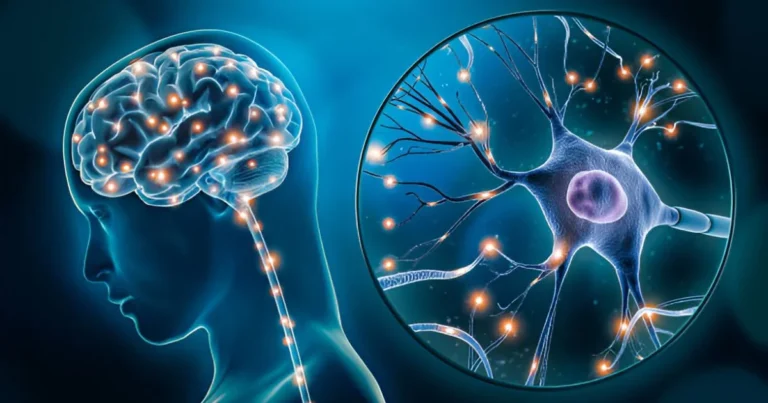
The results show that when attention fails after an all-nighter, the brain does not simply slow down or become less efficient. Instead, it briefly enters a distinct physiological state. Cortical electrical activity transiently decreases, indicating a global reduction in neuronal vigilance. The pupils constrict—a well-established marker of lowered arousal. At the same time, a large wave propagates through the brain’s vasculature, accompanied by prominent pulsations of cerebrospinal fluid. These phenomena occur in a tightly coordinated fashion, representing different facets of the same physiological event.
Importantly, these attention lapses are not localized to a single brain region nor reducible to a simple cognitive deficit. Rather, they correspond to a global shift in brain state resembling the transition toward sleep. Although the individual remains outwardly awake, the brain’s internal organization briefly adopts patterns closer to rest, as if imposing a pause despite the imperative to remain active.
🔗Explore further: Astrocytes: The hidden architects of sleep
Invisible neural shutdowns in the sleep-deprived brain
These observations align with a broader body of research showing that sleep deprivation makes brain function deeply unstable. Previous studies have shown that certain cortical regions can locally enter sleep-like states while the individual remains awake, a phenomenon known as local sleep. This instability partly explains why lack of sleep impairs not only attention but also memory, emotional control, and the ability to inhibit inappropriate reactions. Moments of sleep deprivation are associated with heightened emotional reactivity, a tendency toward impulsive judgments, and reduced sensitivity to long-term consequences.
The major contribution of the recent Nature Neuroscience study is its demonstration that these instabilities extend beyond neurons. They encompass systems that regulate cerebral blood flow, general arousal, and cerebrospinal fluid dynamics. The authors propose that these effects are linked to the activity of deep neuromodulatory systems involved in vigilance regulation, particularly the noradrenergic system centered on the locus coeruleus, a small brainstem structure critical for maintaining arousal and attention. The locus coeruleus exerts diffuse, brain-wide influence on neuronal activity, vascular tone, pupil diameter, and indirectly on cerebrospinal fluid dynamics.
With prolonged sleep deprivation, this regulation becomes unstable. Neuromodulatory activity fluctuates, leading to transient switches into low-arousal states incompatible with sustained attention. In this context, the brain does not merely battle fatigue; it periodically enforces global relaxation phases, manifesting as errors, omissions, or lapses. These “invisible breaks” can occur even in motivated individuals who are fully aware of the stakes and determined to remain focused.
Thus, the study sheds new light on why vigilance can collapse so abruptly. These failures are not due to a lack of effort or a simple lapse in concentration but stem from a physiological shift engaging the entire organism. By revealing that attention lapses following sleep deprivation are accompanied by coordinated changes in brain activity, bodily signals, and fluid dynamics, the research invites us to reconceptualize fatigue as a global state rather than an isolated subjective sensation. When attention falters, it is not motivation that fails first but a fundamental biological system reaching the limits of its regulatory capacity.
🔗Explore further: How the human brain works
Finally, these findings underscore that sleep is not merely a period of delayed recovery after exertion. It continuously conditions the stability of our mental, emotional, and decision-making capacities. In its absence, the brain appears functional on the surface but becomes intrinsically unstable, oscillating between wakefulness and rest. The hidden cost of an all-nighter is not just the fatigue of the next day but a profound and silent fragilization of cerebral function itself.
Reference
Z. Yang et al., Attentional failures after sleep deprivation are locked to joint neurovascular, pupil and cerebrospinal fluid flow dynamics, Nature Neuroscience, 2025.