The anxious brain in an overstimulated world
Between brain plasticity and unconscious repetition, anxiety is embedded in reinforcing neural circuits.
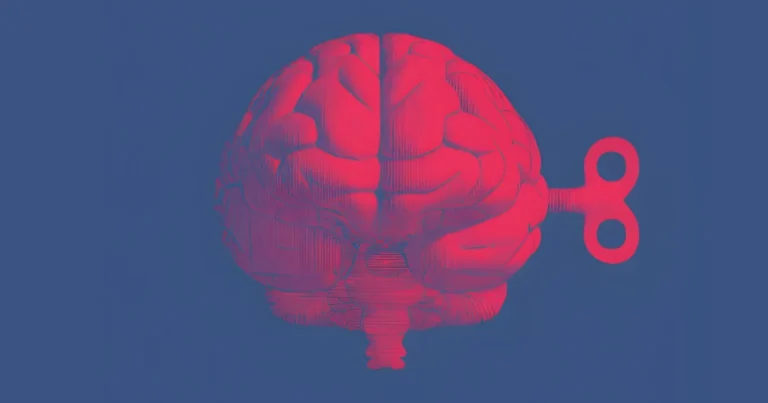
In a world saturated with information, social pressure, and simultaneous demands, anxiety no longer appears as a purely individual symptom. It reflects an era and a neural architecture constantly forced to adapt. Each brain, exposed to uninterrupted streams of stimulation, becomes the stage for psychic repetitions that seem to escape conscious control. Contemporary neuroscience shows that these repetitions are not merely psychological remnants. They are embedded in modifiable and plastic neural circuits, capable of shaping emotional experience, either trapping anxiety or allowing its release, depending on individual history and environmental conditions.
How neural adaptation interacts with the unconscious
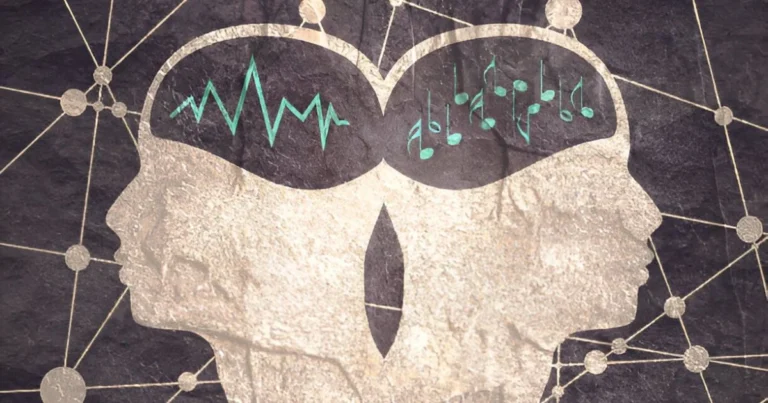
Synaptic plasticity, long associated with learning and memory, now reveals its role in affective and anxious dynamics. The prefrontal cortex, responsible for executive control, and the hippocampus, central to contextual memory, interact continuously with the amygdala, which generates fear and alert responses. Under repeated stress or prolonged exposure to uncertainty, amygdala circuits can strengthen, increasing vulnerability to chronic anxiety. Psychoanalysis describes these repetitions as the return of the repressed, the reactivation of unresolved conflicts that quietly infiltrate everyday life and sustain diffuse unease. Contemporary anxiety, far from being a purely biological reaction, emerges as a biopsychic phenomenon in which brain plasticity and the unconscious engage in an intimate and complex dialogue.
🔗Read also: When trauma finds form through repetition
When anxiety takes shape in the body
Anxiety does not remain confined to the mind. It becomes embodied through muscle tension, cardiac fluctuations, hormonal dysregulation, and somatic symptoms. The autonomic nervous system, particularly the sympathetic branch, plays a central role in these bodily expressions. Neuroscience demonstrates that repeated stress activation elevates basal cortisol levels and alters the gene expression of certain neuronal receptors, consolidating a state of chronic vigilance. Psychoanalysis describes a parallel process. The body becomes the repository of unresolved conflicts, a living memory of anxiety, where each sensation, contraction, or pain carries the imprint of psychic repetition.
Modern life intensifies these mechanisms. Digital stimulation, fear of missing out, constant exposure to social media, and anxiety inducing news streams function as powerful drivers of repetition. Each notification, message, or perceived threat activates vigilance loops in the brain. The psyche is continually solicited by signals that revive earlier conflicts, often rooted in childhood, reactivating familiar anxious scenarios. Although the modern brain remains plastic, it can become trapped in these repetitions if they are not recognized and transformed.
How the brain can learn safety again
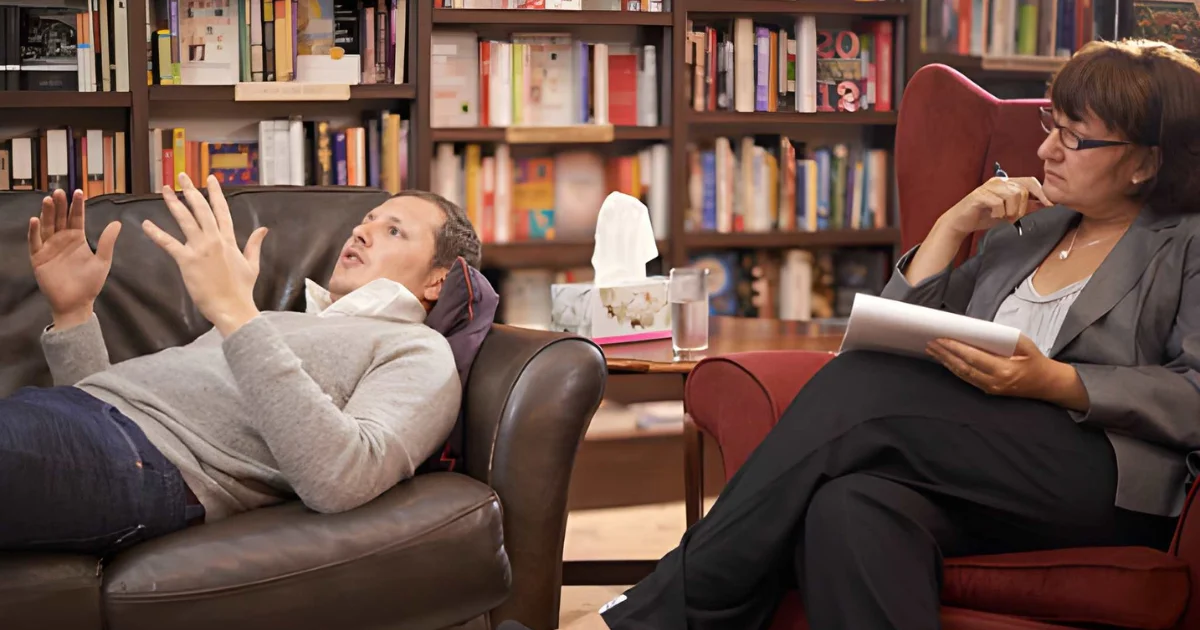
A neuro psychoanalytic understanding opens the door to innovative therapeutic pathways. Brain plasticity offers the possibility of durable modulation of anxious circuits. Approaches combining meditation, analytic psychotherapy, somatic techniques, and targeted cognitive stimulation demonstrate that the brain can relearn tolerance to uncertainty, reduce amygdala hyperactivation, and restore an internal sense of safety. Analytic work supports the emergence of awareness around psychic repetitions, allowing individuals to recognize, name, and transform their anxious patterns.
Neuroscience shows that activating prefrontal and temporal circuits involved in creativity can dampen anxiety loops. Psychoanalysis complements this perspective by emphasizing symbolic transformation. Dreams, writing, and artistic expression give form to what is otherwise unrepresentable. They allow the individual to explore the intolerable within a safe framework and reintroduce psychic freedom. Anxiety, rather than being solely a source of suffering, becomes a material for transformation, a warning signal that invites a restructuring of the relationship to oneself and to the world.
🔗Explore further: The feminine body under persistent tension
Transforming anxiety through meaning and imagination
The convergence of neuroscience and psychoanalysis offers a holistic perspective. Anxiety is neither purely biological nor exclusively psychological. It is embodied, repetitive, and transformable. Contemporary clinical practice shows that acknowledging brain plasticity, understanding psychic repetition, and integrating combined therapeutic approaches can free individuals from anxious loops and restore a secure inner space.
From this integrative standpoint, a fundamental question naturally arises. Could contemporary anxiety be more than a pathology? Might it function as a revealer? Neuroscience explains its formation and persistence, while psychoanalysis uncovers its internal logic and meaning. Understanding these mechanisms allows anxiety to be transformed into a tool for awareness and creativity, a driver of psychic transformation capable of restoring freedom, choice, and desire within a life saturated by tension.
Références
McEwen, B. S. (2007). Physiology and neurobiology of stress and adaptation: central role of the brain. Physiological Reviews, 87(3), 873‑904.
Sapolsky, R. M. (2015). Stress and the brain: individual variability and the inverted-U. Nature Neuroscience, 18(10), 1344‑1346.
Porges, S. W. (2011). The Polyvagal Theory: Neurophysiological Foundations of Emotions, Attachment, Communication. New York: W. W. Norton & Company.
LeDoux, J. E. (2012). Neuroscience of emotion and fear circuits. Annual Review of Neuroscience, 35, 1‑23.
Freud, S. (1926). Inhibition, symptoms and anxiety. Standard Edition of the Complete Psychological Works of Sigmund Freud, Vol. 20, 75‑176.
Cyrulnik, B. (2019). La nuit, j’écrirai des soleils. Paris: Odile Jacob.
Anzieu, D. (1985). Le Moi-peau. Paris: Dunod.
Bion, W. R. (1962). Learning from Experience. London: Heinemann.

Flora Toumi
Psychoanalyst, Researcher at the Paris Brain Institute, and Doctor of Philosophy
Flora Toumi holds a PhD in Philosophy and is a neuropsychoanalyst and clinical sexologist specializing in resilience and post-traumatic stress disorder (PTSD). She works with both civilians and members of the French Special Forces and the Foreign Legion, using an integrative approach that combines Ericksonian hypnosis, EMDR, and psychoanalysis.
As a researcher at the Paris Brain Institute, she regularly collaborates with neuropsychiatrist Boris Cyrulnik on the processes of psychological reconstruction.
Flora Toumi has also developed an innovative method for PTSD prevention and founded the first national directory of psychoanalysts in France. Her work bridges science, humanity, and philosophy in a quest to unite body, soul, and mind.