How brain rhythms structure episodic memory
How does the brain organize our memories? A recent study suggests that slow brain rhythms may synchronize neural activity during encoding and recall, revealing a key temporal dimension of memory.
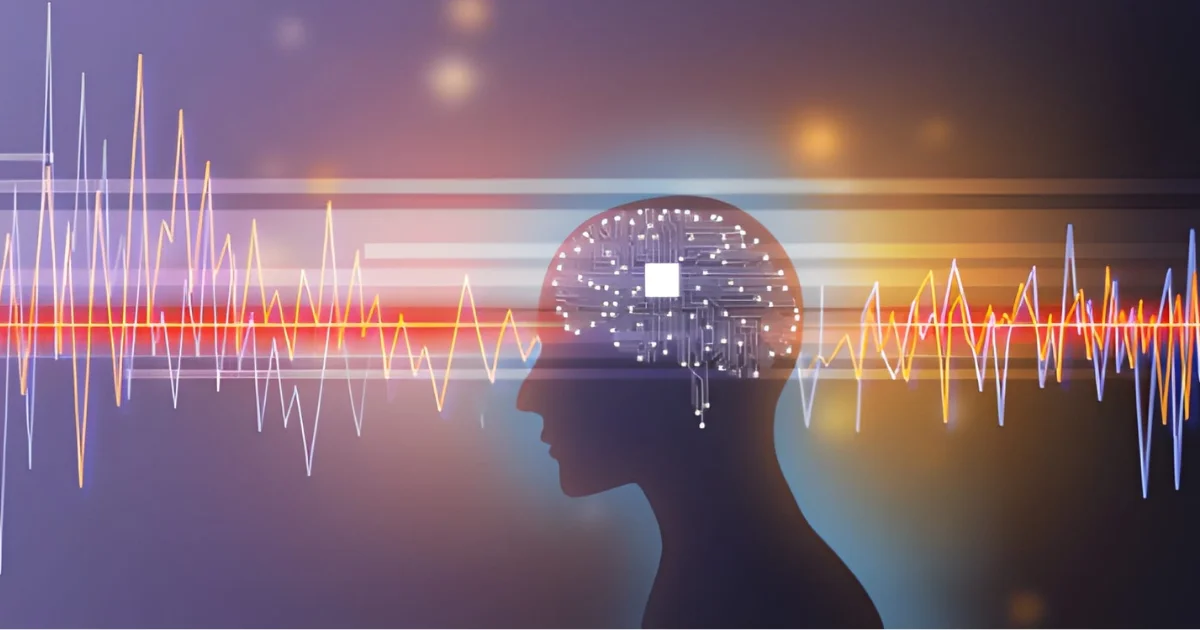
Remembering a place, a route, or a familiar event feels effortless. However, beneath this apparent simplicity lies a highly complex orchestration of electrical signals. A study published in Nature Communications in 2025 by a research team from the University of Freiburg reveals that human memory partly relies on a rhythmic coordination mechanism between neurons, comparable to an internal pulse. The researchers demonstrate that theta oscillations, slow brain waves long studied in animals, play a central role in synchronizing neurons during both memory encoding and recall.
This discovery sheds light on a fundamental dimension of brain function: time. To store and retrieve information, the brain does not merely activate specific regions; it must also align their activity within a shared temporal framework. This synchronization principle was directly observed in human volunteers using high-precision intracranial recordings.
🔗Explore further: How the human brain works
A rare window into the human memory system
The study takes advantage of a rare clinical context. Patients with drug-resistant epilepsy temporarily receive implanted electrodes to localize the origin of their seizures. This situation provides researchers with an exceptional opportunity to observe human neuronal activity directly. Intracranial recordings allow electrical signals to be measured with temporal and spatial precision far exceeding that of non-invasive techniques such as surface electroencephalography.
Within this framework, the team recorded the activity of individual neurons in the medial temporal lobe, a region crucial for episodic memory. Participants performed a spatial memory task in virtual reality. They explored a digital beach, located objects, and later had to recall their positions after a delay. During both exploration and recall phases, the electrodes simultaneously captured the firing of isolated neurons and the brain’s slow oscillations between 2 and 8 hertz, known as the theta band, long suspected to be central to memory processes.
Theta oscillations are known to structure neuronal communication in animals, particularly in rodents, where they coordinate hippocampal activity during navigation and spatial memory. In humans, their precise role remained debated. Previous studies suggested their involvement in memory, but direct evidence was limited. This work provides new insight by recording neuronal signals and their precise alignment with theta cycles at the exact moments when memories are formed or retrieved.
🔗Read also: False memories: The brain’s illusion of truth
How brain waves align neurons during recall
Analyses revealed that the vast majority of recorded neurons, approximately 86 percent, adjusted their activity to synchronize with local theta oscillations. In other words, their firing tended to occur at a specific phase of the oscillatory cycle, as if the brain were following an internal metronome. This phenomenon, known as theta phase locking, reflects a temporal alignment between the activity of individual neurons and the collective rhythm of the network they belong to.
The researchers observed that this phase coherence persisted not only during memory encoding but also during retrieval. This indicates that the same temporal pattern can be reused when the brain shifts from learning to recalling information. This finding is crucial because it suggests that memory is organized in time as much as in space, with internal rhythms being reactivated during recollection. The authors note that some neurons showed phase shifts between encoding and recall, indicating that synchronization is flexible rather than rigid. These temporal adjustments may reflect how the brain adapts its circuits to context or task demands.
These observations align with findings from animal studies. In rodents, theta rhythms accompany spatial navigation and event memory encoding. The human brain appears to rely on a similar principle. Theta oscillations may provide a temporal framework that coordinates communication between neurons across memory-related regions, particularly the hippocampus and medial temporal cortex.
This rhythmic organization offers a major advantage. It allows the brain to structure information temporally by aligning signals from thousands of distributed neurons. Instead of transmitting information continuously, the brain operates in pulses, facilitating synchronization. Within this model, memory is not a static archive but a dynamic process in which each memory is replayed according to the rhythm of theta oscillations. These oscillations act as a temporal scaffold, much like musical measures keep a melody coherent.
🔗Explore further: Can the brain erase a memory?
By tracking the same neurons during both learning and recall, the researchers demonstrated that theta synchronization does not vanish once a memory is formed. It is reactivated when previously encoded information is retrieved. This direct link between neuronal dynamics and episodic memory provides strong evidence for the role of brain rhythms in structuring memory.
Although the study relies on a limited sample of patients with epilepsy, which constrains the generalization of its conclusions, it opens promising avenues for clinical research. A deeper understanding of how neurons synchronize could help identify dysfunctional circuits in patients with memory disorders and ultimately inspire therapeutic approaches based on modulating brain rhythms. Further studies in broader populations and diverse contexts will be required to confirm and extend these findings.
Reference
Guth, T. A., Brandt, A., Reinacher, P. C., Schulze-Bonhage, A., Jacobs, J., & Kunz, L. (2024). Theta-phase locking of single neurons during human spatial memory. bioRxiv : the preprint server for biology, 2024.06.20.599841.