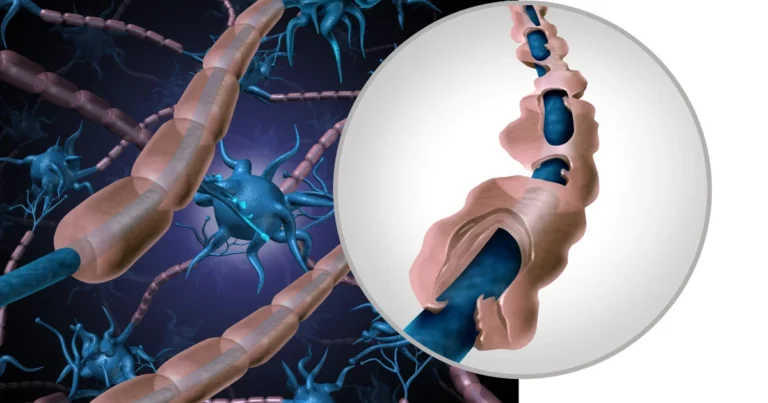
Inside the brain–body dialogue: The visceromotor cortex revealed
Entre cortex et organes internes, un dialogue constant s’organise. L’émotion devient une régulation physiologique.
For decades, neuroscience research has explored the boundaries between the brain and the body. How do thoughts, emotions, or stress influence heart rate, breathing, or digestion? While it was already known that certain brain regions, such as the hypothalamus or the brainstem, regulate internal bodily functions, the existence of a cortical relay capable of integrating bodily signals with cognitive processes remained an open question.
A study published in Nature in 2025 by a team of American researchers provides unprecedented insight into how the brain communicates with the body. By exploring cerebral networks down to their most discreet regions, scientists identified a previously overlooked area capable of orchestrating continuous exchanges between mental activity and internal regulation. This discovery opens a new chapter in our understanding of the relationship between emotions, vital functions, and physiological balance.
A hidden cortical hub connecting mind and body
The posterior visceromotor cortex, located in the medial region of the prefrontal cortex, had long remained poorly understood. It was assumed to be involved in internal motor control, namely the regulation of organs through the autonomic nervous system. The Nature study reveals a very different reality. Rather than serving as a simple motor relay, this cortical area acts as a coordination hub linking perception, memory, emotion, and physiological regulation.
To elucidate this role, researchers combined several state of the art methods, including neuronal tracing, calcium activity recordings, transcriptomic analyses, and three dimensional reconstruction of neural networks. These approaches allowed them to map the connections of the posterior visceromotor cortex with unprecedented precision, demonstrating that it communicates both with cortical structures involved in cognition and with subcortical nuclei responsible for visceral control.
This region receives input from the thalamus and the insula, two structures involved in the perception of internal states and bodily emotions. It sends projections back to the hypothalamus and brainstem, which regulate cardiac, respiratory, hormonal, and digestive functions. In other words, it translates emotional and sensory information into physiological adjustments, ensuring coherence between what we feel and how our body responds.
🔗Read also: Psychedelics: How science is rewriting the future of mental health
How distinct networks shape emotional homeostasis
The researchers showed that the visceromotor cortex is not homogeneous. It is divided into two main subregions, the dorsal posterior visceromotor cortex and the superficial posterior visceromotor cortex, each with a distinct network and complementary function.
The dorsal subregion maintains strong connections with the hypothalamus and brainstem nuclei involved in hormonal regulation and stress responses. It appears to orchestrate the neuroendocrine dimension of internal life, including cortisol secretion, heart rate modulation, and blood pressure maintenance. The superficial subregion communicates more extensively with emotion and memory related regions, such as the amygdala and hippocampus. It likely plays a key role in adjusting bodily reactions to emotional contexts, for example accelerating breathing during fear, releasing muscle tension after danger, or stabilizing internal rhythms during rest.
This dual system illustrates how the brain maintains emotional homeostasis. Visceral responses are not mere reflexes; they rely on fine integration between physiological needs and mental representations. This organization into two complementary circuits explains how psychological states such as stress, excitement, or calmness can directly influence internal bodily functions.
Bridging interoception and cognitive control
One of the major contributions of this research is the demonstration that the traditional separation between bodily functions and mental processes no longer holds. The visceromotor cortex acts as a mediator, translating physiological signals into cognitive information and, conversely, cognitive states into bodily regulation.
When we experience an emotion, its activation does not arise solely within the limbic system. It involves feedback loops between the visceromotor cortex, the hypothalamus, and internal organs. For example, the acceleration of heart rate during fear is not only the result of an automatic command, but also of cortical processing that interprets context and modulates the response. Likewise, bodily signals such as muscle tension, respiratory changes, or visceral sensations ascend to the cortex, where they contribute to the conscious construction of emotion.
This model reinforces the concept of embodied cognition, in which mental processes are not independent from the body but deeply rooted in physiology. The posterior visceromotor cortex emerges as a neurobiological interface between interoception and adaptive behavioral regulation. In practical terms, it allows the brain to sense its own body while adjusting actions based on that internal feedback.
🔗 Explore further: The new era of intelligent neurorehabilitation
New perspectives on psychosomatic disorders
The discovery of the visceromotor cortex extends far beyond anatomical curiosity. It offers a new framework for understanding disorders in which the link between emotions and physiology is disrupted, such as chronic anxiety, depression, irritable bowel syndrome, or psychosomatic conditions. In these disorders, internal signals are often misinterpreted or poorly regulated, leading to simultaneous dysregulation of bodily states and emotional experience.
By identifying a cerebral structure specifically dedicated to this dialogue, researchers provide a coherent biological foundation for these conditions. The posterior visceromotor cortex may represent a promising target for future therapeutic approaches, whether pharmacological or neuromodulatory.
More broadly, this discovery reshapes our understanding of brain health. Visceral regulation is not a simple physiological automatism; it actively contributes to well being, alertness, and even decision making. Understanding how the visceromotor cortex integrates these dimensions paves the way for a truly integrative medicine, one that fully acknowledges the continuity between mental activity and bodily balance.
Reference
Hintiryan, H., Zhu, M., Zhao, P., Zhang, M., Barry, J., Nanda, S., Rudd, M., Wong, A., Miller, S., Gou, L., Wei, J., Zingg, B., Sun, J., Gutierrez, A., Mun, H. S., Han, Y. E., Bowman, I., Garcia, L., Lo, D., Boesen, T., … Dong, H. W. (2025). Neural networks of the mouse visceromotor cortex. Nature, 10.1038/s41586-025-09360-w. Advance online publication.