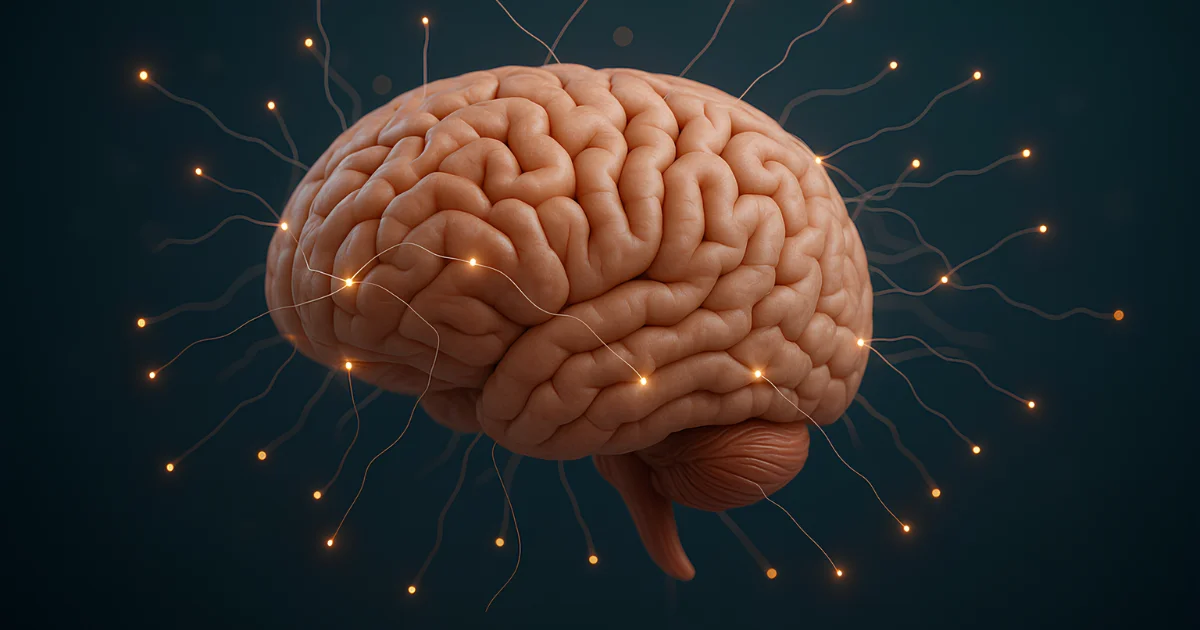
How Dopamine helps the brain unlearn fear
Fear does not always fade once danger is gone. Yet the brain has mechanisms to suppress it. Recent research suggests that dopamine, beyond its role in pleasure, may play a key role in extinguishing fear.
Fear is a vital instinct. It alerts, protects, and ensures survival. When this mechanism becomes dysregulated, fear can persist long after the threat has disappeared. The memory of danger remains active even in safety. This pattern is seen in certain phobias and in post-traumatic stress disorder (PTSD), where the brain continues to react to cues that no longer carry any real risk.
For decades, neuroscience has investigated the circuits underlying this emotion. The amygdala, located deep within the brain, plays a central role in encoding danger. It links a neutral stimulus, such as a sound or an image, to a negative experience, creating a lasting emotional trace. The brain, however, also possesses an opposing mechanism known as fear extinction, in which it learns that a signal once associated with threat is now harmless.
Until recently, this process was primarily attributed to the prefrontal cortex, which was thought to inhibit amygdala-driven fear responses. A new 2025 study published in Proceedings of the National Academy of Sciences (PNAS) points to an unexpected player: dopamine. This neurotransmitter, typically associated with pleasure and reward, may also help regulate the emotional meaning of past threats. This finding opens new perspectives on the interplay between reward systems and emotional learning.
🔗 Read also: Brain photons: Discovery of a natural light emission
The reward circuit that reshapes fear
The researchers conducted their experiments in mice. First, the animals were conditioned to associate a tone with a mild electric shock, a standard method for studying fear learning. After several repetitions, the tone alone triggered a panic response, even in the absence of a shock.
The second phase, known as extinction, involves presenting the sound without any negative outcome. Gradually, the animal learns that the signal no longer predicts danger. The brain does not erase the memory. Instead, it reassesses the stimulus and updates its meaning.
During this extinction phase, the team observed strong neuronal activity in the ventral tegmental area (VTA), a region that produces dopamine. This activation coincided with the moment when fear began to subside. Dopaminergic neurons from the VTA project to the amygdala, the hub of emotional memory, where they influence a set of neurons associated not with threat, but with safety.
Put simply, dopamine may help the brain reclassify a previously threatening situation as neutral or even reassuring. The process does not delete fear; it transforms it. Emotional learning allows safety to supersede threat. These findings suggest that the reward system may contribute to the deactivation of fear. Nevertheless, the authors emphasize that the phenomenon has been observed only in an animal model, and further research is needed to determine whether similar mechanisms operate in humans.
🔗 Explore further: Neuronal rigidity in Autism: Understanding a new path to flexibility
A compelling theory awaiting confirmation
This new study offers a novel perspective on how the brain updates fear memories. It proposes that dopamine, far from being limited to reward seeking, may also contribute to the construction of a sense of safety. Fear does not fade through inhibition alone. It diminishes through positive emotional learning, where the absence of threat becomes a meaningful signal in itself. Positive and negative emotions are not opposites. They are deeply intertwined. The same neurotransmitter that motivates reward-seeking behavior may also help the brain overcome fear. The brain functions not solely as a defensive machine, but as a dynamic system of balance, capable of transforming threat into learning.
If confirmed in humans, this mechanism could have important implications for the understanding and treatment of anxiety disorders. Exposure therapy, which gradually confronts individuals with their fears in a controlled and safe environment, relies precisely on fear extinction. Enhancing this process by modulating dopamine could, one day, improve therapeutic outcomes.
🔗Explore further: How the human brain works
Still, caution is essential. As the authors note, current data do not yet demonstrate a direct causal link between dopamine and fear extinction in humans. This work opens a research avenue but does not constitute definitive proof. Emotional circuits are complex, and their interactions vary across species and contexts. Further studies will be required to clarify this mechanism. In the meantime, it is worth remembering that fear is not merely something to fight. It is something to understand, to tame, and perhaps, eventually, to transform. If dopamine truly helps the brain dismantle fear, then even within our most ancient emotional instincts lies the promise of change.
Reference
Zhang, X., Flick, K., Rizzo, M., Pignatelli, M., & Tonegawa, S. (2025). Dopamine induces fear extinction by activating the reward-responding amygdala neurons. Proceedings of the National Academy of Sciences of the United States of America, 122(18), e2501331122.