Psychedelics: How science is rewriting the future of mental health
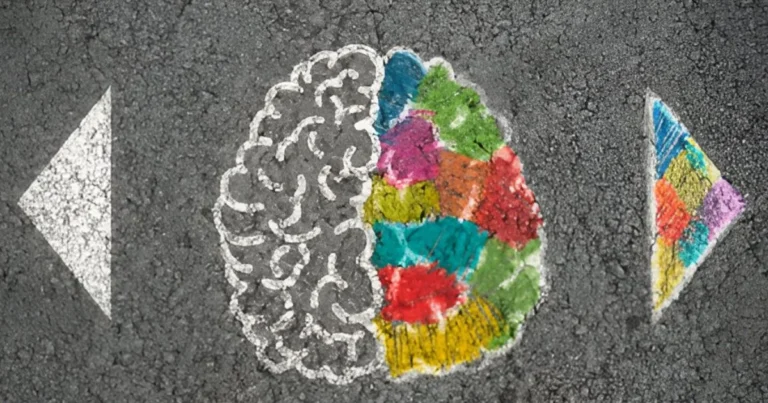
Once confined to cultural fringes, psychedelics are now re-emerging in leading research institutions. By temporarily reshaping brain dynamics, they may unlock new therapeutic pathways for treatment-resistant disorders. What do these substances truly reveal about the brain and psychological transformation?
For nearly half a century, psychedelics were associated with cultural excesses, fringe experimentation or mystical accounts from eccentric writers. Contemporary science, however, tells a very different story. Over the past decade, leading research institutions such as Imperial College London, Johns Hopkins University and NYU Langone have returned to this field. Emerging results suggest that one or two supervised sessions may alleviate treatment-resistant mental disorders where years of conventional medication have failed (Carhart-Harris and Goodwin, 2017). What do these substances truly reveal about the brain, consciousness and psychological healing?
From ancient rituals to modern neuroscience
Psychedelics occupy a unique space between scientific rationality and the human search for meaning. In The Doors of Perception, Aldous Huxley described his mescaline experience as a suspension of the mind’s habitual filter, allowing access to an expanded mode of perception. His interest did not lie in sensory distortion but in the possibility of reaching a form of psychic reality ordinarily inaccessible. Aware that death was approaching, he asked his wife to administer LSD so he could face the transition with clarity, an act that reveals the importance he attributed to altered states of consciousness.
This modern legacy should not overshadow ancient traditions. From Amazonian communities to specific Afro-Brazilian spiritual practices, these substances have long been used to connect with nature, the collective or the immaterial. In these contexts, the substance is never isolated; it is embedded within a ritual structure, a symbolic language and often a deep sense of communal belonging. This dimension remains central today, echoing contemporary clinical practice in which setting, relationship, meaning and psychological safety are as essential as the molecule itself.
Psychedelics are therefore not merely hallucinogenic drugs. They stand at the historical intersection of neuroscience, mythology, philosophy and psychotherapy.
Not all psychedelics act alike: a scientific clarification
Therapeutic use generally involves three main categories.
Classical psychedelics such as LSD, psilocybin, DMT and mescaline act primarily through the 5-HT2A receptor, profoundly altering brain dynamics. Perception, self-processing and memory integration are temporarily reorganized (Vollenweider and Kometer, 2010).
NMDA antagonists such as ketamine and its therapeutic isomer, esketamine, work by blocking NMDA receptors involved in learning and memory. Unlike classical psychedelics, their effects are dissociative. Their rapid antidepressant action is now well documented and used clinically.
Entactogens, notably MDMA, typically do not produce hallucinations. Instead, they enhance emotional openness, empathy and the capacity to reconnect with one’s internal world. The combined modulation of serotonin, norepinephrine and oxytocin makes them particularly effective in treating post-traumatic stress disorder, where a secure therapeutic relationship is central.
This classification is essential. Unlike addictive substances that target the dopaminergic reward system, these compounds do not induce physical dependence. They temporarily modulate neural dynamics and open access to otherwise inaccessible psychological material.
🔗 Read also: Can psychedelics heal the mind?
How psychedelics temporarily reorganize the brain
One of the most influential concepts in contemporary neuroscience is the Default Mode Network (DMN). This network supports autobiographical thinking, rumination, moral judgment and social anticipation, playing a key role in stabilizing identity.
In conditions such as depression, severe anxiety or chronic traumatic stress, the DMN can become overly dominant. Rigid internal models filter reality too strictly, suppressing novelty and trapping the individual inside closed loops of meaning.
Classical psychedelics increase neural entropy (Carhart-Harris, 2014–2021). Connectivity rises between regions that normally communicate very little, the DMN temporarily loses its dominance, and the brain spontaneously explores new patterns of organization.
The goal is not to break the brain but to modulate its dynamics, creating a controlled regressive state reminiscent of early developmental plasticity. This four- to six-hour window appears to promote synaptic reconfiguration, increased dendritic growth and a relaxation of psychological defenses. These effects are robustly observed in animal studies and supported by preliminary human data (Vollenweider and Kometer, 2010).
The therapeutic framework and the transformation of self
The substance alone does not heal. Standard clinical practice relies on a four-stage process described by Schenberg (2018).
The first step is patient selection. Individuals with personal or family histories of psychosis, unstable bipolar disorders or major structural vulnerabilities are excluded. This is not a moral judgment but a precaution to reduce the risk of psychological destabilization.
The second step is psychological preparation. The therapeutic alliance is established beforehand. Patients clarify their intentions, fears and personal history. This step provides containment and safety, much like the establishment of positive transference in psychodynamic psychotherapy.
The third step is the supervised session. The space is calm, with soft lighting, eye shades and carefully curated music. A trained therapeutic dyad remains present, attentive but nonintrusive. Pharmacology is only part of the experience; the therapist’s posture profoundly influences the patient’s relationship to anxiety, imagination and internal representations.
The final step is integration. In the following days or weeks, the individual is guided to translate images, emotions and insights into lasting psychological change. Without integration, the experience remains either aesthetic or traumatic. About one third of participants encounter episodes of fear or emotional collapse (Ona and Bouso, 2020). This is not a “bad trip” to be avoided but psychological material rising to the surface. The goal is not to suppress it but to contain it. The individual must move through it but never alone.
🔗 Explore further: Requiem for a dream: Unraveling the psyche’s dark corners
Conventional treatments often target symptoms. Psychedelics appear to act at the level of self-representation. Patients rarely describe conceptual learning; instead they speak of an embodied experience. They say they felt worthy or perceived their life differently. This direct access to a presymbolic level explains the durability of the effects. Studies using psilocybin in oncology psychiatry show reductions in depression and anxiety lasting up to twelve months after one or two sessions (Griffiths et al., 2016).
From a psychodynamic perspective, clinicians observe a softening of rigid defenses, a renewed investment in bodily experience and a restored capacity to symbolize. The substance does not reveal a truth; it opens perceptual pathways that the psyche then organizes.
Microdosing, the repeated intake of sub-perceptual doses, has become popular in technological and creative communities. Despite positive anecdotal reports, randomized controlled trials show inconsistent and largely weak effects. Some studies suggest little more than an enhanced placebo response. Current literature does not support sustained benefits on mood, attention or anxiety.
Psychedelic-assisted therapy is neither a miracle cure nor a countercultural fantasy. It represents a paradigm shift, an approach that mobilizes brain plasticity, subjective experience and the therapeutic relationship in a coherent dynamic. The molecule opens a space, the setting ensures safe passage and integration transforms the passage into living change.
For some patients, this process does more than reduce suffering; it reorganizes their relationship to themselves and to the world.
The abrupt halt of research in the 1970s did not stem from health concerns but from an ideological climate shaped by the war on drugs. This freeze deprived psychiatry of potentially valuable tools for decades. New obstacles now appear. Traditional economic models rely on chronic treatments, whereas psychedelic therapies require one or two supervised sessions. This raises deeper collective questions about suffering, healing and the meaning we assign to both.
References
Carhart-Harris, R. L., & Goodwin, G. M. (2017). The Therapeutic Potential of Psychedelic Drugs: Past, Present, and Future. Neuropsychopharmacology, 42(11), 2105–2113.
Griffiths, R. R., Johnson, M. W., Carducci, M. A., et al. (2016). Psilocybin produces substantial and sustained decreases in depression and anxiety in patients with lifethreatening cancer. Journal of Psychopharmacology, 30(12), 1181–1197.
Ona, G., & Bouso, J. C. (2020). The challenging experience with psychedelics: A narrative review of the scientific literature. Therapeutic Advances in Psychopharmacology.
Schenberg, E. E. (2018). Psychedelic-Assisted Psychotherapy: A Paradigm Shift in Psychiatric Research and Development. Frontiers in Pharmacology, 9, 733.
Vollenweider, F. X., & Kometer, M. (2010). The neurobiology of psychedelic drugs: implications for the treatment of mood disorders. Nature Reviews Neuroscience, 11(9), 642–651.

Eliesse Drissi
Clinical Psychologist
PhD in Cognitive Neuroscience