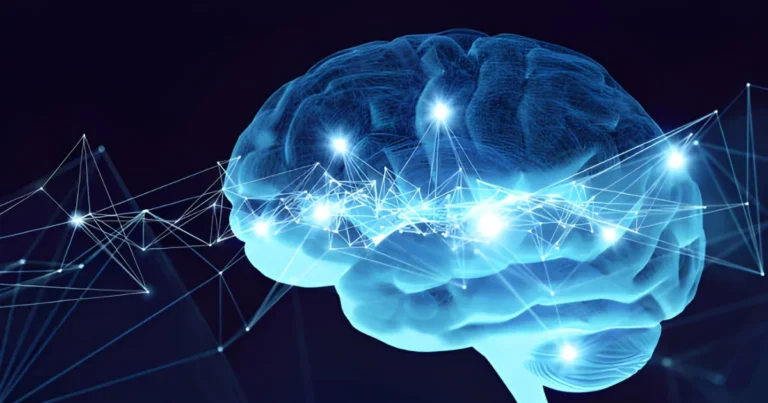
Can the brain erase a memory?
Between forgetting and transformation, memory does more than preserve the past, it reshapes it.
Forgetting a painful memory on purpose has been a dream as old as memory itself. Since antiquity, humanity has sought in forgetfulness a way to ease its inner wounds. In Greek mythology, the souls descending into the Underworld would drink the waters of the river Lethe to erase their memories before being reborn into a new life. Forgetting was not seen as a loss but as a purification, a way to lighten the burden of the past. This myth has survived through the centuries, inspiring poets, philosophers, and physicians, and eventually becoming one of the great ambitions of modernity: the dream of mastering memory itself.
Today, this ancient dream has moved from myth to science. Neuroscience no longer speaks of magical erasure but seeks to understand how the brain can reduce the emotional charge of a memory without making it disappear. The goal is not to delete the past but to modulate its imprint within neural networks, allowing certain images to stop haunting the present.
The origin of this research can be traced to a major discovery in the early 2000s. Scientists realized that memories are not fixed entities carved into the brain. When a memory is reactivated, it temporarily becomes malleable, as if it detaches slightly from its biological support before stabilizing again. This brief period of vulnerability, known as reconsolidation, represents a true window of brain plasticity. During this interval, memory can be modified, adjusted, or reinterpreted under the influence of emotions, context, or new information. The same mechanism explains the formation of false memories. When a memory reconsolidates, it can incorporate inaccurate elements suggested by others or by our imagination. The memory feels genuine, but it has been subtly altered. Every recollection is not a perfect reproduction of the past but a creative reconstruction. Memory rewrites itself constantly, faithful to the feeling of experience, though never entirely to the facts themselves.
This fragile moment, when a memory wavers before reforming, is now the focus of neuroscientific attention. Within this fleeting interval lies the possibility of transforming a painful memory into a more neutral trace, less emotionally charged. Understanding this process means glimpsing the potential for an active form of forgetting, not through erasure, but through healing by the memory itself.
🔗 Read also: False memories: The brain’s illusion of truth
When the brain rewrites its past
Memory is not a passive recording of the past but a living biological activity in perpetual evolution. Each memory emerges from the coordinated activation of multiple neural networks that fire and strengthen together to form a mnemonic trace. These networks extend throughout the brain. The hippocampus encodes context and location, the sensory cortex preserves perceptual details, and the amygdala adds emotional weight. This intricate weaving makes memory a living phenomenon, continuously reshaped by experience and emotion.
When we recall a memory, these circuits reactivate. Some connections strengthen, others weaken, and new ones may appear. With every act of remembering, the memory is slightly rewritten, influenced by our internal state and by the present context. This is why the same memory can feel different over time. Such plasticity is the key to learning and adaptation, but it also makes our memories vulnerable to transformation and error.
Far from being a flaw, this malleability is the foundation of mental flexibility. However, it complicates any attempt at targeted erasure. Intervening in a single memory means intervening in an entire network and risking its balance. Recent research on fear memory provides a concrete example. By exploring the mechanisms of the amygdala, neuroscientists are beginning to understand how an emotional memory can be softened rather than erased and how fear itself can serve as a privileged field for observing brain plasticity in action.
🔗 Explore further: When memory ages: Inside the mind of the elderly brain
How the brain reprograms fear
It is through the study of learned fear that researchers have best understood the flexibility of memory. To explore how a memory could be weakened, they first had to create one. In laboratory conditions, this relies on a classical paradigm known as fear conditioning, in which a neutral stimulus, often a sound, is paired with a mild electric shock. After several repetitions, the animal learns to fear the sound, evidence that a stable memory trace has been formed. This associative model has become a key tool for understanding the dynamics of emotional memory and the neural mechanisms behind fear extinction.
In the early 2000s, neuroscientists Marie Monfils and Joseph LeDoux used this model to investigate whether intervention was possible while a memory was being reconfigured. After reactivating the fear memory by playing the tone associated with the shock, they repeated the tone several times without any negative consequence. The animal, initially tense, gradually stopped reacting. The fear had faded, not because it was forgotten, but because the brain had re-evaluated the signal. By taking advantage of the brief window of plasticity opened by reconsolidation, the researchers demonstrated that it was possible to neutralize an emotion without deleting the memory itself.
This principle, first observed in animals, was later tested in humans. A few years later, neuroscientist Daniela Schiller at New York University sought to determine whether the same mechanism operated in the human brain. In her experiment, participants learned to associate an image with a mild electric shock to the hand. Soon, their bodies reacted to the image alone: heart rate increased, skin conductance rose, all clear signs of learned fear.
To test reconsolidation, Schiller first reactivated the fear memory by briefly showing the image, then presented it again several times but without the shock. This exposure, carried out immediately after reactivation during the window of plasticity when the memory becomes malleable, led to a lasting reduction in physiological responses. The participants still remembered the event consciously, but its emotional weight had changed. The fear was not erased; it was disarmed.
These findings immediately echoed the logic of cognitive-behavioral therapy (CBT), which also relies on repeated exposure to the source of fear in a safe context. Both approaches pursue the same goal: to dissociate memory from threat. The difference lies in timing and level of action. In CBT, prolonged exposure creates a new memory of safety that competes with the original fear memory. Reconsolidation, on the other hand, intervenes earlier, modifying the reactivated memory before it stabilizes again.
Schiller’s work therefore bridged fundamental research and clinical practice. It demonstrated that emotional memory is not fixed and that the brain can, under certain conditions, unlearn fear. This realization opened the door to a promising dialogue between psychotherapy and neuroscience, suggesting a future in which treatment could reshape the meaning of fear. The study inspired a new generation of research aimed at understanding, at the finest neuronal scale, how fear can be switched off.
In 2024, Guo and colleagues at Shenzhen University extended the work of Monfils and LeDoux by observing this same process at the neuronal level. Their focus was not behavior but the micro-architecture of synapses in the amygdala. Recording neural activity during reconsolidation, they showed that the gradual weakening of fear corresponded to changes in communication between neurons. Long-term potentiation (LTP), which stabilizes emotional memory, gave way to long-term depression (LTD), the inverse mechanism that weakens synaptic connections. The researchers had identified the cellular substrate of unlearning, revealing that fear does not vanish but that its synaptic imprint loosens, leaving room for new, more neutral associations.
A year later, a team led by Guillermo Pignatelli at Columbia University took a further step with a study published in Nature Psychiatry in 2025. Whereas Guo had examined changes at the synaptic scale, Pignatelli focused on the collective organization of neuronal ensembles encoding fear and its extinction. His team used optogenetics, a technique combining genetics and light to directly control neuronal activity. They introduced into the basolateral amygdala genes that made specific neurons sensitive to blue light. Once these neurons became light-responsive, they could be activated or inhibited at will through fine optical fibers implanted in the brain.
This approach allowed researchers to track, almost in real time, the neurons involved in fear. They observed that distinct groups of neurons activated during different moments of the process: some during the expression of fear, others during its extinction. By selectively stimulating these groups with light, the scientists could reverse behavior, reactivating fear by exciting certain neurons or reducing it by inhibiting them. The team described this as bidirectional plasticity. This means that fear circuits are not fixed after learning but can adjust their intensity according to context. Such reversibility does not reflect an erasure of memory but a functional change in network state. The memory of the event remains, yet its emotional expression can be neutralized. The amygdala thus appears not as a static center of fear but as a dynamic system of emotional regulation, capable of shifting the organism between vigilance and calm depending on environmental signals.
For neuroscientists, this discovery changes the perspective. It shows that the amygdala is not merely a fear center but a finely adaptable regulatory system, able to balance threat and safety through experience. Forgetting, therefore, is not a passive act but an active operation of the brain, in which certain connections are temporarily inhibited to preserve the overall balance of the network. Beyond its theoretical importance, this research opens tangible therapeutic perspectives. If the brain can learn to deactivate fear by modulating circuit activity, it might one day be possible to mimic this process non-invasively through techniques such as transcranial magnetic stimulation. The goal is not to manipulate memory but to reactivate its natural plasticity so the brain can recalibrate its own emotional balance.
🔗 Discover more: The woman who couldn’t forget: The strange case of Hyperthymesia
The ethics of forgetting
By placing memory within this living dynamic, Pignatelli’s work redefines the boundary between remembering and forgetting. To erase a memory in the strict sense remains beyond our reach. What science now demonstrates is the possibility of modulating its emotional charge, rendering fear ineffective without altering the factual memory of the event. The aim is no longer to erase the past but to neutralize the suffering it carries. As neuroscience uncovers the brain’s plasticity, it reveals its ability to reshape its relationship with the past and to redefine the border between memory and emotion. Such transformation is not classical forgetting but an emotional updating process. The memory remains, but it loses its power to harm. It no longer invades the present and instead integrates into a broader, calmer narrative. This evolution offers a new vision of psychological healing, not through repression of pain but through its reconfiguration. Recent discoveries do not promise erasure, but rather a reconciliation between the brain and its history, a biological way of transforming fear into neutrality and wounds into learning.
These advances outline the contours of a new science of memory. They also raise profound ethical questions. How far can we intervene in the fabric of memory without disrupting the continuity of the self? If we can diminish the emotional weight of a memory, what remains of its role in shaping who we are? Beneath every neuronal circuit lies a lived story, a fragment of inner truth. Memory is not merely a biological register; it is the narrative thread that connects an individual to their experience. Every memory, even the painful ones, contributes to the balance of identity, shaping our choices, fears, and strengths.
🔗Explore further: How the human brain works
This research therefore opens a double horizon: that of healing and that of responsibility. If the brain can transform fear, it is up to us to decide how and why we wish to do so. The goal is not to create a fearless brain but one capable of transforming fear, of remembering without reliving the wound. The true strength of human memory lies not in its capacity to retain everything, but in its ability to repair itself, to recover meaning without losing coherence along the way.
References
Guo, W., Wang, X., Zhou, Z., Li, Y., Hou, Y., Wang, K., Wei, R., , X., & Zhang, H. (2025). Advances in fear memory erasure and its neural mechanisms. Frontiers in Neurology, 15.
Phelps, E., & Hofmann, S. (2019). Memory editing from science fiction to clinical practice. Nature, 572, 43 – 50.
Soeter, M., & Kindt, M. (2010). Dissociating response systems: Erasing fear from memory. Neurobiology of Learning and Memory, 94, 30-41.
Shi, Z., Wen, K., Sammudin, N., LoRocco, N., & Zhuang, X. (2025). Erasing “bad memories”: reversing aberrant synaptic plasticity as therapy for neurological and psychiatric disorders. Molecular Psychiatry, 30, 3209 – 3225.
Shan, J., & Postle, B. (2021). The neural mechanisms of active removal from working memory. bioRxiv.

Sara Lakehayli
PhD, Clinical Neuroscience & Mental Health
Associate member of the Laboratory for Nervous System Diseases, Neurosensory Disorders, and Disability, Faculty of Medicine and Pharmacy of Casablanca
Professor, Higher School of Psychology