Can psychedelics heal the mind?
Once banned, psychedelics are re-emerging in medical research. They may offer solutions where conventional treatments fall short.
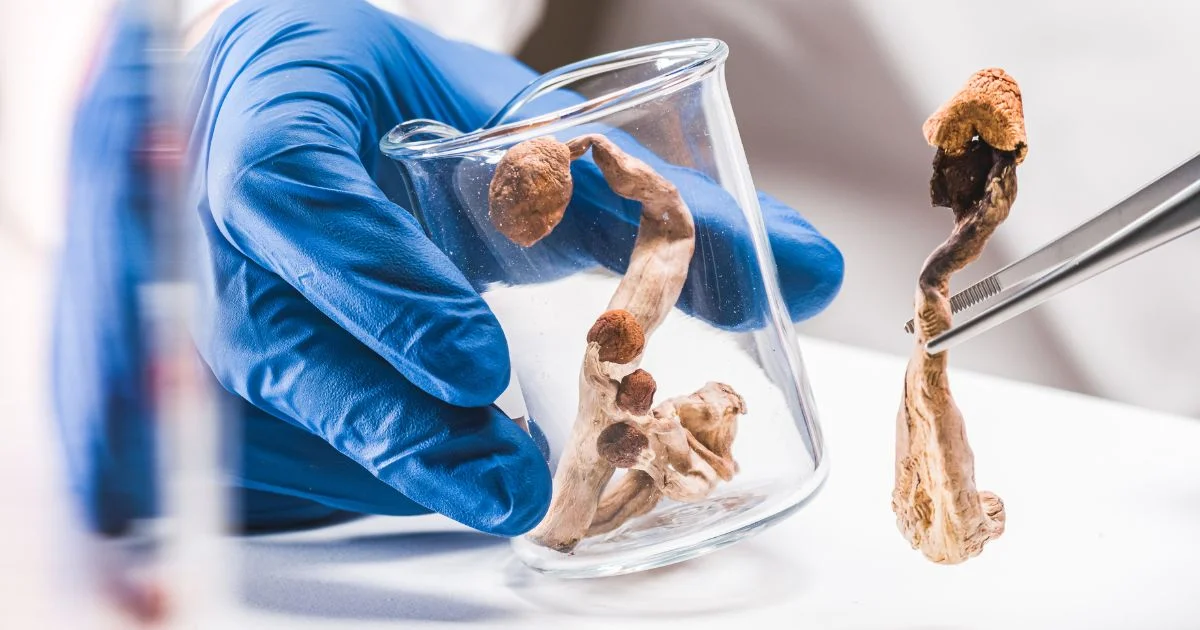
For decades, psychedelics were pushed into the shadows branded as dangerous, unpredictable substances tied to counterculture and moral panic. However, behind the curtain of prohibition, certain compounds like LSD and psilocybin are making an unexpected comeback at the heart of cutting-edge medical research. Top-tier scientific teams, publishing in leading journals, are now testing their efficacy in conditions where conventional treatments fall short: treatment-resistant depression, severe anxiety, and addiction. But what exactly are these studies revealing and how far can this new therapeutic wave really go?
When science first met LSD: The lost years
This renewed interest didn’t appear out of nowhere. Back in the 1950s and 60s, several psychiatrists had already explored the medical use of LSD and psilocybin, particularly in patients with cancer or alcohol dependence. These early trials offered glimmers of hope, but the lack of rigorous protocols combined with the drugs’ widespread use in countercultural circles led to swift prohibition. Research came to a halt, and a scientific silence lasted nearly four decades.
Everything began to shift in the early 2000s. Advances in neuroscience showed that these molecules stimulate the 5-HT2A serotonin receptor and profoundly alter brain connectivity. They also appear to enhance neuroplasticity that is, the brain’s ability to form new connections. This strong biological foundation opened the door to a cautious yet ambitious revival of clinical trials. This time, the studies follow strict methodological standards, carried out under medically supervised, controlled conditions to rigorously evaluate the therapeutic potential of these once-banned substances.
🔗Explore further: Psychedelics: How science is rewriting the future of mental health
Clinical caution meets psychedelic potential
Clinical research first targeted one of psychiatry’s most pressing challenges: treatment-resistant major depression. In 2022, Guy Goodwin and colleagues published an international trial involving 233 patients who had failed to respond to standard antidepressants. Under highly controlled conditions, participants received a single dose of synthetic psilocybin, paired with psychotherapeutic support. Three weeks later, the results were promising: a 25 mg dose significantly reduced depressive symptoms, with nearly 30% of patients achieving remission. However, this improvement tended to fade over time. After 12 weeks, only 20% maintained a durable response. The study shows that psilocybin can trigger rapid improvement but that effect may be short-lived and needs reinforcement through complementary approaches.
Researchers are also exploring psilocybin’s impact on alcoholism another chronic condition where relapse is common. In 2022, Michael Bogenschutz conducted a trial with 95 alcohol-dependent participants. All received psychotherapy, but only some were given two psilocybin sessions; the others received an active placebo. Eight months later, the difference was striking: the psilocybin group had halved their number of heavy drinking days compared to the control group. They also reported fewer alcohol-related complications and an improved quality of life. This study suggests that combining psychotherapy with psychedelics not only reduces consumption it enhances overall wellbeing, further supporting the clinical promise of this approach.
🔗 Read also: Requiem for a dream: Unraveling the psyche’s dark corners
Research isn’t limited to psilocybin. In 2023, a Swiss team led by Friederike Holze examined the use of LSD in an experimental setting involving 42 patients with severe anxiety, some facing life-threatening illnesses. Each participant underwent two LSD sessions (200 μg), paired with psychotherapy. The results confirmed a marked anxiolytic effect. Anxiety levels dropped significantly after treatment, and improvements persisted for up to 16 weeks. Depressive symptoms also decreased suggesting that LSD, long relegated to the realm of forbidden substances, may once again find a place in the treatment of anxiety disorders.
Psychedelics and the brain: a new paradigm?
Beyond the clinical outcomes, the underlying mechanisms are beginning to emerge more clearly. Both psilocybin and LSD appear to temporarily disrupt dominant neural networks, allowing new functional connections to emerge. This reorganization is thought to promote greater cognitive flexibility potentially explaining the rapid improvements seen in depression, anxiety, and addiction. These findings reinforce the idea that psychedelics are not mere “chemical catalysts,” but deep modulators of brain dynamics. They invite a new understanding of psychiatric disorders not only as chemical imbalances but as rigid neural patterns that these substances may help to loosen.
Taken together, these three studies offer a coherent perspective. Psilocybin and LSD aren’t replacements for existing treatments, but they open new doors for conditions that are notoriously hard to treat. They demonstrate that the synergy between psychotherapy and psychedelics can yield fast, and sometimes lasting, improvements while also underscoring the need for strict medical supervision, rigorous follow-up, and a deeper understanding of long-term effects.
In just a few years, psychedelics have gone from taboo to the center of scientific attention. Studies on resistant depression, alcoholism, and anxiety all point to genuine therapeutic potential sometimes with striking results. But they also highlight the limits: transient effects, possible side effects, and the critical need for safe, supervised use.
🔗 Discover more: Animal magnetism: Mesmer’s intuitive glimpse into the unconscious
Psychedelics are not a panacea. Still, they represent a serious path forward backed by solid clinical and neuroscientific data. As they slowly reintegrate into modern psychiatric research, they’re helping redraw the boundaries of therapeutic possibilities and reminding us that new frontiers remain to be explored in the treatment of severe mental health disorders.
References
Bogenschutz, M. P., Ross, S., Bhatt, S., Baron, T., Forcehimes, A. A., Laska, E., Mennenga, S. E., O’Donnell, K., Owens, L. T., Podrebarac, S., Rotrosen, J., Tonigan, J. S., & Worth, L. (2022). Percentage of Heavy Drinking Days Following Psilocybin-Assisted Psychotherapy vs Placebo in the Treatment of Adult Patients With Alcohol Use Disorder: A Randomized Clinical Trial. JAMA psychiatry, 79(10), 953–962.
Goodwin, G. M., Aaronson, S. T., Alvarez, O., Arden, P. C., Baker, A., Bennett, J. C., Bird, C., Blom, R. E., Brennan, C., Brusch, D., Burke, L., Campbell-Coker, K., Carhart-Harris, R., … Malievskaia, E. (2022). Single-dose psilocybin for a treatment-resistant episode of major depression. The New England Journal of Medicine, 387(18), 1637–1648.
Holze, F., Gasser, P., Müller, F., Dolder, P. C., & Liechti, M. E. (2023). Lysergic acid diethylamide-assisted therapy in patients with anxiety with and without a life-threatening illness: A randomized, double-blind, placebo-controlled phase II study. Biological Psychiatry, 93(3), 215–223.
Grieco SF, Castrén E, Knudsen GM, Kwan AC, Olson DE, Zuo Y, Holmes TC, Xu X. Psychedelics and Neural Plasticity: Therapeutic Implications. J Neurosci. 2022 Nov 9;42(45):8439-8449.