Inside the electoral brain: how emotion shapes political choice
Behind the apparent rationality of voting, the brain relies on mechanisms that largely remain unseen. Emotions, intuition, and a sense of belonging often shape the decision well before it is rationalized.
Why do we vote for one candidate rather than another? Why do certain political speeches reassure us, mobilize us, or provoke anxiety, while others, equally well structured, leave us indifferent? At first glance, voting appears to be a rational act: comparing platforms, evaluating proposals, and making a decision. However, this interpretation does not withstand scientific scrutiny. Influencing and persuading voters is a far more complex process, situated at the intersection of communication, psychology, and neuroscience. Political discourse is rarely spontaneous. It is carefully designed, strategically framed, and precisely calibrated, even when its form appears naïve or deliberately simplified.
Branding politics: how messages shape voter perception
Contemporary politics has extensively borrowed from marketing and branding. Candidates have become full-fledged brands that must be recognized, appealing, and capable of triggering action. Logos, slogans, personal narratives, and carefully selected images are not mere accessories. They structure voter perception and guide engagement. Political communication no longer addresses a homogeneous public but rather a mosaic of voters segmented by age, values, expectations, and emotional sensitivities. Each message is simplified, repeated, and strategically framed within a logic where emotion outweighs reason and storytelling becomes a central weapon. The candidate is portrayed as a hero, the opponent as an obstacle, and the citizen as both spectator and actor in a permanent political performance.
When information overload shapes political intuition
Traditional media and social networks play a powerful amplifying role. They select what deserves to be seen, heard, and felt. They intensify polarization, personalize political narratives, and favor immediacy, transforming electoral campaigns into a near-continuous stream of images and sounds. In this saturated informational environment, attention becomes scarce, and electoral decisions are often shaped within an emotional space before any conscious reflection takes place.
🔗Read also: Ideology redefined: The inner evolution of how we think
Emotions as the hidden drivers of political behavior
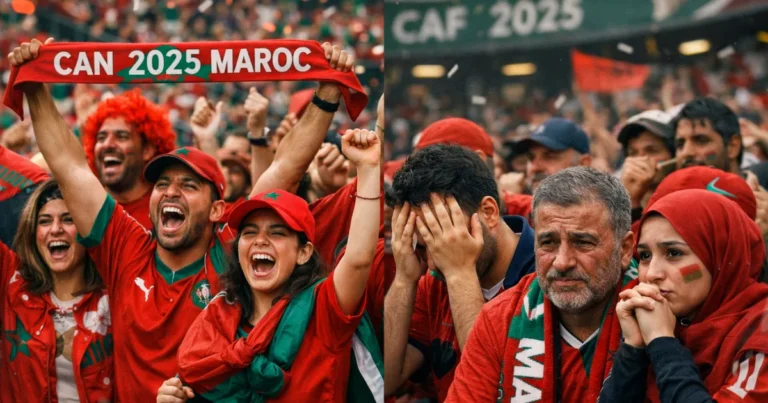
Political psychology provides a complementary perspective: emotions lie at the core of political adherence and rejection. Fear, anger, hope, collective pride, and the sense of belonging shape political behavior far more than rational arguments. Strategies of polarization, dramatization, or enemy designation are not rhetorical artifices. They activate fundamental psychological mechanisms. Voters do not choose a program. They choose an identity, a sense of belonging, and protection against symbolic threats. Aristotle had already anticipated this reality: human beings are guided less by reason than by passions.
Intuition first, reason later: how the brain decides
The work of Antonio Damasio sheds light on this dynamic. Emotions, through somatic markers, guide our choices and orient rationality. Political decisions are never purely logical. They are influenced by what we perceive as safe or dangerous. Daniel Kahneman complements this framework by distinguishing System 1, fast, intuitive, and emotional, from System 2, slow, analytical, and rational. In electoral contexts, System 1 largely dominates. Faced with information overload and constant media and social stimulation, voters decide quickly, relying on intuition and affect, and then rationalize their choices afterward.
Neural pathways of fear, reward, and political trust
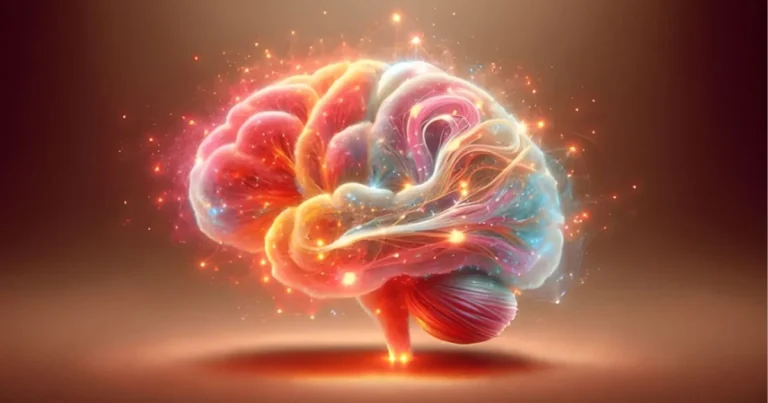
Affective cognitive neuroscience demonstrates that political discourse directly engages the brain. Tone of voice, body language, images, and rhythm activate neural circuits associated with fear, reward, and social belonging. Anxiety-inducing messages stimulate the amygdala, heightening vigilance and reducing critical thinking. Conversely, mobilizing narratives activate reward systems, fostering trust and adherence. What remains in the voter’s memory is not the rational argument but the emotional imprint.
🔗Explore further: How the human brain works
Active voters and the power of critical awareness
These mechanisms could be interpreted as total manipulation. However, voters are never passive. Cultural capital, social experience, and emotional memory shape how messages are received. Understanding these processes does not negate freedom of choice. On the contrary, it strengthens critical awareness and clarifies the emotional levers that structure decision-making. Active reception becomes a tool for resistance and insight, essential for transforming emotion into reflective choice.
The electoral cycle clearly illustrates this dynamic. Before the election, campaigns construct candidate images and activate voters’ emotional memory. During the campaign, repetition and polarization intensify adherence. Afterward, rationalization and forgetting shape personal and collective narratives, preparing the ground for the next cycle. Emotions leave more durable traces than rational memory. Within this space, voters become pragmatic and transactional, seeking immediate benefit, security, and identity confirmation. Voting can resemble a consumer choice, where ideological loyalty yields to emotional and social responsiveness.
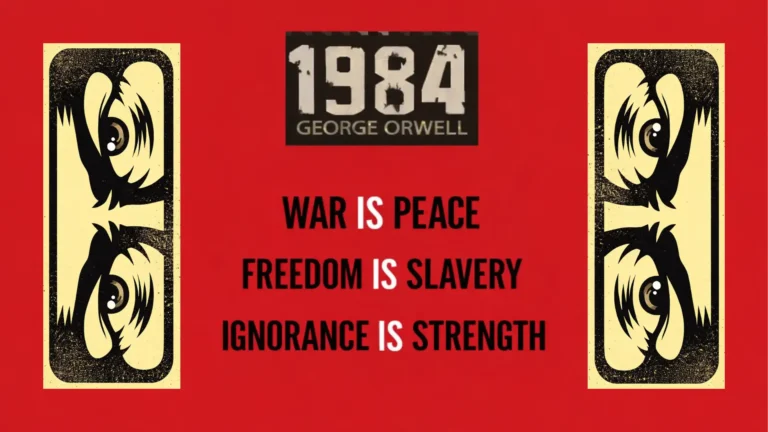
This reality directly challenges democratic health. Politics risks becoming a field of emotional and cognitive manipulation, where visibility and seduction overshadow programmatic substance. Nevertheless, recognizing these mechanisms opens a crucial possibility: informed civic engagement. Awareness of strategic influences enables citizens to filter, interpret, and resist. Democracy is not a purely rational act but a complex process in which emotion, reflection, and critical interpretation must be combined.
Voting is therefore never neutral. It emerges from a continuous interaction between political communication, affective psychology, and neural functioning. Understanding this interaction explains why certain messages persuade, others alarm, and why voters, far from being passive recipients, actively participate in constructing political meaning. Citizenship extends beyond voting itself. It requires awareness of emotional and cognitive mechanisms and the capacity to transform influence into informed decision-making. Without this vigilance, we think we are choosing freely… when in reality, we’re sometimes being guided without realizing it.
References
Damasio, A. (1994). Descartes’ Error: Emotion, Reason, and the Human Brain. Putnam.
Goffman, E. (1973). La mise en scène de la vie quotidienne. Minuit.
Kahneman, D. (2011). Thinking, Fast and Slow. Farrar, Straus and Giroux.
Marcus, G. E. (2000). Emotions in Politics. Annual Review of Political Science.
Sapolsky, R. (2017). Behave: The Biology of Humans at Our Best and Worst. Penguin Press.
Westen, D. (2007). The Political Brain. PublicAffairs.

Ahmed El Bounjaimi
Copywriter-Content Designer
Master’s in Organizational Communication, Hassan II University
Bachelor’s in Philosophy of Communication and Public Spheres, Hassan II University